

























































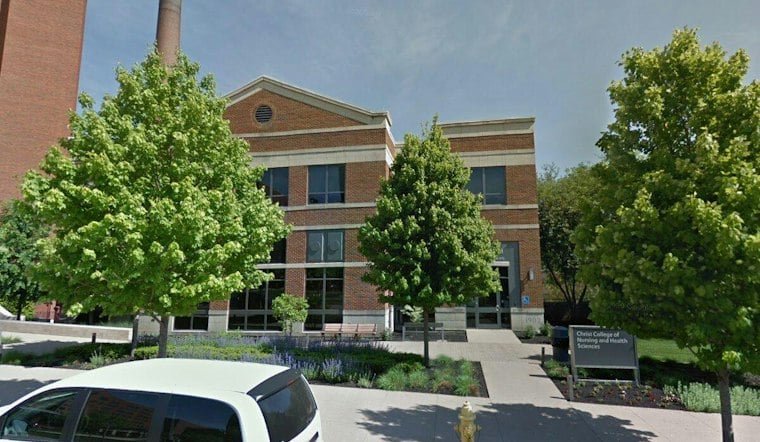
Mike Herrmann woke up from heart surgery in 2024 and felt like he could climb a building. The 64-year-old Cleves resident had just become the fourth person in the world to receive the BiVACOR Total Artificial Heart, a mechanical device that kept him alive at Christ Hospital in Cincinnati while he waited for a donor organ.
Herrmann had been battling end-stage heart failure when doctors enrolled him in an FDA-approved clinical trial for the device, according to WLWT. The implantation was performed in Cincinnati, and the Christ Hospital Health Network said it marked the fourth human implantation of the BiVACOR heart worldwide, completed on November 15, 2024, according to a Christ Hospital Health Network press release. Cardiothoracic surgeons Rob Dowling and Geoff Answini performed the procedure, per the same release.
Nearly two years later, Herrmann says he has never felt better. “A day after the surgery I could have climbed the building,” he said, describing his recovery. He also described the sound of the artificial heart inside his chest as “like a little motor climbing up a hill.”
A Bridge, Not a Permanent Fix
The BiVACOR heart was never meant to be permanent for Herrmann. It gave him time to get off the heart transplant list, and weeks after receiving the device, he underwent a transplant with a donor heart. The device itself uses a single magnetically levitated rotor that pumps blood to both the body and lungs, the hospital's press release notes.
The Christ Hospital was one of only four sites in the nation enrolling patients in the FDA-approved BiVACOR clinical trial at the time, according to the hospital's release. Dr. Robert Dowling recalled telling Herrmann, “You've been accepted,” before the procedure moved forward.
Dr. Geetha Bhat, medical director of Christ Hospital's heart transplant program, said a bridge to transplant is critical because without a functioning heart, patients could wither away and die. The hospital said in its release that its patient woke up pain-free after years of suffering and was walking the halls just five days after surgery.
A Shortage That Devices Like This Aim to Ease
The need for options like the BiVACOR heart is driven by a stark numbers gap: approximately 130,000 patients are diagnosed with advanced heart failure each year, but only about 4,000 heart transplants are performed, according to WLWT. Dowling said the implant could give countless patients more time to get off the transplant list. The hospital's release similarly described the device as providing a critical bridge to transplant for patients with severe heart failure who cannot immediately receive a donor organ.
The technology is still in limited use. BiVACOR's own account of its clinical study says the device has successfully bridged all five patients enrolled to a donor-heart transplant, according to BiVACOR. Separately, the device received FDA breakthrough status and remains under investigational study ahead of full FDA approval, according to UCSF Health, which temporarily replaces both heart ventricles as a bridge to transplant.
Other Hospitals Are Racing to Catch Up
Herrmann's case is part of a small but growing list of patients who have relied on total artificial hearts while awaiting transplants. A Duke University Hospital patient became the second person in the world to receive a BiVACOR heart, living with the device for 10 days before undergoing a transplant, according to Duke University. Duke's transplant team had also been the first in the world to implant a different total artificial heart technology, made by CARMAT, back in 2021.
UCSF Health recently performed its first heart transplant for a patient who had received a total artificial heart a few months earlier, and the hospital says it is the only active program in Northern California implanting the fully mechanical device, having done so four times to date. Further afield, an Australian man in his forties became the first person to leave a hospital with a titanium artificial heart still in place, according to Nature, a milestone because earlier recipients of that type of device had remained hospitalized the entire time it was implanted.
For Herrmann, the device was always a stopgap on the way to a new heart, not a long-term replacement. But nearly two years on from an implant that put him among a handful of people worldwide to ever carry one, he says the hardest part of his health crisis is behind him.





