

























































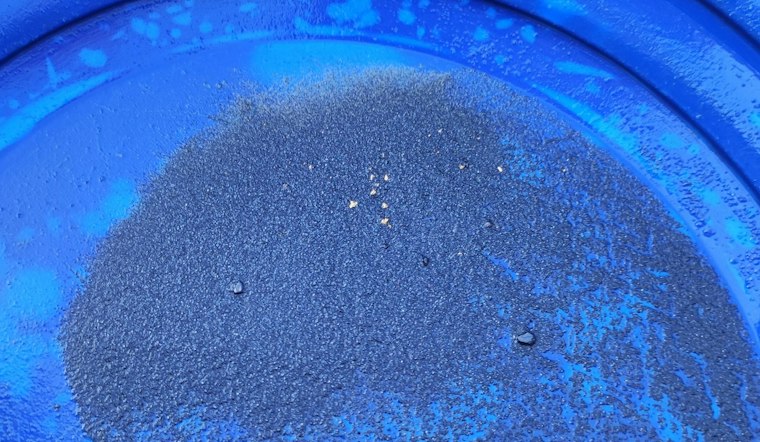
Jack Vulcani spent months panning along Colorado rivers, searching for tiny flecks of gold he planned to turn into an engagement ring for his longtime girlfriend, Joanne. He kept the entire project secret from her, quietly collecting gold along multiple rivers before handing it off to a local jeweler to be cast into the ring that would eventually be on her finger.
Colorado’s gold-panning tradition dates to the 1859 gold rush, but today the work is generally measured in flecks, not fortunes: a full day of panning typically produces less than a gram. The Colorado Sun has described thousands of recreational panners across the state, where small grains sifted from river sediment are often the prize. That helps explain why months of collecting can matter more than the market value of the gold itself. Colorado’s modern panning culture is built around the slow search.
According to localmemphis.com, Vulcani brought his collection of panned gold to Zak Allen, a jeweler based in Wheat Ridge, and asked him to cast the material into a ring. It was not a routine request. Allen said he had never before attempted to cast a ring from gold a customer had panned themselves, and that the unusual job left him excited precisely because it was new to him.
Turning River Flecks Into a Ring
Allen made the ring the old-fashioned way, finding a mold, melting the gold down, and pouring it into shape, per the same report. Vulcani has said that collecting the gold in the first place took forever, and that the slow grind of panning river after river is actually what kept him motivated to finish the project rather than give up on it.
Vulcani’s project also has a Colorado precedent. Prospector and guidebook author Kevin Singel has spent decades gathering flakes from rivers around the state, then melting them into wedding rings and pendants for relatives. His guidebooks map hundreds of places he has visited or identified as suitable for legal panning, while a typical day’s take remains tiny. The practice turns a modest amount of gold into a record of time outdoors and places visited—much like the personal history Vulcani built into Joanne’s ring. Singel’s river-to-jewelry tradition offers a close parallel.
Vulcani has said he wanted to make Joanne's day special without discouraging other people who might attempt something similar, and he considered making the ring himself before asking a professional to handle the casting. Once the ring was finished, he did not stop there: he also made a wedding band for himself out of the leftover gold.
For anyone inspired to try it, access depends on the exact riverbank and land status. The Bureau of Land Management treats hand panning that causes negligible disturbance as “casual use” on BLM-administered land, but it warns that restrictions can apply in particular areas; collecting on an existing mining claim requires the claimholder’s permission. Public-land rules are not a blanket right to pan anywhere, so checking the managing agency and site-specific conditions matters before heading out. BLM’s casual-use guidance explains the distinction.
The Reveal That Brought Her to Tears
Vulcani kept the whole process hidden from Joanne until he showed her a video documenting his gold-panning trips during a hike. Watching the footage, Joanne realized what she was actually looking at: the process of Jack making her ring, piece by piece, river by river.
Joanne has said she cried once the realization hit her. She has also said the ring reinforced her belief that she was with the right person, a sentiment Vulcani has echoed by saying the rings they wear remind him of their connection even when they are apart. Vulcani proposed.




