

























































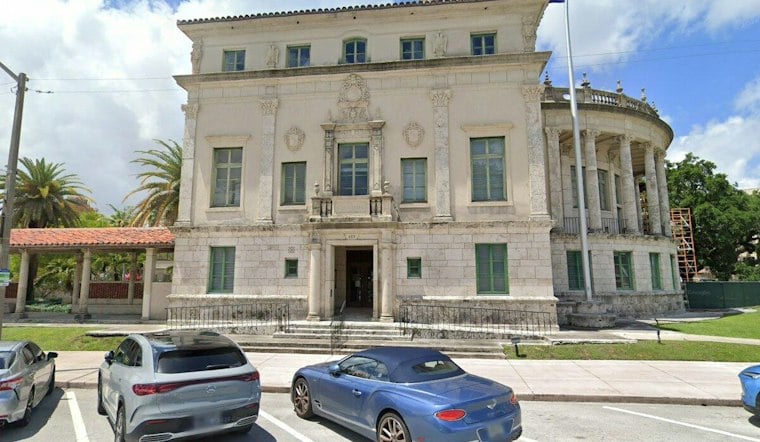
Coral Gables voters head to the polls on November 3 facing a packed ballot: pick a mayor for the next two years, then decide separately whether future mayors should get twice that long in office. Incumbent Mayor Vince Lago is seeking what would be his final consecutive term against two challengers, while a charter amendment asks whether the job itself should change shape starting in 2028.
Lago faces attorney Laureano Cancio and local property owner Jackson “Rip” Holmes in the mayoral race, according to Political Cortadito. Both challengers have run low-budget campaigns compared with the incumbent's established political action committee, the outlet reports. As CBS Miami notes, whoever wins in November will serve a traditional two-year term regardless of how the separate ballot measure turns out, since any change to four-year terms would not take effect until the 2028 election.
A Measure That Wouldn't Help Lago's Own Clock
That timing detail matters because the charter amendment extending mayoral terms to four years starting in 2028 would not alter Coral Gables' eight-year term limit rule, meaning it would not extend Lago's own eligibility beyond this, his final consecutive term, per the Coral Gables Gazette. Lago himself supports extending the term and has said running every two years is difficult and distracts from the job of leading and serving residents, according to CBS Miami. Coral Gables city commissioners already serve four-year terms, the outlet notes, leaving the mayor's office as the shorter-cycle post.
Residents quoted by CBS Miami are split on whether the change would help or hurt. Margaret Meeks, a Coral Gables resident who supports extending the mayoral term, said two years is too short for officials to complete major initiatives. Rhonda McNeil, who has lived and voted in Coral Gables for four decades, has cast her vote by mail to retain the two-year term and said four-year terms could delay accountability.
Why Opponents Are Worried About the Commission Math
The Gazette lays out the governance argument driving that skepticism: because two of Coral Gables' five commission seats are elected every two years, keeping two-year mayoral terms ensures that a majority of commission seats, three out of five, are subject to voter control during every regular election. Under a four-year mayoral term, voters in off-year cycles would only vote on two commission seats, the paper notes, making it impossible to replace a commission majority in those years.
This isn't the city's first run at the idea. Coral Gables previously enacted a four-year mayoral term via a referendum in 2005 that passed by 190 votes, but voters reversed the decision in 2009 by 73 votes to restore the two-year term, according to the Gazette's reporting. That 2009 election ended up being the city's only regular election cycle without a mayoral contest on the ballot.
Three More Referendums Share the Ballot
The term-length question, listed as Referendum 3, isn't alone on the ballot. Coral Gables voters are also deciding three other charter referendums on November 3: raising public works bidding thresholds to $300,000, enforcing a one-year candidate residency requirement, and requiring a 60% supermajority to sell or long-term lease city parks, according to Coral Gables Magazine. All four referendums were advocated by Lago ahead of the fall vote, the magazine reports. The parks-related measure echoes concerns Hoodline has covered as the youth center deed fight heats up elsewhere in city government.
This fall's vote also marks a procedural first for the city. November 3 is the first regular municipal election held in November instead of April, following an April 2026 charter referendum in which 66% of voters approved moving election dates, per Florida Politics. That spring referendum itself drew participation from only about 28% of registered city voters, the outlet reported.
Cost Savings and Turnout Were the Pitch
The rationale for the calendar shift was largely financial and about participation. Moving municipal elections from standalone April dates to November general elections was estimated to cut city election costs from roughly $125,000 to about $20,000, while also aiming to boost turnout from below 20% in recent municipal runoffs, Florida Politics reported. Coral Gables isn't alone in overhauling its local rules this cycle — ten municipalities across Miami-Dade County are voting on a combined 43 local referendum questions on November 3, touching on term limits, official salaries, and public debt, according to Political Cortadito.
Lago's path to this election has included its share of friction. He was first elected to the Coral Gables City Commission in 2013 and won his first mayoral term in 2021, and he currently holds a three-vote working majority on the five-member commission, per Political Cortadito's reporting. In April 2024, a local activist group submitted roughly 1,700 signatures in an unsuccessful bid to trigger a recall election against Lago over real estate conflict-of-interest allegations, as Hoodline reported at the time in its piece on the mayor's recall bid; the effort needed signatures from 5% of registered voters to advance.
For comparison, two-year mayoral terms are also used in Miami Beach and North Miami, while Miami, Miami Gardens, and Hialeah all run four-year mayoral terms, according to CBS Miami's reporting. That mix underscores that Coral Gables voters aren't just choosing a candidate on November 3 — they're choosing which model of local accountability the city follows going forward.





