

























































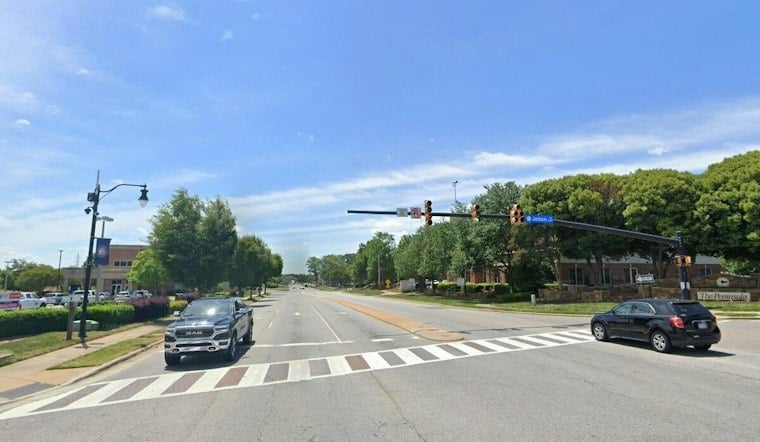
Nearly two decades after Cornelius residents first started pushing for it, the widening of West Catawba Avenue is actually moving forward. The $35 million project will expand the road from two to four lanes across roughly 2.7 miles between Jetton Road and Sam Furr Road, and crews are already in the thick of utility relocation work that's reshaping the corridor ahead of construction.
Cornelius Deputy Town Manager Cynthia Broomfield told the Town Board this month that the project has been a long time coming. “It just takes a lot of time to get these projects off the ground,” Broomfield said, according to The Charlotte Observer. The North Carolina Department of Transportation project, officially designated STIP R-2555B, has been delayed repeatedly over the years by shifting state project ratings, state financial issues, cost increases, and competition from higher-priority projects elsewhere in the state.
Those delays weren't just bureaucratic friction. The project has also faced rising costs. The segment being widened is the last piece of a corridor overhaul that began with Phase 1 — the stretch of Catawba Avenue between Jetton Road and Interstate 77 — which was completed back in 2009, according to the NC Eminent Domain Law Firm, leaving the western segment a two-lane bottleneck for nearly two decades.
Why the Wait Dragged On So Long
Part of the reason the fix took so long to materialize is simple growth. Cornelius grew from 24,866 residents in the 2010 Census to 31,412 by 2020, per World Population Review — pressure that steadily outpaced what a two-lane arterial could handle. Right-of-way acquisition for the widening alone took four years to complete, per the Observer's reporting, before utility relocation work — the phase now underway — could even begin.
That utility relocation is expected to take about a year, and it's the visible, disruptive work residents are seeing along the corridor right now: trees being cleared to make room for new electric poles, which are set to start going in beginning in February. Broomfield acknowledged the process is difficult to watch. “I know it hurts right now, it’s painful to see,” she said. “But these are priorities the town set, and they are in progress right now,” she said, per the same Observer account.
The Underground Option That Never Penciled Out
Some residents have pushed back on the tree clearing and asked why the utility lines simply can't be buried instead. Broomfield's answer, delivered to the Town Board this month: burying the lines would cost more than $60 million — exceeding Cornelius's entire $40.7 million annual operating budget — and would still require removing trees to make room for the wider roadway, according to Cornelius Today. In other words, there was no version of this project that avoided the clearing.
The scope of the widening itself is substantial. The project will expand the right-of-way corridor from 90 feet to 200 feet including easements, affecting more than 80 commercial and residential parcels along the route, per Cornelius Today's reporting. Under prior town approvals, the Alexander Farms development is required to convert its driveways to right-in/right-out configurations once the widened road is built, according to the Town of Cornelius.
What Drivers Will Actually Get
NCDOT's design calls for a center median along with 8- to 10-foot pedestrian and bicycle paths on both sides of the road, according to the Observer. The agency's design documents describe a 23-foot raised center median, 11-foot travel lanes, and multi-use paths on both sides of the road.
NCDOT expects to open sealed bids from general contractors in December 2027, with construction starting roughly three or four months later. The widening should be completed by 2030, with Broomfield noting the project is expected to deliver real relief from congestion and improved safety by about 2030 or 2031.
Part of a Bigger Regional Squeeze
West Catawba Avenue doesn't end in isolation — it connects at its southern terminus to NC 73, better known as Sam Furr Road, where NCDOT is planning a later widening. NCDOT also awarded a $21 million contract to KWest Group in late 2025 for work at the junction of West Catawba Avenue and Torrence Chapel Road/Liverpool Parkway, with work apart from landscaping expected to finish in spring 2028.
For now, Cornelius officials are asking residents to bear with the disruption. The town has framed the widening as a critical long-term safety and capacity fix for a corridor that has struggled to keep pace with growth for years — even as it means years of construction noise, tree loss, and traffic headaches for the more than 80 property owners along the route before relief finally arrives.



