

























































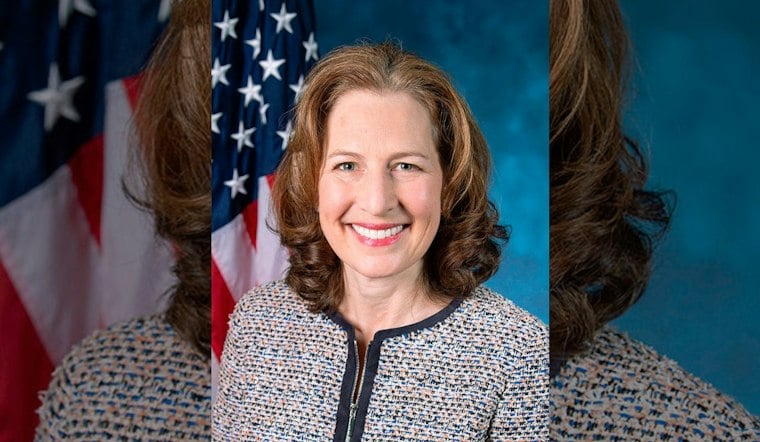
Democratic Representative Kim Schrier, who is seeking a fifth term, is fighting to hold onto Washington's 8th Congressional District against Spencer Meline, a Cashmere resident and Leavenworth small-business owner making his first run for public office. With ballots due by Election Day on November 3, the race has become a referendum on the cost of living, from grocery bills to health insurance premiums to the price of a starter home.
A First-Time Challenger Takes On A Familiar Name
Schrier, a former pediatrician who has served seven years in Congress, flipped the 8th District for Democrats in 2018 by defeating Dino Rossi, according to FOX 13 Seattle. The district, created in 1983, was the Seattle area's largest Republican stronghold for its first 35 years before Schrier's win, and it stretches from King and Pierce counties across the Cascades into eastern Washington, encompassing Chelan and Kittitas counties, portions of King, Pierce and Snohomish counties, and a small slice of Douglas County, according to The Leavenworth Echo.
Meline, who has operated three small businesses in Leavenworth, opened his first restaurant there in 2018 and now employs about 100 people, according to seattlered.com. He reported $126,516 in campaign contributions as of late July, per the same outlet. In August's primary, Schrier took 54.00 percent of the statewide vote, or 59,340 ballots, while Meline edged out fellow Republican Trinh Ha for second place by just seven votes, 16,206 to Ha's total, the Echo reported.
Housing And Small-Business Costs Take Center Stage
Meline has built his campaign around three priorities: small-business opportunity, housing, and wildfire prevention and forest management, according to kpq.com. He supports targeted tax relief for first-time homebuyers and reforms meant to make it easier to put existing homes back on the market, and his platform also calls for preventing institutional investors from buying single-family starter homes, FOX 13 Seattle reported. On small businesses, Meline has warned that rising costs ripple directly into consumer prices. “When energy, insurance, ingredients, equipment, rent, and labor all become more expensive, the customer eventually pays for it,” he said, according to kpq.com.
He's made a similar case about the toll on employers more broadly: “When labor, housing, energy, insurance, supplies, and compliance all become more expensive, something has to give,” Meline said, per the outlet's reporting. His prescription includes producing more domestic energy, protecting affordable Northwest hydropower, cutting what he calls unnecessary regulatory costs, and boosting domestic manufacturing and supply chains, along with curbing federal spending more broadly.
The housing numbers underpinning that argument are stark. Washington's statewide median single-family home price was $645,200 in the second quarter of 2026, down 4 percent from a year earlier, according to the Washington Center for Real Estate Research. King County's median hit $950,000 in the same quarter, the center's report shows. Despite the statewide price dip, a median-priced home was affordable to the median-income buyer in only six rural counties statewide, and the center's housing affordability index showed the typical buyer had just 65.5 percent of the income needed to afford that median-priced house. Thirty-year mortgage rates, meanwhile, climbed from about 6.1 percent in the first quarter of 2026 to 6.4 percent in the second.
Schrier Leans On Health Care Record And Insulin Fight
Schrier, who lives with diabetes, has focused her campaign on health care affordability and sits on the House Subcommittee on Health within Energy, Commerce, Manufacturing, and Trade, FOX 13 Seattle reported. She advocates for lower insulin costs and access to affordable coverage, and Representative Diana DeGette introduced H.R. 10227, the INSULIN Act of 2026, with 19 cosponsors.
In an interview with FOX 13 Seattle, Schrier said she hears pain and frustration directed at the administration and Republicans in the majority, and described constituents facing increasingly higher insurance premiums or struggling to get insurance at all. Those concerns track with national affordability data: monthly premiums for the second-lowest-cost Silver plan on the Affordable Care Act Marketplace rose 22 percent from 2025 to 2026, reaching $611, according to the Urban Institute. Washington saw a 45 percent year-over-year jump in unsubsidized benchmark Marketplace premiums over the same period, per the institute's tracker.
The same data shows residential electricity bills outpaced earnings in 31 states between June 2025 and June 2026, adding roughly $5 a month to the average customer's bill, and that families with two young children are now paying $6,600 more annually for child care than in 2017, with renters paying $710 more a month for housing over the same span. Those figures are national and statewide in scope rather than specific to the 8th District, but they echo the affordability anxieties both candidates say they're hearing from voters.
Energy Policy And AI Divide The Candidates
On energy, Schrier has said data centers should be located in the United States rather than in China or Saudi Arabia, while also arguing that they should not drive up energy prices or drain water resources for cooling, FOX 13 Seattle reported. She advocates for balanced investment across hydro, wind, nuclear and technological infrastructure.
Meline has described artificial intelligence as a major generational shift on his campaign site and said government should not suppress innovation, while also calling for federal safeguards to protect workers, privacy, market competition and national security, according to the outlet's reporting on his campaign materials. He declined requests for an on-camera interview with FOX 13 Seattle, but outlined his vision for the district in a Facebook video following his primary performance, saying his campaign aims to restore hope and make life more affordable for working families.
Despite their differences on regulation and energy policy, FOX 13 Seattle reported that both candidates support law enforcement funding, budget relief and public land protections. With rising daily expenses like food, gas, energy and insurance emerging as a defining issue of the race, the contest is shaping up as a test of which candidate's economic message resonates more with voters across the district's sprawling mix of Puget Sound suburbs and Cascade foothills communities.




