

























































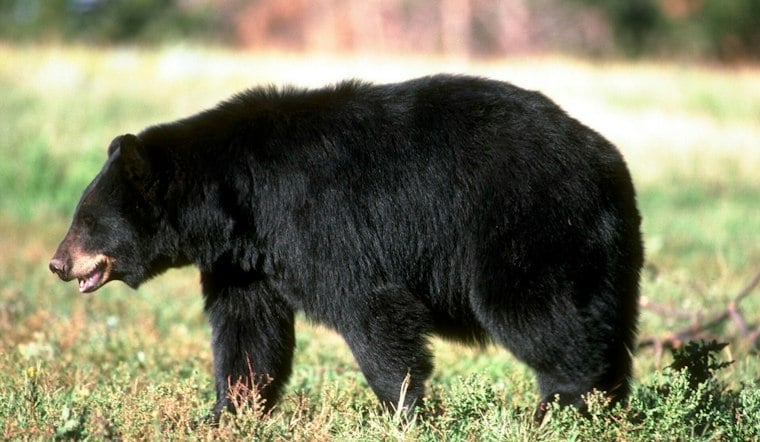
A Coventry homeowner's security camera caught a black bear at her home. Sharon Soltys said a wasp nest had formed beneath the shingles.
Soltys said the nest may have drawn the bear. Video shows it trying to reach the nest.
Why a Bear Would Risk Tearing Apart a House for Bugs
Black bears eat insects, and wasp and yellowjacket nests can provide a seasonal food source. Research from the North American Bear Center cited in the original account says insect larvae and animal matter make up less than 10% of a black bear’s overall diet, but bears may seek out nests in late summer and autumn as they build reserves before hibernation. This increased feeding period is known as hyperphagia.
Soltys said the nest may have attracted the bear, but the available account does not establish why it chose that particular spot.
A Town Already on Edge Over Bear Sightings
This isn't Coventry's first brush with a bear this year. In July, a Coventry resident suffered minor injuries during a late-night confrontation with a black bear in his own backyard, according to a video report circulated on YouTube.
Statewide, black bears remain rare, and Rhode Island has a small resident bear population, according to Rhode Island Department of Environmental Management.
That pattern isn't new. A long-term monitoring study by University of Rhode Island researchers and the state Department of Environmental Management used barbed-wire hair traps and trail cameras back in 2014 to evaluate whether black bears were beginning to establish breeding territories in western Rhode Island, laying early groundwork for tracking the state's small but apparently growing bear presence.
No Hunting Season, and Steps Residents Can Take
Rhode Island regulations do not establish a black bear hunting season for 2026–27, meaning the species retains full legal protection statewide due to its small population, according to MyWild. DEM guidance also focuses on prevention.
If a bear does show up, the Rhode Island Department of Environmental Management instructs residents to stay calm, avoid approaching or cornering the animal, and report the sighting to the DEM Division of Law Enforcement at 401-222-3070.
Keeping Bears Away and Reporting Sightings
DEM’s BearWise guidance advises residents to secure food, garbage and recycling because food and food odors can attract bears. DEM says black bear sightings in Rhode Island continue to increase, but its statement does not provide counts or a measurement method. Residents can report sightings to DEM’s Division of Law Enforcement at 401-222-3070; the agency also offers year-round reporting of black bear observations. DEM says public wildlife observations help biologists understand the distribution, abundance and health of native wildlife, according to its wildlife-observation guidance.





