

























































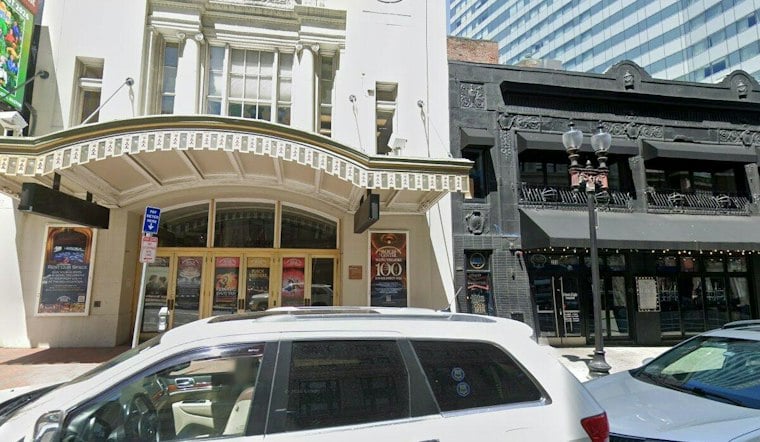
At a Boston appearance at the Boch Center Shubert Theatre, Steven Crowder accused Harvard professor Danielle Allen of withdrawing from a planned debate over filming and distribution terms. Crowder, who hosts the online show Louder with Crowder, told the audience that Allen pulled out in early March after the two sides disagreed about how the event would be recorded and shared.
The event, organized by the Harvard Republican Club, nearly sold out and drew more than 100 participants from Harvard and surrounding Boston universities, according to Crowder's own social media posts recounted by The Harvard Crimson. Crowder told the audience that he and Allen had an agreement before she sent over her proposed terms, which he said would have given her five business days to review the recording, with an option to extend that window to 15 business days. Her terms also required his team to obtain her written approval before posting or distributing any footage and to remove objected-to material within two business days, though they explicitly prohibited editing her remarks in a way that would materially misrepresent their meaning or context.
A Debate That Almost Happened
Allen, a James Bryant Conant University Professor, planned to bring her own videographer, and wanted the full debate posted to YouTube within two weeks, according to the Crimson. The terms also included a right to object to the footage after approving it and require its removal from Crowder’s channel. Crowder said his team had spent time preparing, including having personnel check the venue and security arrangements, and that this work went unused after Allen withdrew.
Allen gave the Crimson a different account of the disagreement. She said she had understood the proposal to be for an intellectual debate in an academic setting, but came to view it as an appearance on Crowder’s show, with filming serving content creation more than intellectual exchange. Allen said she had agreed to a Harvard film crew recording the event, with footage available to both sides, and had requested a media-release and non-monetization contract. Crowder’s executive producer said Allen had been invited to debate in the format used for Crowder’s earlier matchup with Harvard Law School professor Randall L. Kennedy.
Echoes of a Canceled Penn Debate
Allen is not the only academic whose planned face-off with Crowder collapsed. A separate event at the University of Pennsylvania, where Crowder was slated to debate professor Jonathan Zimmerman, was canceled in April after Louder with Crowder producers backed out of the contract, citing disagreements over standard university policies on livestreaming and security. Crowder told the Boston crowd that Penn had restricted his team from livestreaming and had demanded they use official campus security, a claim Allen said she had no idea what he was referring to regarding Penn. Penn's own Guidelines on Open Expression generally prohibit livestreaming of campus events except under limited, approved circumstances, according to the same Crimson report, a policy framework that parallels Harvard's own filming guidelines requiring advance permission to record on campus.
Crowder said his team had spent years trying to arrange a debate along the lines of the Kennedy matchup, contacting somewhere between 10 and 15 schools and departments directly. He said the team even offered a $10,000 donation to a professor's chosen academic department as an incentive, and that Kennedy ultimately directed his donation to Princeton University, his undergraduate alma mater. Despite the outreach, Crowder said his team received almost universal refusals from professors they approached, with only a couple of instances where a professor initially accepted before later dropping out.
Crowder's Broader Critique of Harvard
Crowder used the Boston stage to level a wider set of criticisms at Harvard, describing its faculty as an ideological monolith and calling the university among the worst offenders in suppressing conservative speech on campus. He also criticized Harvard's affirmative action practices, its federal funding, and its past requirement that faculty job applicants submit diversity-statement paperwork, claiming affirmative action had harmed the university's academic rigor. Kennedy, who debated Crowder in the earlier matchup Crowder referenced, has publicly defended both Harvard's stance against the Trump administration and the university's use of affirmative action.
Kennedy's own record on campus speech complicates a simple narrative of Harvard as uniformly resistant to open debate. The Michael R. Klein Professor of Law, who has taught at Harvard Law School since 1984 and clerked for Supreme Court Justice Thurgood Marshall, published an op-ed in the Crimson in April 2024 opposing mandatory diversity statements, arguing they were counterproductive to addressing discrimination and threatened academic freedom, according to Insight Into Academia. Roughly two months later, Harvard's Faculty of Arts and Sciences officially eliminated the DEI-statement requirement for faculty job applicants, replacing it with broader service statements about contributions to the academic community, according to HigherEdJobs.
A Shifting Free-Speech Reputation
Crowder's blunt assessment of Harvard's speech climate also arrives against the backdrop of a notable shift in the university's national standing. In September, Harvard rose 174 places to rank 71st out of 261 institutions in the Foundation for Individual Rights and Expression's College Free Speech Rankings, climbing out of dead last with a 0.00 score in the 2024 and 2025 reports, according to the 1636 Forum. The jump followed university-wide initiatives beginning in 2024 that introduced mandatory Open Inquiry and Constructive Dialogue training for incoming first-year students and adopted Chatham House non-attribution rules for select campus discussions as part of Harvard's broader Intellectual Vitality effort.
The Harvard Republican Club did not try to book space through the university’s Dean of Students Office. The event was instead held at the Boch Center Shubert Theatre, a 1,600-seat historic venue in Boston’s Theater District that opened in 1910 and is listed on the National Register of Historic Places. Crowder promoted the appearance as the first Change My Mind segment to feature a professor; the format usually invites college students to debate him at a campus table.
What Harvard’s filming policy covers
Harvard’s filming policy applies to Harvard property, including university facilities used by outside groups; it does not set rules for an event at the privately operated Shubert Theatre, according to the Harvard Office of the Provost. A separate Harvard working group report on open inquiry found that some community members were reluctant to share views on controversial topics, while also noting that efforts to encourage dialogue were already underway, according to the Harvard Office of the Provost.




