

























































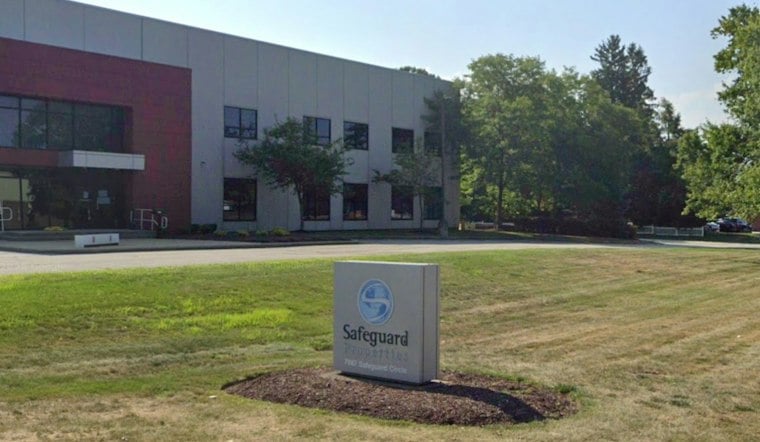
Cuyahoga County and Chagrin Valley Dispatch are locked in a dispute over who should control 911 call handling for dozens of Northeast Ohio communities, after CVD purchased its own next generation 911 system without routing the move through the county's review process. County officials say the move threatens years of consolidation work and could leave taxpayers footing a duplicate bill, while CVD argues its member cities deserve modern technology without waiting years for the county to catch up.
The fight, first detailed by Cleveland.com reporter Kaitlin Durbin, centers on Chagrin Valley Dispatch's plan to launch its own call-handling system when its new consolidated dispatch facility opens in December 2026. CVD, which serves 36 communities along with the Cuyahoga County Sheriff's Department and Cleveland Metroparks, says the system will let member cities access next generation 911 benefits sooner than the county's own timeline allows. Cuyahoga County, meanwhile, says it does not expect to complete its transition to next generation 911 until late 2027 or early 2028.
The new $15 million Valley View dispatch hub driving this fight is no secret locally — the Port of Cleveland Board of Directors approved tax-exempt bond financing in February for the 75,000-square-foot facility at 7887 Hub Parkway, according to NEOtrans. CVD is consolidating four separate dispatch facilities into that single center, part of a broader expansion that has seen Brook Park and Strongsville join its roster in the past year.
A County Plan CVD Allegedly Bypassed
Cuyahoga County officials accuse CVD of going behind the county's back and violating a countywide 911 plan adopted in 2024, one that calls for a single countywide system rather than competing platforms. Officials say CVD needed sign-off from the five-member 911 Program Review Committee before changing systems, and that it never sought that approval. The county says it only learned of CVD's purchase after a member community requested $1 million to help cover the transition — a request Christopher Alvarado, the county's director of regional collaboration, wrote that Cuyahoga County will not fund.
Alvarado has not pulled punches in describing the fallout. He said CVD breached years of trust and collaborative planning, and warned that having one community on one system and a neighboring city on a different one has the potential to negatively impact public safety, walk back the progress we've made over the last twelve years, and negate many of the benefits of NG911. He sent a letter to mayors, trustees and safety service leaders on October 9 urging communities not to use CVD's system, and asked them to consult with the county before considering a separate arrangement.
CVD executive director Nick DiCicco pushed back hard on Alvarado's letter, calling it replete with untruths and misleading information. He also accused the county of repeatedly canceling meetings, and said CVD remains committed to regional cooperation grounded in accurate information, clear explanations and respect for participating communities. DiCicco pointed to other examples statewide, noting there's well over a dozen counties in the state that are doing exactly what we're doing, and citing Franklin and Hamilton counties as places where multiple call-handling systems already operate.
Governance Overlap Adds Another Wrinkle
The dispute is complicated by overlapping leadership. Euclid Mayor Kristen Holzheimer-Gail serves as president of the council of governments overseeing CVD and was separately selected by local mayors in May 2024 to sit on the county's five-member 911 Program Review Committee, according to records from the City of Lyndhurst. Holzheimer-Gail defended the new system bluntly, asking why would we outfit a brand-new center with old technology? She also argued that the county is opposing CVD's system because it could lose some 911 funding.
Money is very much part of the fight. Cuyahoga County received about $4.5 million in state funding in 2025 and expects $7.6 million in 2026, but officials say that bump is temporary and the county's share will fall to about $4.8 million or less annually starting in 2027 — a figure they say matches what it actually costs to run the county's 911 service. CVD argues it deserves a cut of that state funding because it directly answers wireless 911 calls for its member communities, with DiCicco saying we're not looking for all the money, we just want our fair share. Those state wireless 911 access fee disbursements flow monthly to county government funds under Ohio Revised Code Section 128.55, according to the Ohio Department of Taxation.
Call Volume, Costs and a Motorola Question Mark
Cuyahoga County currently handles about 84% of local emergency calls, with CVD handling the remaining 16%. CVD has already spent more than $5 million on its own 911 call-handling system, while the county estimates its new system will cost $15 million total, against roughly $10 million in reserves — leaving a funding gap that officials say could force costs onto member communities if state money doesn't cover the bill.
Deputy director of public safety and justice services Jill Smialek put the stakes plainly, saying we won't be able to support two full systems. County officials say their technology vendor, Motorola, told them CVD's system needs additional work and a costly interface to communicate with county technology, and they worry that transfers between separate systems could get complicated when emergencies cross jurisdictions. Director of public safety and justice services Brandy Carney said there's ability for calls to get cut off, or for it to get lost. CVD disputes that characterization, saying Motorola told it the systems can work together seamlessly without an interface.
DiCicco maintains CVD has state approval to transition sooner than the county and that its system can handle call transcription and translation for non-English speakers immediately upon connecting to next generation 911. He said CVD's service will cost partner communities nothing to use and will operate alongside the county's system rather than replacing it, with everything operating as it is today for participating cities. The Cuyahoga County law department is exploring ways to prevent CVD's system from being implemented, even as DiCicco says CVD is fielding inquiries from mayors interested in joining.
The standoff lands against the backdrop of Cuyahoga County's decade-long consolidation effort, which began around 2014 when the county began folding dozens of independent dispatch centers and 46 separate 911 systems into a single countywide network. CVD's push for independent NG911 capability also follows the dispatch council's established habit of seeking outside funding on its own — it previously secured a $784,050 federal Assistance to Firefighters Grant in 2014 to support regional communications infrastructure, according to Chagrin Valley Dispatch. CVD also handles dispatching for First CALL, a co-responder program embedding mental health clinicians with first responders across several eastern Cuyahoga County suburbs, a dynamic Hoodline has previously examined.





