

























































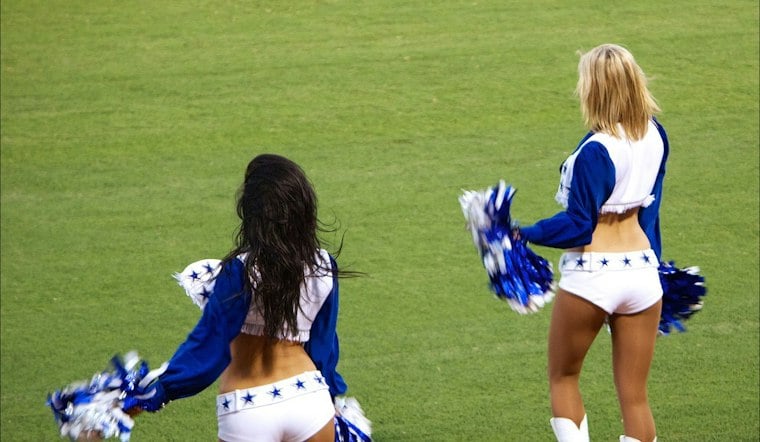
The Dallas Cowboys have officially recognized the Dallas Cowboys Cheerleaders Association as the collective bargaining representative for the squad, clearing the way for formal contract negotiations after decades of complaints about low pay. The recognition, announced Friday, follows a 400% pay raise the cheerleaders received ahead of the 2025 season and years of public pressure over their wages.
According to dallasnews.com, the Dallas Cowboys Cheerleaders Association, or DCCA, has been recognized by the team as the collective bargaining representative of the DCC, and the parties are now set to begin collective bargaining after what were described as meaningful discussions. The next step, as NBC News reports, will be bargaining for an official contract for the cheerleaders. The squad currently consists of 36 active members, though it remains unclear exactly how many are represented by the new union, the outlet notes.
A Raise Years in the Making
The recognition caps a stretch of renewed scrutiny over how little Dallas Cowboys cheerleaders have historically earned compared to the money and attention the squad generates for the organization. Per the same NBC News account, the cheerleaders received a 400% raise for the 2025 season, with some veteran dancers slated to receive more than $75 an hour. That is a steep jump from what one former cheerleader described experiencing just one year earlier.
Former cheerleader Jada McLean told gvwire.com that in 2024, her fifth year with the squad, she made $15 an hour and $500 for each appearance. Per The New York Times, that same $15-an-hour, $500-per-appearance figure for 2024 underscores how far the gap had stretched before last year's raise. McLean also said the new contract restructured pay for game days and other appearances, but that it still does not provide health insurance, according to the gvwire.com report.
Netflix Spotlight Reignited the Fight
Much of the public pressure traces back to the Netflix docuseries “America's Sweethearts: Dallas Cowboys Cheerleaders,” which put the squad's pay and workload back in the spotlight. Compensation grievances resurfaced after the series premiered in 2024, as noted by The New York Times, and the show's second season became a major plot point around the issue, with dancers saying on camera that they had received the 400% raise, according to dallasnews.com. As 19thnews.org put it, the pay issue exploded into headlines again thanks to the documentary, at a time when NFL cheerleaders generally have no union or governing body representing them.
The pay gap has deep roots. Dallas Cowboys cheerleaders reportedly earned $15 per game in the 1970s and 1980s, with pay rising to $50 per game before the turn of the century, per dallasnews.com's reporting on the squad's history, which dates back to 1961 before it professionalized in the early 1970s, according to NBC News. The cheerleaders have been a global brand fixture for more than 60 years, as nbcdfw.com notes.
An Echo of the Buffalo Jills' Short-Lived Push
The Cowboys' new union isn't the first time NFL cheerleaders have tried to organize. NBC News reports that the Buffalo Bills' Buffalo Jills made a short-lived attempt to unionize in the mid-1990s. The squad was essentially disbanded in 2014 after pursuing greater workplace protections, according to gvwire.com's account of that effort's outcome.
That earlier wave of cheerleader activism came amid a string of 2014 lawsuits that exposed wildly uneven pay across the league. The 19thnews.org report details how Buccaneers cheerleaders were paid a flat fee of $100 per game, Jets cheerleaders got $150 per game, Bengals cheerleaders said they were paid about $2.85 an hour, and Bills cheerleaders got nothing at all. Former Oakland Raiderette Lacy Thibodeaux Fields was entitled to just $125 a game despite the demands of practice, game days and community events, the same report notes.
The history of NFL cheerleading goes back even further than those pay disputes. The Baltimore Colts were the first NFL team to have cheerleaders in 1954. More than seven decades later, the Dallas Cowboys Cheerleaders' new union marks a fresh attempt to turn that legacy of unpaid and underpaid labor into a formal bargaining relationship, with both sides now expected to negotiate the terms of an actual contract.


