

























































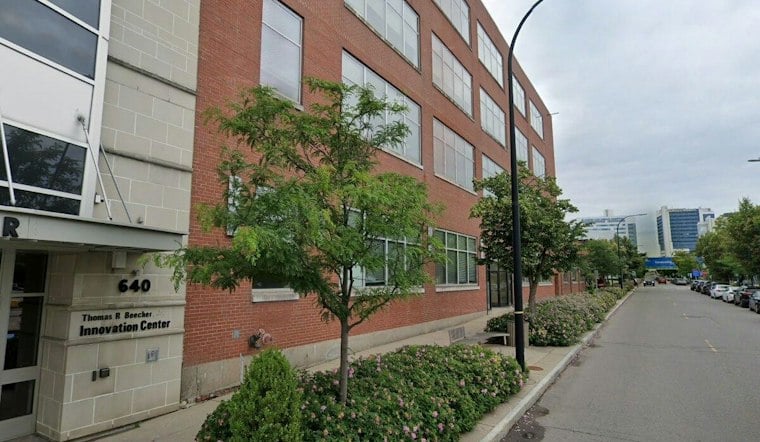
Buffalo's most prominent tech success story now answers to a Dallas company. Copart completed its roughly $1.9 billion, all-cash acquisition of ACV Auctions on Thursday, paying $10.50 per share and ending ACV's run as a publicly traded company based in Western New York.
The deal closed Oct. 15 after about 68.43% of ACV's outstanding shares were tendered, according to CollisionWeek. ACV's stock has since stopped trading on the New York Stock Exchange, the trade publication reported, closing out a chapter for a company that grew from a Buffalo startup into a major player in digital vehicle wholesaling. Copart had agreed in September to acquire all outstanding ACV shares for that same $10.50-per-share price, representing an implied equity value of approximately $1.9 billion, according to a press release from ACV Auctions.
As WGRZ reported, the Dallas, Texas-based company now owns the Buffalo-founded auction platform outright. ACV was founded in 2015, per WIVB, and built its business around moving used-car wholesale transactions online for dealers across the country.
What Happens to ACV's Buffalo Workforce
The companies have said ACV will continue operating as an independent Copart subsidiary under its existing leadership team, a structure confirmed in both the original acquisition announcement and CollisionWeek's report on the closing. But the size of ACV's local footprint is described inconsistently across coverage. WIVB reported that ACV has around 600 employees in Western New York, while the Buffalo News has put the number at 650 local employees at the company's Buffalo headquarters. Neither figure has been reconciled, and what the acquisition means for those jobs going forward has not been detailed publicly.
That uncertainty lands against a backdrop of recent local investment. ACV had been expanding its Buffalo headquarters and expected to hire more than 100 new employees over the next four years, the Buffalo News reported in earlier coverage of the company's growth. The same outlet also noted that Copart expects significant synergies from the deal that will lead to cost savings across the companies' dealer, commercial and retail operations, though specifics on what that means for staffing have not been spelled out.
Why Copart Wanted In
Copart pursued the acquisition as it sought to expand beyond its core vehicle-auction business amid slowing vehicle-volume growth, according to Reuters. Pairing Copart's auction infrastructure with ACV's digital wholesale marketplace and dealer tools gives the Dallas company a bigger footprint across vehicle remarketing broadly. Copart expects the deal to be neutral to its earnings per share in the first full year of ownership and accretive starting in fiscal 2028, per ACV's own press release announcing the agreement.
ACV enters the merger on solid financial footing by its own recent numbers. The company reported $760 million in revenue for all of 2025, up 19% from $637 million the year before, according to a report from Digital Commerce 360. ACV sold 829,276 vehicles through its platform last year, a 12% increase over 2024, with the total value of vehicles sold climbing 9% to $10.4 billion, the outlet reported. Still, the company posted a full-year net loss of $66 million in 2025, an improvement from a $79.7 million loss the prior year, per the same account.
A Digital Push Ahead of the Sale
In the months before the deal closed, ACV had been leaning further into automation and expansion. The company has been stepping up investment in artificial intelligence-powered tools, no-reserve vehicle sales and commercial remarketing as it works to shift more wholesale vehicle transactions online, Digital Commerce 360 noted. ACV also opened its first purpose-built remarketing center in Houston and had plans to launch a second one in Chicago this year, the outlet reported.
Those moves suggest a company trying to scale its digital-first model well beyond Western New York even as its headquarters remained in Buffalo. Now folded into a much larger, Dallas-based parent, ACV's next moves locally — including any changes to its headquarters operations — have not yet been detailed in public statements from either company.




