

























































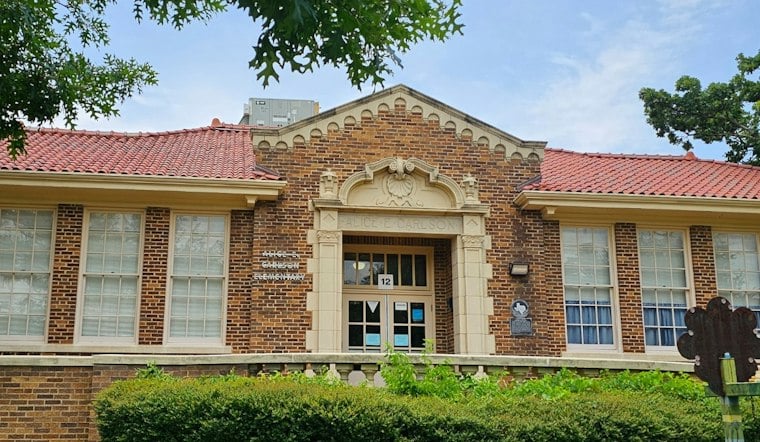
Six outside organizations want to take over or redesign existing campuses inside Fort Worth ISD, turning them into charter-style schools under state law, though the district has not picked a single building yet. The proposals range from a high school for students who have dropped out to a kindergarten program built around entrepreneurship, and none of them have a launch date sooner than the 2027-28 school year.
The six groups have expressed interest in launching new school models or redesigning existing campuses within Fort Worth ISD as charter schools, according to the Fort Worth Star-Telegram. The newspaper reports that nine organizations initially signaled interest, but two missed the application deadline and a third, the Next Education Workforce Initiative at Arizona State University, withdrew after learning more about the requirements. An earlier account from the Fort Worth Report put the number of initial indications of interest at six, a discrepancy the two outlets have not reconciled.
Who Wants In, and When
Three of the six groups are targeting a 2027-28 launch, per the same Star-Telegram report: Ridgeline Education Corporation, Lamar Legacy Partners and Texas New School Accelerator. Ridgeline has written that its school will serve students who have dropped out of high school or are at risk of dropping out, the paper's earlier reporting on the individual proposals notes. Lamar Legacy Partners has proposed a partnership serving pre-K through second-grade students with autism and related learning needs, while Texas New School Accelerator wants to bring a project-based New Tech model to sixth through eighth graders at a Fort Worth ISD middle school.
The other three groups, The Glory Impact Center, Eagleview Leadership Academy Inc. and Live Pura Vida, are aiming for the 2028-29 school year. The Glory Impact Center's proposal targets pre-K students. Eagleview wants to serve kindergarten through fifth-grade students in East Fort Worth, opening first with kindergarten through second grade and adding a grade each year, while Live Pura Vida would serve kindergarten through fifth graders through a model built on experiential learning and entrepreneurship.
Nothing's Been Decided About Which Schools Move
Despite the interest, the district has not determined which schools could be restructured, Fort Worth ISD spokesperson Evan Anderson said in October, as the Star-Telegram reported. The Fort Worth Report's reporting similarly found that the district had not set a target number of schools and had not selected any campus for redesign. Any proposal still needs approval from the state-appointed Board of Managers before it can move forward.
The timeline from here is tight. Superintendent Peter Licata must make a formal recommendation on any 2027-28 partnerships to the board by Jan. 12, with a possible vote on contracts by March 9, the Star-Telegram reports. Groups targeting the later 2028-29 window have until Dec. 15 to submit final applications. Under the arrangement, the resulting partnership schools would operate as charter schools under Chapter 12, Subchapter C of the Texas Education Code.
How the Law Works, and What It Has Produced Elsewhere
The underlying law is commonly known as SB 1882, a 2017 statute the Texas Education Agency says provides incentives for districts to contract with an open-enrollment charter school, a higher education institution, a nonprofit or a government entity to run campuses. It has been used well beyond Fort Worth: 27 school districts across Texas have struck deals under the statute, covering 129 public schools, according to a Texas Observer analysis, which found that 48 charter operators have received at least $735 million in state and federal funds through the program.
That same analysis found mixed academic results among past partnerships: of 30 schools with relevant academic data among 44 campuses reviewed, 18 ended their time under private management with failing state overall accountability ratings. Houston ISD approved similar partnerships earlier this year, with four of its highest-performing high schools beginning operations under nonprofit agreements for the current school year, the Fort Worth Report noted. Austin ISD has proposed letting the Texas Council for International Studies operate Dobie, Burnet and Webb middle schools, with that nonprofit gaining jurisdiction over hiring, basic school functions and academics, according to the Austin American-Statesman.
San Antonio ISD offers a cautionary note on how these arrangements can play out over time. The district grades its 1882 schools on three metrics, academics, organizational health and financial health, according to the San Antonio Report, which found that for the 2024-25 review cycle, SAISD's administration recommended probation for Woodlawn Academy and Woodlawn Hills Elementary, both operated by the Texas Council for International Studies.
The Fort Worth proposals arrive as the district's state-appointed Board of Managers has already approved sweeping changes to campus instruction this year. In April, the board unanimously voted to implement the Elevate Network instructional model, a move the Star-Telegram reported was expected to affect district staffing. Whether any of the six charter proposals ultimately lands on a Fort Worth ISD campus remains an open question the district has yet to answer.




