

























































Noa Ramirez just turned 3, and she already has a milestone most adults can't claim: ringing the bell that marks the end of cancer treatment. The Dawsonville, Georgia toddler rang it last month after more than two years of fighting B-cell acute lymphoblastic leukemia, a journey that took her through an intensive immunotherapy regimen, a brand-new children's hospital, and finally a celebration on the sidelines of an Atlanta United match.
Noa was diagnosed with B-ALL at just 16 months old and underwent a 28-day continuous chemotherapy infusion known as the Blina Backpack, a trial regimen involving the drug blinatumomab that raised her survival odds to 95 percent, according to FOX 5 Atlanta. Her parents initially resisted enrolling her in the trial treatment before agreeing to the pump infusion, the station reported. As CBS News reports, Noa is now 3 years old and recently rang the bell after more than two years of leukemia treatment at Children's Healthcare of Atlanta, with her parents reflecting on the long-awaited milestone.
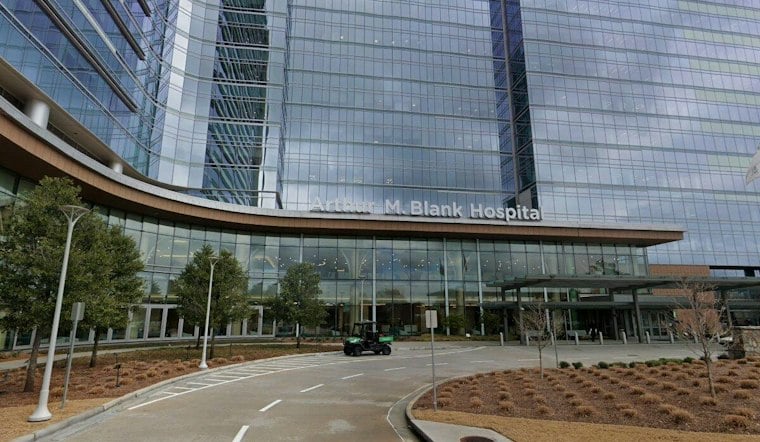
Her formal bell-ringing ceremony took place on September 25 in the Egleston Garden at Children's Healthcare of Atlanta's newly opened Arthur M. Blank Hospital, attended by hospital staff and Maximus the Lion, the mascot for the Atlanta Gladiators, per the Dawson County News. The 19-story, 446-bed hospital opened on September 29, 2024, after CHOA executed a single-day transfer of 202 pediatric patients from Egleston Hospital, according to the Georgia State Senate. The $1.5 billion facility was built with support from a $200 million donation from the Arthur M. Blank Family Foundation.
A Hometown Rallied Around Her for Two Years
Throughout Noa's two-year medical fight, neighbors and local businesses in Dawsonville supported the family in ways that went beyond the hospital walls. The community hosted drive-by birthday celebrations, organized tattoo parlor fundraisers, and donated paid time off to her parents, the station's report notes, reflecting the kind of non-medical financial pressure that prolonged pediatric cancer care often places on families.
Noa's pediatric oncologist at Children's Healthcare of Atlanta, Dr. Ryan Summers, said bell-ringing ceremonies offer essential emotional rewards not just for patients but for the care teams who guide young patients through multi-year oncology treatments. That sentiment echoes the broader purpose behind the tradition itself, which dates back three decades.
The Bell's Naval Origins
The custom of ringing a bell upon finishing cancer treatment began in 1996 at MD Anderson Cancer Center in Houston, when U.S. Navy Rear Admiral Irve Le Moyne brought a brass bell to his final radiation appointment, following a naval tradition of sounding a bell when a task is completed, according to the Ovid Journal of Oncology Nursing. Le Moyne left his bell mounted on a plaque at the center, and the ritual quickly spread to oncology centers nationwide.
Noa's family celebrated at an Atlanta United match, per CBS News, a detail that connects to the club's annual Unite & Conquer Cancer campaign. Major League Soccer and Atlanta United hold the campaign every September during Pediatric Cancer Awareness Month in partnership with Children's Healthcare of Atlanta; campaign activities were adapted for patients, survivors and staff in 2020, as Hoodline previously reported.
Why Pediatric Cancer Funding Still Lags
Pediatric cancer remains the leading cause of death by disease among children in the United States, yet pediatric cancer research receives only about 4 percent of total federal cancer research dollars. That funding gap helps explain why pediatric health systems and nonprofits lean so heavily on private philanthropy and community fundraising, like the kind that surrounded Noa's family in Dawsonville, to help close research and support gaps.
Children's Healthcare of Atlanta's Aflac Cancer and Blood Disorders Center, where Noa was treated, provides cancer and blood-disorder care for children.




