

























































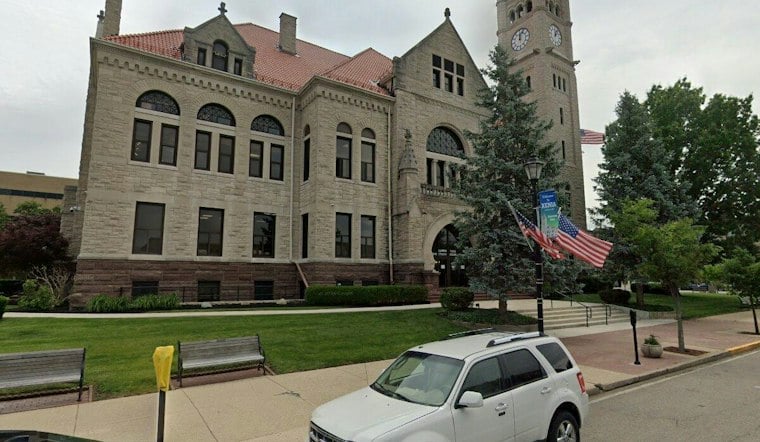
A Greene County jury found David Allen Miller, 45, of Dayton, guilty Tuesday of fourth-degree felony menacing by stalking, WHIO reported. Miller is scheduled to be sentenced Nov. 18. He could receive up to 18 months in prison and a $5,000 fine, Dayton 24/7 Now reported.
At trial, evidence showed there was no affair between Miller’s girlfriend and the man he confronted, though Miller believed they were involved, WHIO reported. The woman had previously dated the man and contacted him for help after Miller threatened her, the report said. The case arose from a Jan. 19 encounter in Yellow Springs: The Dayton Daily News reported that Miller confronted the man near his home, followed him to his apartment building and tried to get inside while making threats involving a chainsaw and pigs.
The man asked police only to tell Miller to stay away, WHIO reported. Officers first spoke with Miller at his Yellow Springs workplace, and he agreed to stay away. Police later received another report about threats and arrested him with help from the Dayton Police Department, the report said.
Ohio law and national stalking data
The Ohio Revised Code defines menacing by stalking as knowingly engaging in a pattern of conduct that causes another person to believe the offender will cause physical harm to that person or a family or household member, or cause mental distress to that person or a family or household member. Nationally, about 1.3% of U.S. residents age 16 or older — 3.4 million people — experienced stalking in 2019, according to the Bureau of Justice Statistics.
Protection orders and reporting
Separate from a criminal case, Ohio law allows a person to petition for a civil protection order in a menacing-by-stalking case. After a hearing, a court may set terms to protect the petitioner, including barring the respondent from specified places such as the petitioner’s home or workplace, under Ohio law. The Bureau of Justice Statistics also found that less than a third (29%) of stalking victims reported their victimization to police in 2019. Its national estimate of people who experienced stalking declined from 1.5% in 2016 to 1.3% in 2019; those survey figures do not establish a current or local trend. The reporting figure alone does not explain why victims did not report or what responses they received, and it does not describe reporting in Miller’s case.




