

























































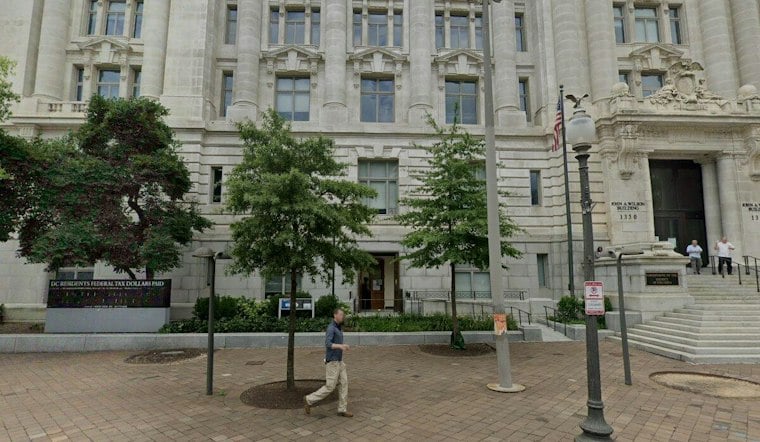
A D.C. Council bill introduced this week would raise the mayor's salary from $250,000 to $290,000, but under district law, the increase cannot take effect until a new mayor takes office in January 2027 — meaning current Mayor Muriel Bowser would never see the extra money even if the measure passes before she leaves.
A Raise That Skips the Current Mayor
Councilmember Anita Bonds introduced the bill, which would also raise the salaries of the D.C. Council chair and the district's attorney general, according to WTOP. Phil Mendelson currently serves as council chair and Brian Schwalb as attorney general, and both of their salaries are legally pegged $10,000 below whatever the mayor earns. That tethering mechanism was established under D.C. law to keep executive and legislative pay scales aligned, as reported by the Associated Press.
District law also prohibits a sitting mayor from collecting a pay increase during an active term, a statutory restriction meant to prevent officials from voting to instantly enrich themselves while still in office, per the same Associated Press report. Bowser, who has earned $250,000 annually since 2023, has already announced she won't seek a fourth term. The seat is likely to go to Councilmember Janeese Lewis George, who represents Ward 4 and won the district's June Democratic primary after defeating former council member Kenyan McDuffie and several other candidates, per WTOP's reporting.
Cost-of-Living Adjustments on the Table
Beyond the one-time jump, Bonds' bill would open the door to future cost-of-living adjustments for the mayor's salary, likely based on the Consumer Price Index for All Urban Consumers — the same index already used to adjust council members' pay. D.C. Council members currently earn a base salary of $171,547.60 as of January 2026, with those figures rising annually through CPI-linked increases, according to data from the Council of the District of Columbia.
The proposed jump would not be unprecedented in scale. The council previously approved a $48,000 salary increase in December 2006, lifting mayoral pay from $152,000 to $200,000 starting with incoming Mayor Adrian Fenty in 2007, following eight years of stagnant pay, according to The Washington Post's reporting from that period. More recently, the mayor's salary rose from $200,000 to $220,000 in a 2018 bill that took effect in 2019, then climbed again to $250,000 in 2023, according to historical context compiled by Business Insider.
How D.C. Would Stack Up Nationally
If approved, a $290,000 salary would place the D.C. mayor among the five highest-paid municipal chief executives in the country, trailing Oxnard, California, as well as mayors in San Francisco and Los Angeles, who each earn over $300,000 annually, per benchmarking data from Visual Capitalist. The comparison stands in contrast to New York City, where Mayor Zohran Mamdani rejected a City Council proposal in July 2026 that would have raised his $258,750 salary to $305,800, saying the increase would not benefit city residents, the same Visual Capitalist analysis notes.
The proposed $290,000 figure would still trail several non-elected D.C. executive positions. The D.C. Public Schools Chancellor and the Metropolitan Police Department Chief both currently out-earn the $250,000 mayoral salary, since agency heads are compensated on separate, market-competitive pay tables, according to a 2021 report from the Washingtonian. Overtime pay has produced even starker gaps: one Metropolitan Police Department sergeant earned $361,000 in total compensation in fiscal year 2022, outpacing the mayor's base salary entirely, according to DCist.
What Happens Next
Before any of this becomes law, the bill must clear the full D.C. Council and be signed by Mayor Bowser herself. Even then, the increase faces a mandatory 30-day congressional review period under the District of Columbia Home Rule Act of 1973, which gives Congress final disapproval authority over District legislation, according to a legal analysis from Paul Hastings LLP. Only after council approval, mayoral sign-off, and that federal review period would the new salary structure take effect — putting the earliest possible start date at the beginning of the next mayoral term in January 2027.





