

























































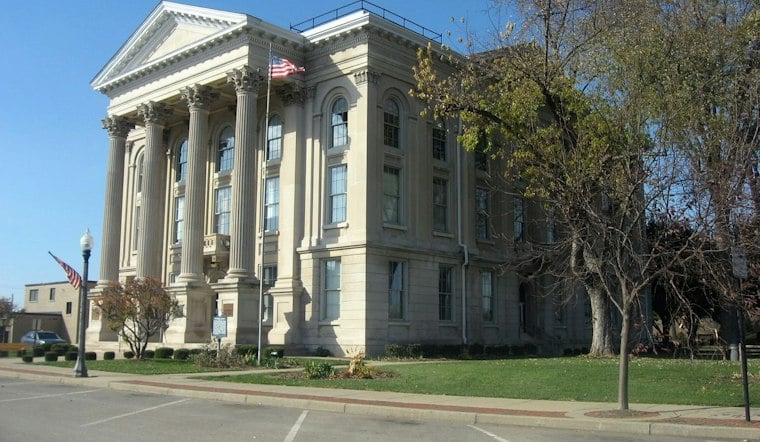
Dearborn County officials are trying to settle a question that has split rural neighbors, developers and the county's own commissioners: how big is too big when it comes to solar farms in the Tri-State area? The Dearborn County Plan Commission reviewed a solar-focused zoning draft during a meeting held Monday, the latest step in a yearlong rewrite of rules covering everything from a homeowner's rooftop panels to utility-scale arrays spanning hundreds of acres.
The push to rewrite the county's solar rules traces back to February, when county commissioners passed a one-year moratorium to halt commercial solar farms and data centers from coming into the county, according to WKRC. That pause was meant to buy time for officials to write a comprehensive ordinance rather than react project by project, and as that window nears its end, the pressure to finalize language has intensified.
The draft itself is sprawling. WCPO reports the new ordinance spans more than 50 pages and governs solar installation, maintenance and use ranging from personal installation on privately owned homes to small and large business installation up to arrays spanning hundreds of acres. That breadth is part of why the review has dragged on, with county committees working line by line through farmland protections, battery-storage language, community-solar rules, permitting and enforcement, the same draft reviewed by a county committee that opted to compile comments for the planning commission rather than edit the text in-session, per Citizen Portal.
The 500-Acre Versus 1,200-Acre Fight
At the center of the dispute is a stark gap between two competing size limits. The citizens' proposal suggests solar farms be no larger than 500 acres, while the county's draft ordinance set a maximum of 1,200 acres, the station notes. That more than doubles the ceiling residents are pushing for, and it puts Dearborn County's debate squarely in line with a statewide pattern: a Purdue Extension study found a trend towards stricter regulations in ordinances across Indiana, with some counties banning utility-scale solar outright and others capping total acreage.
That same Purdue analysis, which evaluated the 67 counties that regulate utility-scale solar projects as a primary use, found that Henry, Marshall and Steuben counties explicitly do not permit solar in any district. Nine Indiana counties, per the study, employ a cumulative acreage cap to limit how much land can go toward these projects, and setback requirements from non-participating neighbors' property lines show up in 45 of the counties studied. Special exceptions remain the most common approval path in general agricultural districts, used in 32 of the 56 county ordinances the researchers reviewed.
Property Value Protections Survive a Close Vote
Beyond acreage, Dearborn County's draft also tackles what happens to the value of land next door to a future array. Under a proposed property-value protection program, solar developers would be forced to engage with property owners within 1,500 feet of a solar array when a sale is pending, according to WCPO's reporting on the commission's deliberations. Developers would pay for a property assessment, and if an owner can prove the array directly caused a loss in value, the developer would be responsible for making up the difference.
That provision nearly got stripped out entirely. Commissioner Russell Beiersdorfer's motion to cut the property value protections failed in a 4-4-1 vote, leaving the safeguard in the draft for now, the outlet reported. The debate has real-world stakes beyond hypotheticals: a proposed 1,200-acre Linea Energy solar farm in Manchester has been cited as the kind of project that could directly affect nearby property owners under the rules being written.
What Happens Next
If the Plan Commission did not reach a vote during Monday's meeting, another special plan commission meeting is scheduled for Nov. 12, and a vote could happen then, per WKRC's reporting. Until that vote, Dearborn County's acreage cap, setback distances and property-value safeguards remain unsettled, with county residents and developers alike watching to see which draft, and which number, ultimately wins out.
Statewide, lawmakers have already moved to limit how flexible local governments can be in approving these projects. Under Indiana Senate Bill 54, a permit authority may not establish a zoning overlay district for one or more commercial solar energy projects after December 31, 2025, unless each underlying zoning district already permits commercial solar projects under the existing zoning ordinance, according to the Indiana General Assembly. That provision adds another layer of constraint to whatever Dearborn County ultimately adopts, ensuring the fight over acreage caps and setbacks is only part of a broader, statewide recalibration of how Indiana counties handle solar development.




