

























































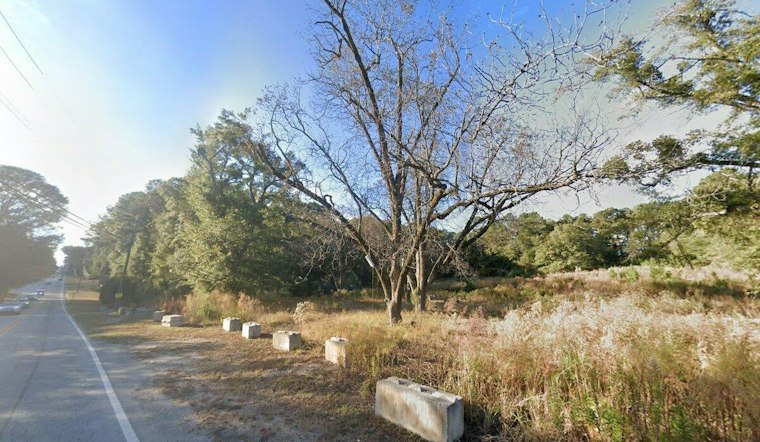
DeKalb County officials and community leaders broke ground Wednesday on Fire Station 27 in unincorporated Lithonia, marking the first brand-new station added to the county's fleet since Station 26 opened in 2006. The $9.7 million facility is rising at 7558 Pleasant Hill Road near the Rockdale County line in southeast DeKalb, an area local leaders say has gone without dedicated coverage for far too long.
The groundbreaking ceremony drew DeKalb County CEO Lorraine Cochran-Johnson, who led elected officials, community representatives and firefighters in a ceremonial dirt toss to mark the occasion, according to Decaturish. Cochran-Johnson said the site was chosen specifically to improve emergency coverage in a part of the county that has historically waited longer for help to arrive. Fire Rescue Chief Melvin Carter echoed that reasoning, saying the department used data to select the location and expects the new station to reduce response times once it opens.
A Station Built to Outlast the Old Model
At 14,600 square feet across two stories, Fire Station 27 will be considerably larger than the aging houses it's meant to supplement. Construction on the project, WSB Radio reports, is already underway, with the county investing in upgraded safety features throughout the design. The station will include individual sleeping quarters, a commercial-grade kitchen, a fitness room and community space intended for local meetings and events.
Those amenities sit alongside a design choice drawing particular attention from fire officials: the building is split into hot, warm and cold zones to separate contaminated work areas from living and dining spaces. The station's report notes the zoning is meant to limit firefighters' exposure to carcinogens that can cling to uniforms worn in the field, with separate areas set aside for gear and laundry to keep those contaminants away from sleeping quarters.
Part of a Broader Rebuilding Push
Fire Station 27 isn't an isolated project. Construction has also begun on replacement stations for Station 5 in Tucker and Station 16, and the county is planning to rebuild Station 14 while adding new Stations 28 and 29 to serve Stonecrest and Brookhaven, respectively. Major renovations are also scheduled for Stations 18, 19 and 20. The Champion Newspaper reports that Stations 5, 16 and 27 moved into construction together after the Board of Commissioners approved a single contract covering all three facilities in May, with Station 16's build expected to follow a multiyear schedule.
The comparable projects underscore how closely DeKalb has standardized its new-station design. Station 16, according to WSB-TV, is a $10.9 million, two-story, 14,601-square-foot building with the same hot-and-cold zoning and a separate area for soiled turnout gear away from living quarters. Station 5, meanwhile, carries an $8.2 million price tag and is relocating from a 1952 building on Lawrenceville Highway to a new site on Cowan Road in Tucker, as part of what Decaturish has described as a five-station SPLOST-funded building program.
Local Leaders Frame the Station as Economic Investment
Beyond faster response times, elected officials tied the project to broader neighborhood stakes. District 5 Commissioner Mereda Davis Johnson said the station closes a longstanding service gap in her district, while Super District 7 Commissioner Ladena Bolton said investments like this one support economic development by strengthening neighborhoods and attracting businesses. Lithonia Mayor Pro Tem Darold Honore added that faster response times can also help keep homeowners' insurance costs down.
Stonecrest Mayor Jazzmin Cobble emphasized the cooperation between city and county governments in putting SPLOST dollars toward public safety projects like this one. Christopher Sanders, executive director of the East Metro DeKalb Community Improvement District, said fast emergency response gives local businesses and property owners a sense of security. The entire project is funded through proceeds from DeKalb County's Special Purpose Local Option Sales Tax program, the same funding mechanism backing the county's other station rebuilds and additions.



