

























































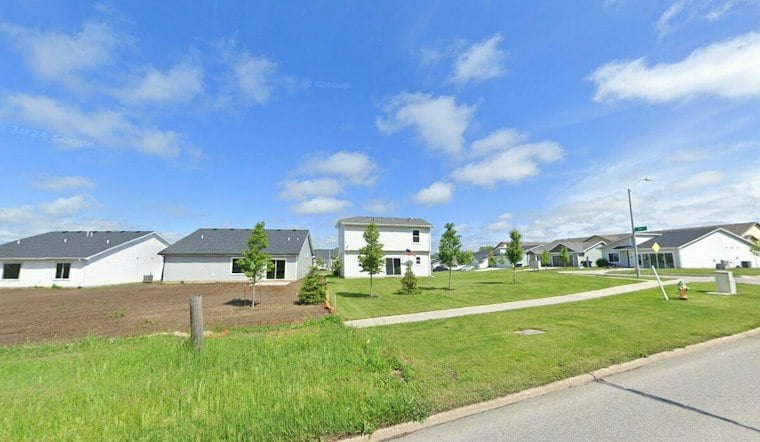
Fifteen new affordable townhomes are headed to a stretch of Hubbell Avenue in Des Moines, part of a $5.3 million project that developers say is aimed squarely at families struggling to find room to grow in a tight housing market. The project, known as phase 3 of Baker Creek Townhomes, would sit near the Crest at Baker Creek Apartments in the 4500 block of Hubbell Avenue, and construction is expected to begin in the coming months.
The development is a partnership between Hubbell Realty Company and Anawim Housing, according to Axios, which reported that the Des Moines City Council still must approve the final development terms and an amendment to the urban renewal plan before the project can move forward. The council has already approved preliminary terms for an estimated $221,000 in tax incentives over 20 years, per the same report. Hubbell Realty describes the project on its own site as an effort to “expand the affordable housing choice” in the metro, according to Hubbell Realty.
The 15-unit project will be a mix of nine two-bedroom townhomes and six three-bedroom townhomes, according to Business Record. Four of those units will be reserved for households earning 40% of area median income, while the rest will be set at 60% AMI, the outlet reported. Business Record also noted that Baker Creek was among nine communities included in an Iowa Finance Authority announcement awarding $11.3 million in Federal Housing Tax Credits, and that construction is expected to start in late 2026.
More Phases Planned for Adjacent Land
The Business Record report also indicated that two additional phases of Baker Creek Townhomes are planned for adjacent land, suggesting the Hubbell Avenue corridor could see even more family-sized housing in the years ahead. Axios framed the project as an effort to bring family-sized housing to a metro already facing an affordable housing shortage.
That shortage is well documented. As of 2022, the Des Moines metro had just 23 affordable and available housing units for every 100 extremely low-income households, according to Axios — a figure well below both Iowa's statewide average of 42 units and the national average of 34. The outlet's reporting also found that “naturally occurring affordable housing” is steadily disappearing as the region grows, and that Des Moines simply doesn't have enough affordable and available housing to meet demand.
A Regional Squeeze on Smaller Homes
Families looking for smaller, attainable purchasing options are running into a particularly tight market. The median new-construction home price in the Des Moines area sits around $467,000, a price unaffordable for 74% of households, Iowa Public Radio reported in May. That same report noted that the Central Iowa Community Land Trust had listed three newly built affordable homes in Des Moines, with a buyer already identified for one and applications accepted for the other two through May 25.
A separate Axios analysis found a shortage of smaller attainable purchasing options for families across the metro, pointing to a Polk County Housing Trust Fund report that identified roughly 740 viable underused parcels — including sites at churches and strip malls — that could support new housing. That report also floated smaller-scale alternatives, including an approximately 875-square-foot cottage court unit estimated to cost $154,000 to build and an 830-square-foot triplex unit estimated at $115,600.
City Policy Backs Mixed-Income Development
The Baker Creek project also fits within the city's broader housing policy. The Des Moines City Council's Citywide Housing Strategy prioritizes expanded investment in existing housing and support for new mixed-income development, according to the City of Des Moines. A related strategy amendment established continued approval of Low-Income Housing Tax Credits and clarified affordable-unit standards when tax increment financing is used for new developments, the city said.
With council approval still pending on the final development terms and the urban renewal plan amendment, Baker Creek's third phase remains a work in progress. But between the units already planned, the two additional phases slated for adjacent land, and a citywide strategy built around mixed-income housing, the project signals a continued push to chip away at a shortage that has left many Des Moines-area families with few affordable places to land.




