

























































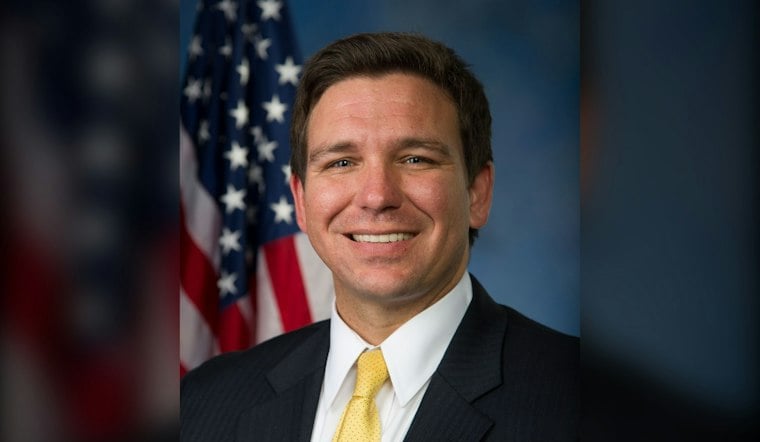
Gov. Ron DeSantis signed a death warrant Monday for 64-year-old Jesse Guardado, scheduling his execution for November 5 at Florida State Prison in a case that could push the state past its own record for executions carried out in a single year. If three other executions already scheduled for this month go forward first, Guardado would become the 20th person put to death in Florida in 2026, surpassing the 19 executions the state carried out in 2025.
DeSantis has now signed his second death warrant within a week, according to the CBS News Miami team. That 2025 total was already the most executions Florida had carried out in a single year since capital punishment resumed in the state in 1976, and as reported by the Orlando Sentinel, DeSantis's warrant stated that executive clemency had been considered but was determined not appropriate.
Guardado was convicted of killing Jackie Malone, a 75-year-old Walton County woman, in September 2004. According to case facts cited by the Sentinel, Malone had helped Guardado find a place to stay and a job after he got out of prison. He entered her home at night on September 13, 2004, claiming he needed to use the telephone, then attacked her with a breaker bar, stabbed her in the chest and slit her throat during what the same report describes as a crack cocaine binge, stealing her purse, jewelry box, briefcase, cell phone, money and other belongings.
A Decades-Long Appeals Process Reaches Its End
Guardado pleaded guilty to Malone's murder and was sentenced to death in October 2005. The Florida Supreme Court upheld that sentence in 2007, and the case has continued working through federal appeals since. Guardado argued his trial attorneys were ineffective during the penalty phase, failing to investigate and present mitigating evidence and failing to prevent three jurors from participating in that phase of his trial — arguments a three-judge panel of the 11th U.S. Circuit Court of Appeals rejected in 2024, per the Sentinel's reporting and court records in Jesse Guardado v. State of Florida.
Guardado's execution is one of four scheduled in Florida over a 23-day span. James Robertson, 63, and William Lee Thompson, 74, are both set to be executed October 13, with Robertson scheduled to die at Charlotte Correctional Institution for murdering his cellmate, Frank Hart, in 2008. Thompson was convicted of murdering, kidnapping and sexually battering Sally Ivester, who was killed 50 years before the CBS News Miami article's publication. William Reaves, 77, is scheduled for execution October 20 for killing Indian River County Sheriff's Deputy Richard Raczkowski in 1986.
Florida's Outsized Share of the Nation's Executions
The numbers underscore how far Florida has pulled ahead of the rest of the country on capital punishment. As of August 18, 2026, Florida had carried out 13 executions for the year and accounted for 57 percent of all executions nationwide, according to a report from the Death Penalty Information Center. States other than Florida carried out just seven executions in the first six months of 2026, down from 18 during the same period in 2025, the organization found.
Florida's pace has also quickened. The interval between executions narrowed from an average of one every 16 days in 2025 to roughly one every 14 days between February and August of 2026, per the same report. Through August, the state had carried out 13 executions and imposed five new death sentences, and its death row population of 256 trails only California's. Before 2025, Texas was the only state to exceed 18 executions in a single year, something it last did in 2009.
Tennessee's Botched Execution Raises Questions About the Drugs
Florida's acceleration stands in contrast to trouble unfolding in Tennessee, where Gov. Bill Lee halted executions after a September 30 attempt to execute Christa Pike failed. According to WSMV, Pike received two syringes of pentobarbital but remained alive and, according to her attorneys, snoring; Lee ordered a comprehensive, third-party review and called off the state's remaining scheduled execution for the year. Tennessee had also abandoned the attempted execution of Tony Carruthers in May after medical staff failed to establish IV access for more than an hour, the station reported.
Tennessee uses a single-drug lethal-injection protocol centered on pentobarbital, having switched to that method after earlier problems with its three-drug approach, according to a report from ABC News. Florida, by contrast, uses a three-drug protocol of etomidate, rocuronium bromide and potassium acetate, sequenced to induce unconsciousness and sedation, paralyze the body, and stop cardiac function, the Sentinel reported. The state stopped using pentobarbital sodium in its own three-drug cocktail back in 2013 amid a shrinking supply. Floridians for Alternatives to the Death Penalty has warned that a failure like Tennessee's could happen in Florida as well, according to the Sentinel's reporting.





