

























































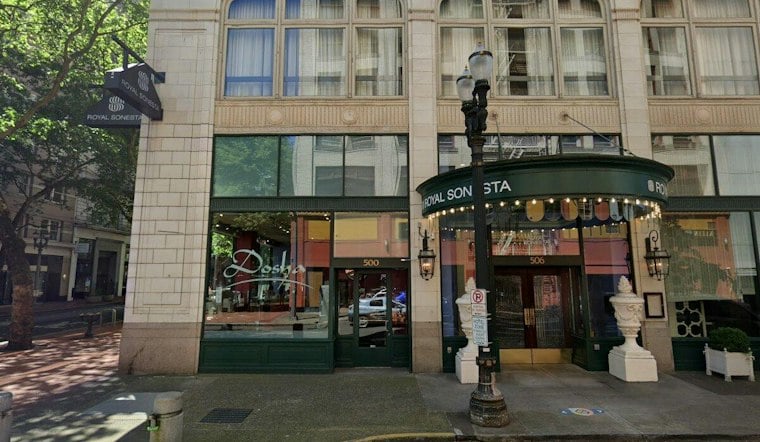
Downtown Portland's Royal Sonesta hotel, a 221-room property that traded hands for $108.3 million in 2016, has just sold for $6.83 million — a drop of roughly 93 percent in a decade. Laxmi Hotels Group picked up the hotel as part of an eight-property portfolio purchase, according to reporting that surfaced the deal this week.
The sale was reported by the Daily Mail, which reported the $6.83 million figure. Details on the transaction were also confirmed to the Portland Business Journal, which reported that Laxmi Hotels Group acquired the hotel as part of an eight-property portfolio purchase. Laxmi also picked up properties in Minneapolis and Charlotte as part of its broader buying spree, with the Minneapolis Royal Sonesta — a 360-room property — selling at a similarly steep 93 percent discount for $5 million, per reporting attributed to the St. Paul Business Journal. Laxmi Hotels Group CEO Kunal Dave confirmed the hotel deal to the Portland Business Journal. The Royal Sonesta in downtown Portland currently lists rooms starting at $145 a night, with suites running as high as $236.
A Hotel Market Still Digging Out
The Royal Sonesta's steep discount lands amid a broader downtown Portland hotel slump that has outlasted the pandemic by years. Occupancy at downtown hotels sat at roughly 62 percent in 2025, nearly 10 percentage points below 2019 levels, according to OPB. Revenue per available room was $13 lower last year than it was in 2019, the outlet reported.
The station's reporting points to business travel as the central culprit, since office workers and visitors have not returned downtown at their old volumes. The market is also oversupplied: filling roughly eight full-size hotels downtown would require around 1,400 additional stays a night, per the same account. Visitor spending on hotels and motels across the Portland region did tick up 2 percent in 2025 compared with 2024, but much of that spending appears to be landing outside downtown, with the Beaverton area described as the most resilient local hotel market as corporate investment and business travel shift toward the city's western suburbs.
Office Vacancies and Foot Traffic Tell a Mixed Story
The hotel slump tracks alongside a broader office-sector retreat downtown. Quarterly office leasing fell from an average of 400,000 square feet in 2024 to just 250,000 square feet in 2025 — the lowest level on record, according to the Portland Metro Chamber. Central City office vacancy averaged more than 10 million square feet in 2025, also the highest vacant inventory on record, the chamber reported.
Not every downtown indicator points the same direction, though. Portland's Central City foot traffic has actually recovered to about 86 percent of pre-pandemic levels, the chamber found — putting it roughly in the middle of a peer group that includes Milwaukee, which is closest to a full recovery at about 92 percent, and Minneapolis, which lags at about 83 percent. The chamber's report concludes that Portland's path forward depends less on restoring old commuting patterns and more on building a Central City that draws a stronger mix of residents, visitors and activity. For comparison, OPB's reporting notes that San Francisco's hotel industry has recovered more strongly than Portland's, as distressed properties there attracted investors following a shift in public perception and an AI-driven uptick in office activity.
Other Portland Hotels Have Sold at a Loss, Too
The Royal Sonesta isn't the only downtown Portland hotel to change hands for a fraction of its former value. Pebblebrook Hotel Trust sold the 174-room Hotel Zags for $10 million, with Texas-based investment company Newcrest Image confirming the acquisition to KOIN. The Hotel Zags had operated at an $800,000 loss between late August 2025 and late August 2026, despite being named among the top hotels in the Pacific Northwest in Condé Nast Traveler's 2024 Readers' Choice Awards. Portland's RiverPlace Hotel was also acquired at a steep markdown, selling to Amaterra Hospitality Group for $11 million, per the same outlet.
Homelessness Figures Add Context, Not a Verdict
Any discussion of downtown Portland's struggles inevitably touches on homelessness, which has also been rising. A Portland State University report found more than 12,000 people experiencing homelessness, a 67 percent increase from 2023. The university's report notes that changes in how administrative data was incorporated substantially increased Multnomah County's unsheltered count that year, and researchers say the increases may also reflect factors such as evictions and a continued lack of affordable and accessible housing.
None of the available reporting connects those homelessness figures directly to the Royal Sonesta's reported sale price, and the hotel market data points instead to business travel patterns, office vacancies and an oversupplied lodging sector as the dominant forces behind downtown Portland's prolonged slump. Whether the city's broader quality-of-life challenges play any role in investor decisions remains a question the available record does not resolve.





