

























































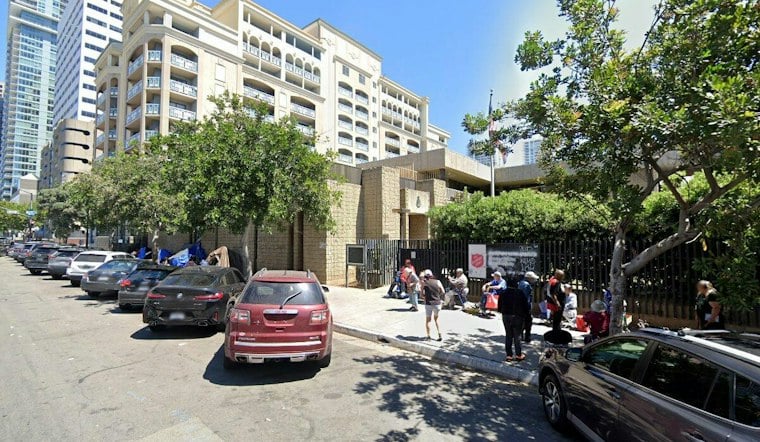
For 52 years, the Salvation Army's downtown San Diego site has functioned as a safety net for people without housing, offering shelter, food, spiritual guidance and job training. Now that property is being torn down and rebuilt into a larger campus called the Rady Center, with a formal groundbreaking planned for November 9, according to FOX 5 San Diego. The old headquarters building had served the community for 50 years before demolition began.
The Salvation Army describes the effort as moving its downtown headquarters into a larger, more efficient facility, according to the organization's own project page for The Salvation Army San Diego. The redevelopment will cover a full Salvation Army-owned block and add roughly 200,000 square feet of housing and support-service buildings alongside the existing Silvercrest Senior Residences, which already provide 100 affordable units for older adults. Wakeland Housing and Development Corporation is the lead developer, managing entitlement, financing, design, construction and ongoing asset management for the site, per the same project page.
Two Phases, One Rebuilt Campus
The project is being built in two phases. The first phase includes a headquarters building with wraparound services and temporary housing meant to help people transition off the streets, offering more than 100 beds with social services, including designated beds for sober living. Phase one is slated to break ground in fall 2026, with an opening planned for 2028, the Salvation Army's project materials state.
The second phase will add permanent affordable housing for seniors, building on units already in place at the site. Planned services across the campus include a subsidized community health clinic, a food pantry, homeless outreach, case management, youth programs, senior meals, a chapel and spiritual support, along with workforce development aimed at helping people reintegrate into society. Once complete, the facility is set to be renamed the Salvation Army Rady Center.
A $50 Million Gift Behind the Build
Ernest and Evelyn Rady provided the lead gift in the Salvation Army's capital campaign, and the Rady family is expected to deliver a $50 million donation in person at the November 9 groundbreaking, per FOX 5 San Diego. The Salvation Army's own project page describes Ernest and Evelyn Rady as contributing $20 million specifically for construction, in addition to funding an endowment for the center, and says the organization has secured more than $50 million in donor support overall to launch the project.
Project costs and timelines have shifted across years of reporting. The San Diego Union-Tribune described the effort in 2022 as a $100 million project, while NBC 7 San Diego later reported it as a $119 million public-private partnership with 220 short-term housing beds, sober living beds and affordable rental homes. The Union-Tribune's 2023 coverage projected a 2027 opening, while NBC 7's more recent reporting states the Rady Center is now expected to open in fall 2028 — timelines that have not been publicly reconciled.
Need Outpacing Housing Placements
The rebuild comes as San Diego's homelessness numbers remain a persistent challenge. NBC 7 San Diego has reported that the number of people falling into homelessness for the first time has outpaced the number of people securing housing for two years, with private donors increasingly expected to fill gaps left by unreliable federal funding for homeless programs. A January 2023 point-in-time count cited by the Union-Tribune found more than 10,250 people experiencing homelessness in San Diego County on any given night, while a more recent count from the Regional Task Force on Homelessness San Diego found 9,905 people experiencing homelessness countywide, down from 10,605 the year before.
The Salvation Army has pointed to outcomes from its existing programs to make the case for the investment. The Union-Tribune reported that 75 percent of people exiting the organization's transition housing programs remain stably housed, while the San Diego Business Journal reported that 78 percent of people who stayed in its transitional housing moved on to permanent housing, with 95 percent of those placed in permanent housing staying there. Similar expansion efforts are underway elsewhere, including a planned Salvation Army social-services campus in Dallas that the Dallas Morning News described as a comparable push to grow regional homeless services.





