

























































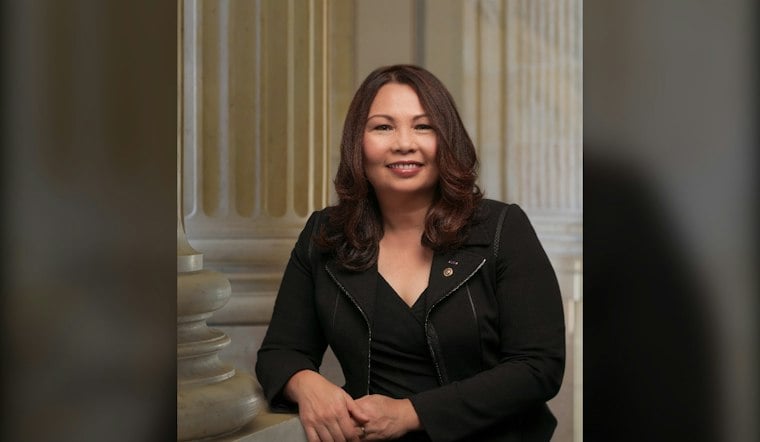
Sen. Tammy Duckworth and Cincinnati Mayor Aftab Pureval stood before an invitation-only crowd at a private residence in Dunwoody on October 2 with a blunt message for Georgia's Asian American and Pacific Islander community: your vote is the margin. The gathering, aimed squarely at mobilizing AAPI turnout ahead of the November 3 midterm election, drew Georgia state legislators and organizers who argue that a community once treated as a political afterthought now holds the power to decide statewide races.
A Private Gathering With a Public Urgency
The event, reported by the Georgia Asian Times, was co-organized by Shekar Narasimhan, founder and chairman of the Asian American Victory Fund, and Lani Wong. It brought together Georgia AAPI legislative leaders Rep. Sam Park, Rep. Michelle Au, and Rep. Long Tran alongside Duckworth and Pureval, with the focus squarely on getting community members to the polls in November. Pureval told the crowd that 32 days remained to preserve what he called a dream for the next generation, framing the stretch of early voting ahead as a narrow but critical window.
Duckworth, an Iraq War veteran and the first Thai American to serve in the U.S. Senate, leaned into her own biography to make the case for civic engagement. She told attendees she did not speak English until age 8 and grew up translating for her mother, and she urged Asian Americans to embrace what makes them different rather than shrink from it. Asian American cultures, she said, are a superpower. She also warned against accepting respect that is contingent on keeping quiet, and pointed to her own fight to hold up President Joe Biden's nominees in order to push for an Asian American Cabinet secretary as evidence of what persistent pressure can accomplish.
The Math Behind the Message
Duckworth told the room that AAPI voters have political power specifically when they function as the margin of victory, and she urged attendees to vote not just at the top of the ticket but in local races too, noting that it is local library boards that decide which books are banned and PTAs that decide what is taught in schools. Her point was reinforced by a detail about the group backing the effort: Perimeter PAC is named after a young crew member who held off enemy fighters after Duckworth's helicopter was shot down in Iraq.
Pureval put the arithmetic in blunter terms, telling the crowd that Georgia elections can be won if one in 28 AAPI community members brings one additional voter to the polls. That framing tracks with state-level data: Georgia has roughly 320,000 eligible Asian American voters, according to the event's organizers, and the 2020 presidential race in the state was decided by fewer than 12,000 votes. Research from the The Hill found that Asian American turnout in Georgia grew by nearly 62,000 voters between 2016 and 2020, a swing larger than Joe Biden's eventual margin.
A Report Backs the Case for AAPI Influence
That argument is bolstered by a joint report from Asian Americans Advancing Justice-Atlanta and the Asian American Advocacy Fund titled The Future of Voting: Asian American and Pacific Islander Voters in Georgia. According to Asian Americans Advancing Justice-Atlanta, Georgia's AAPI population has grown 52% since 2010 and now totals 486,327 residents, concentrated most heavily in Forsyth, Gwinnett, Fulton, DeKalb, and Cobb counties. The report counted 196,210 registered AAPI voters statewide and found a record 64.6% turnout rate in 2020 that included 45,000 first-time voters, concluding that the electorate is capable of delivering critical margins of victory at the city, county, state, and congressional level.
The report also found that AAPI voters backed Democratic candidates at a rate of 57.9% in the 2020 general election and 58.1% in the 2021 Senate runoff. But national reporting cautions against assuming the bloc is locked in. Per NPR, AAPI voters have historically voted overwhelmingly Democratic but have not been strongly tied to a specific party, making them persuadable targets for both sides. The Hill separately noted that Asian American support for the Democratic presidential candidate declined between 2020 and 2024, with Donald Trump gaining 10 points among Asian voters over that span.
Pureval's Personal Stakes and Sharp Words for Trump
Pureval, the son of a Punjabi father and a Tibetan refugee mother, told the Dunwoody audience that his parents were not yet citizens when he was born, and that his family's story went from refugees to him becoming Cincinnati's first Asian American mayor. He praised metro Atlanta's AAPI communities from Buford Highway to Chamblee, calling the region's diversity a strength rather than a liability.
He also used the platform to criticize President Donald Trump directly, accusing him of scapegoating immigrants and Asian Americans and condemning the president's push to restrict birthright citizenship. A baby's future, Pureval told the crowd, should be bigger than a president's prejudice. The Fourteenth Amendment's Citizenship Clause, per the text of the amendment cited in a recent Supreme Court opinion, states that all people born or naturalized in the United States and subject to its jurisdiction are citizens of both the United States and the state where they reside.
Looking Ahead to November
Both Duckworth and Pureval closed by urging the crowd to reelect Sen. Jon Ossoff, and Pureval voiced his support for Keisha Lance Bottoms in the governor's race. The appeals come as national outlets have flagged Georgia as a state where AAPI and South Asian voters in particular could prove decisive. NBC News has reported that South Asian voters could be decisive in Georgia, Michigan, and Pennsylvania because their populations may exceed recent presidential victory margins, noting that Georgia had more than 82,000 South Asian eligible voters even as Joe Biden's 2020 win there came down to 11,779 votes.
Nationally, Pew Research projected that 15 million Asian Americans would be eligible to vote in the 2024 election cycle, representing 6.1% of all eligible voters, with that population growing by roughly 2 million people, or 15%, between 2020 and 2024. Whether that growth translates into decisive turnout in Georgia's 2026 midterms remains to be seen, but for the organizers gathered in Dunwoody this week, the message to AAPI voters was unambiguous: show up, because the margin is you.




