

























































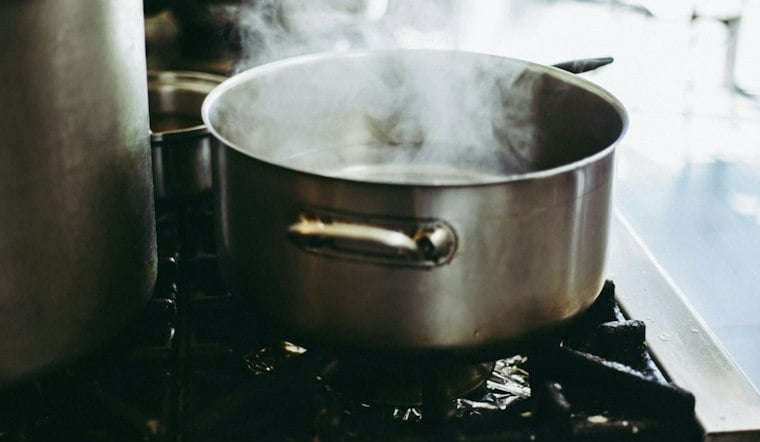
Residents of Slick, a tiny Creek County town of roughly 151 people, are being told to boil their tap water or switch to bottled water after state regulators confirmed E. coli bacteria in the public water supply. The Oklahoma Department of Environmental Quality issued the mandatory boil order on October 3, and officials say it will stay in place until the system proves itself clean.
The Slick Public Water Supply, a small community groundwater system registered under state ID OK3001921, serves 148 people, according to TapWaterData. The scale underscores just how exposed this community is: as reported by News On 6, customers should boil tap water to a full rolling boil for one minute before using it for drinking, preparing food, making baby formula, making ice, brushing teeth, washing dishes, bathing infants who may drink bath water, or cleaning open wounds. Anyone who prefers can simply use bottled water or another acceptable source instead.
Health Risks Tied to the Bacteria
E. coli contamination can cause illness, including diarrhea, cramps, nausea, and headaches, the station's report notes. The bacteria pose particular concern for people with weakened immune systems, and infants, young children, some elderly residents, and people with severely compromised immune systems face greater health risks from the exposure. Slick customers are being warned specifically not to drink unboiled tap water while the advisory remains active.
What actually caused the contamination in Slick has not been determined. Per the same account, bacterial contamination in public water systems can generally result from runoff entering a drinking water source, a break in distribution pipes, or a failure somewhere in the water treatment process — but which of those, if any, triggered the Slick incident remains unspecified. Town leaders are working with the Oklahoma Department of Environmental Quality to investigate, and officials say customers will be notified once the contamination has been corrected.
A Strict State Timeline for Lifting the Order
Under Oklahoma Department of Environmental Quality and Safe Drinking Water Act compliance rules, an E. coli detection like this one is treated as an acute health violation, according to the Oklahoma Department of Environmental Quality. The order is tied to follow-up testing, and the system must produce two consecutive days of clean bacteriological test results before it can be lifted.
Slick's predicament fits a broader pattern playing out across Oklahoma this year. The Oklahoma Department of Environmental Quality issued a comparable boil advisory for parts of Moore in Cleveland County in July after routine sampling verified E. coli contamination there. That same month, an E. coli outbreak in the Tonkawa Public Water Supply in Kay County forced both the city of Tonkawa and the Tonkawa Tribe under a boil order, prompting emergency bottled water distribution sites that required proof of a utility bill, according to Ponca City Now. In September, the agency placed the Copan Public Works Authority in Washington County under its own mandatory boil order over elevated turbidity and low disinfectant levels. Hoodline has previously reported on an E. coli boil order in Hydro, Oklahoma, another rural town caught in this year's run of contamination cases.
A Boomtown Turned Small Rural Community
Slick's current struggles stand in sharp contrast to its origins. The town was founded in 1920 as an oil boom settlement named after oilman Thomas B. Slick, and it swelled to an estimated population of over 2,500 by 1922, according to the Oklahoma Historical Society. Once oil production declined, the town's railway line was abandoned by 1930, and Slick has remained a small community ever since. Creek County, where Slick sits, has an estimated population of 74,967 as of 2025 and is part of the broader Tulsa Metropolitan Area, with Sapulpa serving as the county seat, per USAFacts.
For now, residents in Slick are left boiling water and waiting. Whether Creek County or town leaders will set up emergency bottled water distribution points for low-income households, as happened in Tonkawa, has not been addressed publicly, and officials have given no timeline beyond the standard two-day clean-test requirement before the order can be lifted.




