

























































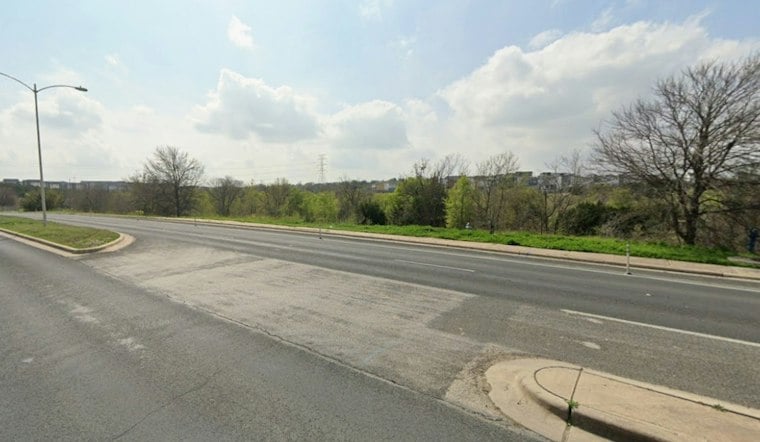
A youth baseball and softball nonprofit that has spent years bouncing between rented seasonal fields is finally getting a home of its own. RBI Austin has broken ground on its first permanent facility, a 33-acre campus at 7401 Loyola Lane in East Austin, with completion expected in late 2027.
The organization is an affiliate of Major League Baseball's RBI program, and as reported by CultureMap Austin, the new Youth Development Complex will include an outdoor multiuse ball field, a weight room and a covered turf field training center for year-round practice regardless of weather. A headquarters building on the site will also house classrooms where participants can take part in mentoring, get academic support, and even access job training, according to the same report.
A Growing Program, With an Unsettled Timeline
RBI Austin served 1,706 kids in 2025 while relying on rented seasonal locations, according to CultureMap Austin. The permanent campus is intended to give the organization a stable, year-round base. Its history, however, has more than one starting point: the organization’s own accounts place key milestones in both 2009 and 2011.
What the local planning record shows
A 2013 Austin/Travis County Community Health Improvement Plan listed expanding access to school facilities and other recreational spaces through joint-use agreements as a strategy. That historical planning document does not provide recent measures of youth physical activity or recreation access, and it does not establish baseball participation levels or a shortage of baseball fields.
Co-founder Matt Price said community support for the project reflects its importance to the 1,706 children and families involved, as well as future generations. He described the campus as a year-round setting for youth development beyond the field, CultureMap Austin reported.
A Bigger Footprint, A Bigger Mission
The complex is projected to double RBI Austin’s reach within three years, allowing it to serve 3,400 kids annually, up from the 1,706 it reported serving in 2025, according to CultureMap Austin.
That growth trajectory is not new for the organization. Founders Matt Price and Andy Harris got their start helping coach an understaffed Reagan High School baseball program in 2009, according to RBI Austin's own account, though CultureMap Austin's reporting separately describes 2009 as when the organization itself started. RBI Austin's website also states the group grew from 118 kids in 2011 to 1,706 kids in 2025 — a timeline that sits alongside a 2017 newsletter in which the organization described its own founding as having happened in 2011, a discrepancy the available records do not resolve.
Big-League Backing for a Community Build
The Nolan Ryan Foundation and the Round Rock Express have supported RBI Austin, according to CultureMap Austin. Reid Ryan, Nolan Ryan’s son and a former Texas Rangers player, called the groundbreaking a milestone years in the making and said baseball instruction, coaching and mentorship at the facility could affect young people’s lives, the outlet reported. Nolan Ryan played for the Houston Astros and Texas Rangers, among other professional teams.
Money, unsurprisingly, remains central to getting the complex finished. RBI Austin has raised $7.2 million so far toward a $15.1 million project goal, putting it almost halfway to its fundraising target, according to CultureMap Austin.
Part of a Broader RBI Movement
RBI Austin's building push echoes similar efforts in other cities tied to Major League Baseball's RBI initiative. In Milwaukee, a 9,000-square-foot facility near 38th and Mitchell was planned as a home for the Milwaukee Baseball Club and the Milwaukee Brewers' Reviving Baseball in Inner Cities program, according to Athletic Business. For RBI Austin, the Loyola Lane groundbreaking represents a similar leap from temporary arrangements toward a dedicated space built specifically for its mission.
With construction now underway and a late 2027 completion date on the books, RBI Austin's leadership is framing the campus as the foundation for the organization's next chapter — one where baseball and softball fields share space with classrooms meant to support kids well beyond the diamond.





