

























































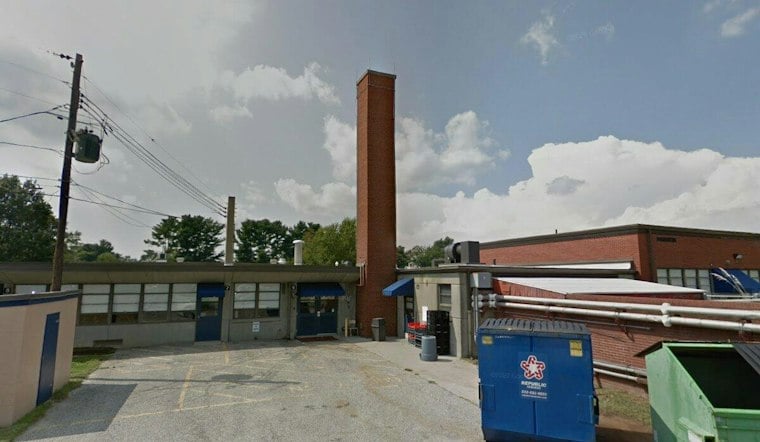
Three candidates vying to represent Louisville's East End on a newly shrunken Jefferson County Board of Education faced off Thursday night, sparring over which schools should close, whether the district's central office has actually shed enough jobs, and how JCPS should rebuild trust after a brutal year of budget cuts. Incumbent Taylor Everett, retired educator Veda Pendleton, and economist Neil Seftor made their case at the final of five candidate forums held ahead of the November election.
The race unfolds under the shadow of sweeping state intervention. Kentucky Senate Bill 4, enacted in April after legislators overrode a veto from Gov. Andy Beshear, shrank the Jefferson County Board of Education from seven members to five, redrew district boundaries, and forced every seat onto the ballot this November, according to WHAS11. Three sitting board members, including Everett, are now trying to hold onto seats under the new map. A companion measure, Senate Bill 1, also passed over Beshear's veto in April and shifted expanded day-to-day operational authority away from the board and directly to Superintendent Brian Yearwood, the station reports.
A Trimmed Field After a Residency Ruling
District 3, which covers East Louisville, originally drew four candidates, but a circuit court judge disqualified Gay Perry-Adelmann in September after ruling she did not live within the newly redrawn District 3 boundaries, WHAS11 reported. That left Everett, a staffing company leader who has served on the board since 2024, facing Pendleton, a retired educator with experience across K-12 schools and universities, and Seftor, an economist whose research has centered on evidence-based education decisions, according to the Louisville Courier-Journal.
The winner will represent a District 3 that covers East Louisville.
Closures Already Underway, More Debate Ahead
Closures Already Underway, More Debate Ahead The backdrop for the closure debate is stark: JCPS Chief Operations Officer Rob Fulk has said the district has room for roughly 17,000 more students than are currently enrolled, and the system is grappling with a budget deficit, the Courier-Journal reported. The board voted in January to close Zachary Taylor Elementary and Martin Luther King Jr. Elementary, amid a budget deficit, according to WHAS11.
Everett said two schools were closed in May and argued the district's closure decisions have repeatedly failed to properly involve communities, ask the right questions, or communicate clearly, telling the Courier-Journal that forums on future closures should not begin with a predetermined list of schools already in mind. Pendleton countered that closure decisions need to weigh instruction, the impact on children, and community effects alongside enrollment figures alone, noting that schools often function as community gathering places. Seftor took the most direct stance, saying he would be willing to close underutilized schools to use district resources effectively, though he argued effective programs and processes should be preserved even when moved into another building — underutilized schools, he said, simply cannot remain open.
Central Office Cuts Called Insufficient
All three candidates agreed on one point: recent cuts to the district's central office have not gone far enough. Pendleton said that when deficit discussions began in fall 2025, leaders prioritized central office reductions over cuts that would hit classrooms, but she argued the district has since created new positions under different titles even as others were eliminated, and said JCPS needs to honestly assess whether it actually reduced its budget or just its personnel on paper.
Seftor said the net reduction in central office staff has been tiny compared with cuts to school-level support resources, arguing the burden has fallen disproportionately on teachers and students — a dynamic he said was a main reason he decided to run for the board. Everett, who voted against a central office reorganization chart in April, said the cuts fell short of what was promised; he noted JCPS has hundreds of open classroom positions and argued central office staff could have been shifted into those roles instead of being cut loose. That reorganization was announced in spring, and in July Yearwood appointed more than 30 new leaders across executive and school administrative posts as part of it, as Hoodline previously reported.
JCPS has an estimated $2.5 billion in deferred maintenance needs, adding to the district's budget pressures as closure debates continue.
Legal Fights Continue Over Board Authority
The structural upheaval at JCPS has also spilled into the courts. In September, Franklin Circuit Judge Thomas Wingate struck down a provision of Senate Bill 4 that would have barred school district employees working more than 100 days a year from serving on school boards in Kentucky's major districts, ruling it amounted to unconstitutional special legislation, WHAS11 reported; the challenge had been filed by the Kentucky Education Association. Separately, the Jefferson County Board of Education accepted a working operating budget of nearly $2 billion in September after months of debate over proposed cuts to central office and school-based support staff, according to the Louisville Courier Journal, though final adoption still requires approval from the Kentucky Board of Education.
Beyond Buildings: What Students Should Learn
The forum also touched on broader questions about student preparation. All three candidates pointed to reading comprehension, critical thinking, communication, and responsible technology use as essential skills. Pendleton said students should learn to critically evaluate and make connections within texts, including material generated by artificial intelligence. Seftor said students need stronger communication skills to succeed in the workforce and to advocate for themselves.
Everett argued students should be taught responsible phone and AI use, but said teachers' own gaps in technology knowledge make that harder to achieve. She also said students are not being adequately prepared to collaborate with people from different backgrounds once they leave school, rounding out a forum that mixed day-to-day classroom concerns with the district's deeper structural reckoning.




