

























































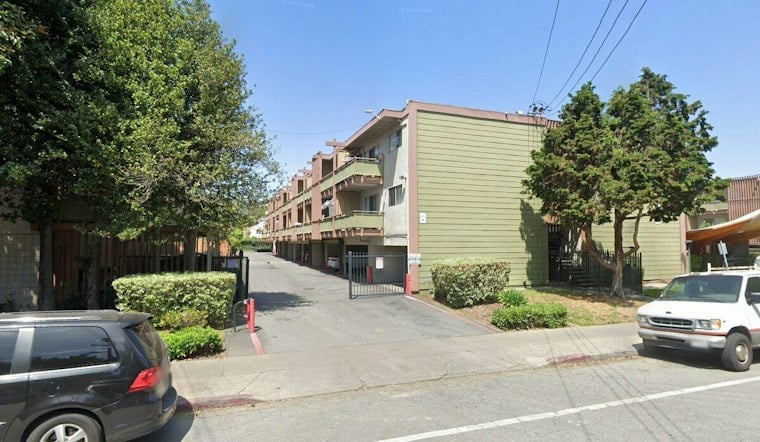
East Palo Alto's City Council voted 4-0 to postpone a decision on Sand Hill Property Company's sprawling West Bayshore-Newell redevelopment proposal, telling the developer to come back with a more complete plan for how much affordable housing it will actually deliver. The vote means hundreds of families in the Woodland Park neighborhood will keep waiting to learn the fate of the buildings many of them call home.
The council's Tuesday decision, reported Thursday by Palo Alto Online, centers on what city staff call an alternative compliance request — a developer proposal to build different levels of affordable housing than East Palo Alto law normally requires. Council member Ruben Abrica was absent from the vote, according to the outlet's reporting.
At the heart of the dispute is a gap between what the city's inclusionary housing ordinance demands and what Sand Hill has put on the table. Per city documents cited in that reporting, the ordinance requires 49 affordable rental units priced between 35 and 60 percent of area median income, plus 12 affordable for-sale units. Sand Hill instead proposed 124 affordable units restricted to households earning 80 percent or less of area median income, with rents based on 60 percent or less of household income — but the company did not specify affordability levels across all of its proposed rental units, and it proposed selling all 60 planned townhomes at market rate rather than including below-market-rate homeownership options.
What's Actually Being Built, and Where the Numbers Diverge
The project would touch West Bayshore Road, Newell Court and Newell Road, land zoned for multiple-family high-density and neighborhood-commercial use, according to the City of East Palo Alto's official project page. That page describes renovating 315 existing units alongside 253 net-new mixed-income rental apartments and 60 new for-sale townhomes, for a stated total of 772 residential units — though the listed component figures do not add up to that total.
Palo Alto Online's reporting on the council meeting describes the plan differently still: renovating 315 existing rental units, demolishing 144 units, and building 239 new apartment units plus the 60 for-sale townhomes, alongside 2,800 square feet of new retail space. That demolition would also take out Three Brothers Tacos and a 7-Eleven, the outlet reported. City staff told the council that all demolished affordable units will remain at the same or more affordable levels, and that residents or displaced people will receive priority in renting the new units.
Project records show the city received Sand Hill's SB 330 application on December 9, 2025, following a pre-application community meeting held in February at Woodland Park's Cabana and a pre-application study session held in April at City Hall. Michelle Huang is listed as the project's planner.
Residents Describe a Neighborhood Already on Edge
West Bayshore-Newell is one piece of what Palo Alto Online describes as a three-pronged development push that could reshape most apartment buildings across Woodland Park, a neighborhood on the city's west side that holds much of East Palo Alto's affordable housing stock and has been managed by one consolidated owner for almost two decades. A separate Palo Alto Online account from August detailed how residents there have spent decades bracing for exactly this kind of redevelopment.
That fear surfaced repeatedly during Tuesday's meeting. Mario Alejandrez, who moved to Woodland Park in 1994 and raised his children there, told the council he and his college-age son would be unable to afford a new unit in the area. “Not only will you demolish buildings, you'll demolish our dreams,” he said, per the outlet's report.
Council member Carlos Romero was sharper still, criticizing the proposal as incomplete and as reducing public benefit. “This is not a compromise, this is a sellout of our community,” Romero said. Council member Webster Lincoln opposed the plan specifically because it dropped affordable home-purchase options, telling fellow council members, “Homeownership is how people build wealth in this community, but eliminating all of them without any evidence of greater public benefit, I don't think I can accept that” — even as he said he supported the broader goal of replacing a neighborhood in need of assistance.
A Developer With a Track Record of Delays
Not every voice at the meeting was opposed. Council member Mark Dinan supported the project generally, arguing the city should replace older, obsolete buildings. But council member Martha Barragan, along with other members of the public, voiced wariness about both the project and the developer, pointing to Sand Hill projects that stalled for years before being declared financially infeasible as construction costs climbed. Barragan specifically called out stalled construction at Woodland Park's Euclid Improvements site, saying, “Every time I drive there, my heart sinks,” and described the incomplete West Bayshore-Newell proposal as a waste of public and city-staff time.
Sand Hill and city staff maintained that the request would still provide ample community benefit despite the gaps, the outlet reported. But California's recently adopted housing laws set tight deadlines for cities to act on development applications, and under those rules the council must show evidence that declining Sand Hill's request would break the law, harm the public or fail to deliver required affordability. The council is now expected to approve or reject the alternative compliance proposal at its next meeting in November, while East Palo Alto's planning commission separately must rule on the entire project in the coming weeks.
How This Fits East Palo Alto's Broader Housing Math
The standoff echoes an earlier fight over Sand Hill's Four Corners project at 1675 Bay Road, where the company sought to build more than 250 units. In that case, city staff recommended denial of Sand Hill's alternative compliance request, citing a 58 percent loss in affordability compared with what the ordinance required, according to Palo Alto Online's earlier coverage. A divided council ultimately approved that request anyway, allowing the Four Corners project to omit very low-income units and scale back affordable for-sale townhomes — though city officials stressed the decision applied only to that single development and did not change the citywide inclusionary ordinance.
Regional housing mandates add pressure to all of these decisions. East Palo Alto has met its low-income housing needs at 60 percent of area median income, but the city remains behind on goals for ultra-low-income and middle-class housing under the regional housing needs allocation that sets production targets for every California city. For the 2023-2031 housing cycle, the city's own objectives call for 1,794 new units, including 704 affordable to East Palo Alto residents, according to a city housing element progress report. For now, Woodland Park residents are left waiting once again for Sand Hill to answer the question the council says it still hasn't: how many of those new units will actually be ones they can afford.



