

























































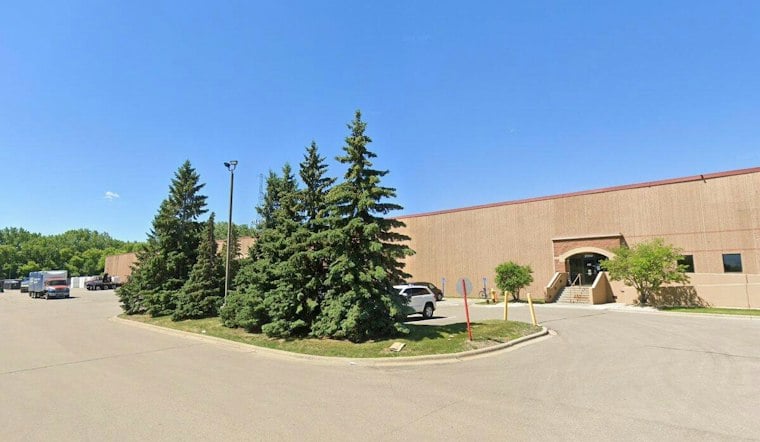
Capital Partners has paid $54.25 million for five industrial properties across three Twin Cities suburbs, scooping up warehouse space from Blackstone's Link Logistics at a moment when the region's industrial market is running red hot while its office towers face high vacancy.
The Edina-based private equity firm acquired the five buildings, totaling 449,456 square feet, in a deal spanning three suburban municipalities, according to Finance & Commerce. One of the properties sits at 2360 County Road C W. in Roseville, a 68,000-square-foot building that adds to Capital Partners' footprint in a submarket it already knows well. The firm bought the portfolio directly from Link Logistics, the industrial real estate platform Blackstone built into one of the largest last-mile warehouse operators in North America.
A Familiar Buyer in a Familiar Suburb
Capital Partners is no stranger to Roseville. The firm already owns the 172,057-square-foot Roseville Distribution Center on Long Lake Road near Interstate 35W, according to the company's own property records. Roseville sits near I-35W and Highway 36, and the new acquisition deepens Capital Partners' presence in the suburb.
The firm's overall scale is considerable. Capital Partners manages more than $1.8 billion in industrial assets spanning over 17.5 million square feet across the Twin Cities, Milwaukee, Southwest Florida, and Indianapolis, per the company's official site. This is also not the firm's first large-scale Twin Cities play. In November 2022, Capital Partners partnered with Investcorp to buy a 16-property, 2.5 million-square-foot industrial portfolio for $249 million from Artis REIT, as reported at the time by The Real Deal.
Why Link Logistics Keeps Selling
The seller's motivations fit a pattern. Link Logistics, created in 2019 as Blackstone's primary U.S. industrial platform, has been actively divesting light industrial portfolios nationally, including an $1.8 billion sale of 51 properties spanning 8.5 million square feet, according to Commercial Property Executive. Hoodline has tracked that pattern locally and nationally, from a Pompano warehouse buy to the $1.8 billion portfolio sale this summer, acquired by a joint venture between BKM Capital Partners and Kayne Anderson Real Estate.
Demand for shallow-bay and small-bay industrial buildings has been strong, while higher construction costs constrain new supply. Those smaller, flexible layouts tend to suit trade contractors, regional distributors, and light manufacturers rather than massive big-box users.
Tight Vacancy, Rising Rents
The fundamentals underpinning that demand are stark. Twin Cities industrial vacancy stood at just 4.9% in the second quarter of 2026, well below the national industrial average of 6.9% and even under the metro's own 20-year average of 5.1%, according to Cushman & Wakefield data published by WareCRE. Average net asking rents for industrial space in the metro reached $8.62 per square foot annually in that same quarter, up 4.9% year-over-year, the same data showed.
Manufacturers accounted for 51.1% of Twin Cities industrial leases over 10,000 square feet in the first half of 2026.
Office Towers Tell a Different Story
The contrast with downtown office space is hard to miss. While industrial vacancy sits under 5%, downtown Minneapolis office vacancy reached 30.8% and downtown St. Paul office vacancy hit 39.5% at the end of the third quarter of 2025, per figures from Colliers reported by REJournals. The gap contrasts with Capital Partners' recent warehouse portfolio purchase, even as office towers in the metro's core struggle to find tenants.





