

























































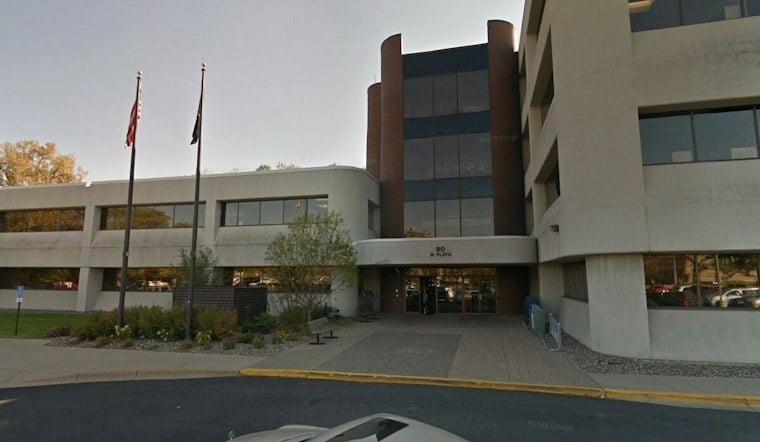
Ramsey County says only people authorized under Minnesota law will be allowed inside its polling places on Nov. 3, making it the first jurisdiction in the state this year to formally bar federal election monitors from entering voting sites. The county says it has not yet received a request from federal monitors to be inside its polling locations for the midterm election, even as the U.S. Department of Justice prepares what would be its largest-ever nationwide monitoring effort.
County Policy Follows August Primary Standoff
The stance builds on what happened during the August primary, when Ramsey and Hennepin counties both denied Justice Department requests to place monitors inside polling places, according to WJLA. Roughly 20 staff from the Justice Department's Civil Rights Division and Minnesota's U.S. Attorney's Office were sent to monitor that primary, but were required to remain outside the 100-foot boundary surrounding each polling site. The department said at the time its monitors were there to ensure transparency, ballot security and compliance with federal law.
Minnesota law is explicit about who gets inside that perimeter. As MinnPost reported, the only people allowed inside a polling place or within 100 feet of the building are voters, election workers, people who normally work in the building, and one individual per major political party designated in writing as a challenger. Federal law enforcement agents, the outlet noted, need to remain outside that same perimeter like everyone else.
St. Paul Council President Presses for More
St. Paul City Council President Rebecca Noecker has asked Ramsey County to go further, calling for a publicly posted protocol governing federal personnel at or near polling places and a commitment to prosecute threats against voters and election workers, according to the Minnesota Spokesman-Recorder. Per that same reporting, Noecker said she had not received a response from the county to her requests. She is also pushing county leaders to pass a strong separation ordinance, as CBS News reported.
Ramsey County Board Chair Rafael E. Ortega said the county's existing policies, protocols and board resolutions already establish a clear separation between county work and federal immigration enforcement, the Spokesman-Recorder reported. St. Paul has separately strengthened its own separation ordinance, banned masks for federal agents, and barred Immigration and Customs Enforcement from staging in city parking lots, according to the same report.
Election Judges Trained on the Rules
Ramsey County election judges are trained to enforce the state law barring federal personnel from entering polling places without local consent, and to contact the county elections office if unauthorized people refuse to comply, per the Spokesman-Recorder. Anyone not authorized under state law must stay at least 100 feet from the polling-place building. The county plans to deploy more than 2,000 election judges for Nov. 3, with 150 more on standby, the outlet reported.
The Ramsey County Attorney's Office is coordinating with the county elections office, the secretary of state's office and the attorney general's office, and is preparing for scenarios including disinformation campaigns, targeted voter intimidation, mail-ballot interference and illegal seizure of ballots or voting equipment, according to the Spokesman-Recorder. The office says it is ready to act quickly with the attorney general's office if civil litigation becomes necessary, and will hold anyone — including federal actors — accountable when there is evidence of criminal conduct.
During the August primary, lawyers from the Minnesota Attorney General's Office were present at each monitored polling location, and Justice Department monitors talked with voters outside polling places without reported issues, per the Spokesman-Recorder. Minnesota Attorney General Keith Ellison has released updated voting rights guidance and says he will enforce state voter protection laws if needed, the outlet reported. Voters can decline to talk with federal monitors, and federal monitors may still talk with voters beyond the 100-foot limit if local offices refuse them entry, working to ensure compliance with the Voting Rights Act and accessibility laws, according to that reporting.
A Record National Deployment
The Justice Department's plan for 1,000 election monitors nationwide this November would be nearly 700 more than the roughly 289 monitors it sent during the 2022 midterms, CBS News reported. The department sent 714 people to monitor compliance with federal voting laws across 27 states and 86 jurisdictions during the 2024 presidential election, and had previously monitored Minnesota elections in 2020, 2022 and 2024, WJLA reported. The head of the department's civil rights division has said she hopes to reach 1,000 monitors at midterm polling sites in November, according to The Guardian.
That expanded footprint has drawn scrutiny elsewhere. The Guardian reported that Wyoming Governor Mark Gordon criticized two federal election monitors who arrived at a polling station during that state's primaries without notice and attempted to examine voting machines. Separately, Democracy Docket reported that outside Hennepin County's 100-foot boundary, plainclothes federal personnel could ask departing voters to participate in voluntary interviews.
Federal prosecutors have also moved on a separate voting-related matter in Minnesota. The U.S. Attorney's Office for the District of Minnesota announced that a federal grand jury indicted 10 noncitizens on charges of illegally voting or falsely claiming citizenship to vote in elections dating back to 2022, according to the Spokesman-Recorder. All 10 are presumed innocent unless proven guilty.
What Voters Should Know Before Nov. 3
Minnesota statute also makes clear that, outside of official duties, no one may engage in conduct intended to procure or prevent someone's election or to prevent a voter from voting, according to the Minnesota Office of the Revisor of Statutes. Threats, harassment or intimidation of election workers intended to obstruct their official duties are now illegal under state law, the Minnesota Secretary of State's Office has said. Early voting turnout is running slightly higher than in previous midterms, per the Spokesman-Recorder.
Voters who run into problems at their polling place should contact the head election judge or the Ramsey County Elections Office at 651-266-2171, according to the Spokesman-Recorder. The Minnesota Secretary of State's Office can also be reached at 877-600-VOTE (8683). Anyone who witnesses a crime being committed at or near a polling place should call 911.



