

























































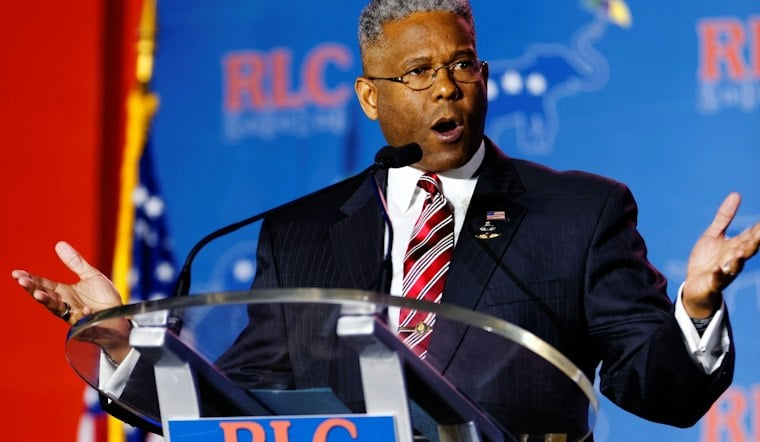
Embry-Riddle Aeronautical University rejected a request from its Young America's Foundation chapter to bring former Congressman and retired Army Lt. Col. Allen West to campus for a conservative values event, touching off a fight over free speech at the Daytona Beach, Florida institution. The denial, delivered October 15, has drawn accusations that the school targeted conservative students while the university insists it never intended to shut down differing viewpoints.
Negar Afshar, the university's director of student organizations and engagement, notified YAF that officials were unable to approve the invitation for West at that time, according to townhall.com. Afshar wrote that the move was not intended to prevent students from engaging with differing viewpoints, the outlet reported. Separately, The College Fix reported that the university cited its commitments to inclusive dialogue, respectful discourse and student safety, saying moving forward with the event would not align with those commitments.
Accounts of the episode diverge on one key point. Townhall reported that neither Afshar nor any other Embry-Riddle official gave a reason for the rejection, while The College Fix's reporting describes the university pointing to its stated commitments as the basis for declining the request. Matthew Finkel, chairman of the campus YAF chapter, told The College Fix the group would still be restricted in its activities with no direct reason or explanation given, framing the decision as a restriction on free speech and fair treatment of conservative students.
A Paper Trail of Emails and Delays
The dispute traces back at least to October 6, when Afshar received the chapter's speaker request form and asked Finkel to arrange a meeting to discuss it, according to University Herald. Finkel replied two days later that he believed the group had followed the correct steps, pointing to earlier approved YAF activities, including a 9/11 Never Forget Project the chapter organized through the university's own event scheduling system. Afshar again asked Finkel to schedule a meeting and promised a fuller response, per the same account.
By October 9, Afshar said the speaker request was already under review and that his meeting request and response were separate matters not delaying that process, the outlet reported. He said he had reviewed West's public record and the proposed event, citing West's prior campus appearances, public remarks and possible effects on the university community as factors in the decision. Afshar also described the chapter's email tone as increasingly accusatory and adversarial, a characterization he repeated in his message to YAF, telling the group that emails had become increasingly accusatory and adversarial under its new leadership, according to townhall.com.
Afshar said the university's Speaker Request Form itself had been created in response to a new requirement from university leadership that speaker requests be reviewed through appropriate channels, per the same townhall.com report. He added that he would continue working with the chapter if it returned to a collaborative and respectful relationship, and offered to help the group identify other speakers aligned with its goals and the institution's values, University Herald reported.
University Admits It Acted in Haste
The university later walked back the tone of its initial response, telling The College Fix that it unfortunately responded in haste and hoped to work with student groups to host West at its Daytona Beach campus in the near future. The school also noted that West has spoken on campus in the past. The published email excerpts did not identify a specific statement by West or a particular safety threat, and the university did not immediately respond to a media request for comment or provide examples of how his views conflicted with its stated goals, University Herald reported.
Young America's Foundation president Scott Walker, the former Wisconsin governor, accused the university of targeting conservative students and said students should not need administrators' approval to express conservative beliefs or hear from a speaker who represents their views, according to University Herald. YAF posted a statement on X about the rejection on October 19.
A Pattern the College Fix Says It Has Tracked Before
The College Fix reported that Embry-Riddle has a history of blocking conservative student events, and in separate reporting described updated university event guidelines that reportedly prohibited outdoor events and demonstrations tied to religious and political causes until further notice at both its Daytona Beach and Prescott campuses. YAF previously escalated similar concerns to federal regulators: on February 19, 2025, the organization asked the U.S. Department of Education's Office for Civil Rights to open a formal investigation into alleged civil-rights violations involving conservative students at the university, according to the complaint filed by Young America's Foundation.
West is no stranger to campus appearances elsewhere. In 2024, Duke University's YAF chapter and the Ciceronian Society hosted him in Gross Hall for a lecture and question-and-answer session, where he discussed conservative policy issues including immigration, inflation, student-loan forgiveness and the Russia-Ukraine war, according to The Duke Chronicle.
Campus Speech Climate Nationally
The dispute lands amid broader strain over campus expression. The Foundation for Individual Rights and Expression surveyed 68,510 students across 257 colleges and universities for its 2026 College Free Speech Rankings, conducted from January 3 through June 5, 2025. The average overall score came out to 58.63, a failing grade by the group's own measure, with 166 of the 257 schools receiving an F and only 11 earning a C or higher. Claremont McKenna College topped the rankings with a score of 79.86, while Barnard College ranked last at 40.74.
The same survey found that 53 percent of students said the Israeli-Palestinian conflict was too sensitive for open discussion on their campuses, and that the share of students who consider shouting down speakers, blocking access to campus speech, or using violence acceptable all rose to record highs.




