

























































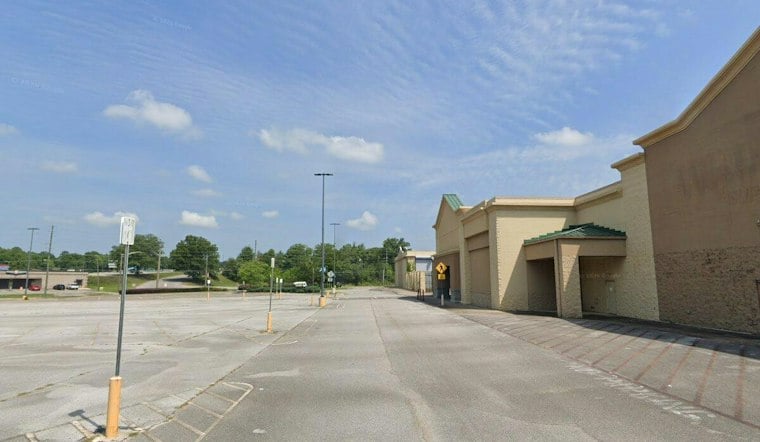
Chants of “No data centers” rang out in front of Fairfield City Hall this week as residents pressed city leaders for answers about a proposed Patmos data center and a potential $150 million financing arrangement. The protest capped months of simmering frustration in the Jefferson County city, where officials and a developer say the project could bring jobs and tax revenue, but neighbors say they still don't have basic facts about what's coming to the old Walmart site.
A Former Walmart Could Become a Tech Campus
Patmos wants to convert Fairfield’s former Walmart supercenter into a colocation data center and technology campus, according to WBRC. The site had sat vacant for a decade, AL.com reported. The project has been under consideration for months, as reported by WVTM 13. The first phase is planned at roughly 20 megawatts, with Patmos estimating that initial buildout will cost about $150 million, according to a separate report from WBHM. A planned expansion could push the site to about 45 megawatts in 2028, per ABC 3340.
Patmos representatives have said the former Walmart property is under contract for purchase, though engineering plans and an electric service agreement are still being developed, the station's report notes. The company has told officials it expects to pay the upfront capital costs tied to Alabama Power upgrades needed to serve the facility, and it projects the 20-megawatt phase alone could generate more than $3 million annually in real property taxes. Patmos has also estimated the completed campus would support around 50 long-term jobs; the roughly 120-person peak construction workforce was for its Kansas City project, not Fairfield.
Water, Generators and Megawatts Raise Questions
Among residents' biggest concerns are the facility's water and power needs. Patmos has said the initial facility would use approximately 10,000 gallons of water per day during hot conditions, per the same ABC 3340 account, and the company has indicated it plans to rely on 10 diesel backup generators, each capable of producing about 2.5 megawatts, according to WBHM. Those numbers are modest next to other Alabama projects in the pipeline — the proposed Project Red Clay campus in Lowndes County reportedly requested 1,500 megawatts of capacity and up to 100,000 gallons of water per day, as detailed by Inside Climate News, while the proposed Project Marvel campus near Bessemer is projected to consume 90 times more energy than all Bessemer residences combined.
A Different Water Plan in Lowndes County
Water-use figures for proposed data centers can reflect different designs and stages of operation. For the separate Project Red Clay proposal in Lowndes County, the project’s website says its planned closed-loop cooling system would recycle water and that day-to-day use after the initial system fill would be comparable to an office building. That is the developer’s stated expectation, not a measured-use figure.
That broader backlash has spread across the state. At least a dozen data center developments have been proposed across Alabama, Inside Climate News reports, and residents in communities including Bessemer and Lowndes County have said they've found it nearly impossible to get detailed information about the projects headed their way — a complaint that echoes what Fairfield residents are now voicing about Patmos.
The C-PACE Fight at City Hall
At the center of the latest dispute is a financing tool called C-PACE, short for Commercial Property Assessed Clean Energy, which is generally used to finance eligible energy, water and property-resilience improvements. Fairfield Mayor Herman Carnes has said the program is an option for eligible businesses, not a city loan to build the Patmos data center. He told WVTM 13 that Fairfield would not use city funds for the project.
A Patmos spokesperson echoed that framing in comments to WBRC, saying the arrangement would involve private financing repaid by the property owner through an assessment on its own property, without the city taking on debt, guarantees or liability. Carnes has described C-PACE as separate from the Patmos project and as one tool in a broader effort to attract investment, pointing to Fairfield buildings that need roof and electrical repairs before new businesses can move in. He's also said Huntsville, Texas uses C-PACE and that the city is not tied to the dollar figure residents have been speculating about.
Despite that pushback, the Fairfield City Council discussed adopting the C-PACE program Monday but tabled the issue for now, WBRC reported. The council has instead voted to hold a dedicated work session devoted entirely to the program, though no date has been announced for that session or for an expected public town hall that would also be part of the process.
Residents Say They're Still in the Dark
Gilda Walker, who is affiliated with the Fairfield Environmental Justice Alliance, said residents haven't received clear information about the project's status or city officials' actions. “People should not have to rely on rumors or to piece together answers on their own,” Walker said, per WVTM 13's reporting. She's called on city leaders to release relevant documents and studies, explain project costs and expected benefits, and hold accessible public meetings before decisions are finalized.
Residents’ calls for more information have focused on project documents, costs and any public commitments, while Carnes has maintained that the city has been open and that its actions are documented. He has said Fairfield is seeking new ways to attract business after limited economic development.
A Moratorium That Doesn't Cover This Project
Complicating the picture is Fairfield’s own moratorium on data centers. The City Council voted unanimously to approve a ban on new data center applications, joining Birmingham, Leeds, Fort Payne, Homewood, Cullman and Springville among Alabama cities that have passed similar pauses, according to AL.com. The outlet reported that the earlier ordinance set no time limit for the temporary ban, which was intended to give the city time to study how data centers fit into its zoning regulations. But the moratorium does not apply to the existing Patmos proposal, which was already under consideration before the ban passed, Carnes told AL.com. The moratorium pauses new data center applications.
For now, the Patmos project sits in a kind of limbo: not blocked by the city's own moratorium, not yet backed by a finalized C-PACE agreement, and still facing residents who say they want information before, not after, decisions get made. Walker summed up that sentiment plainly, saying residents need clarity on the financial side and on any public commitments or resources involved — before the City Council's promised work session and town hall ever get scheduled.




