

























































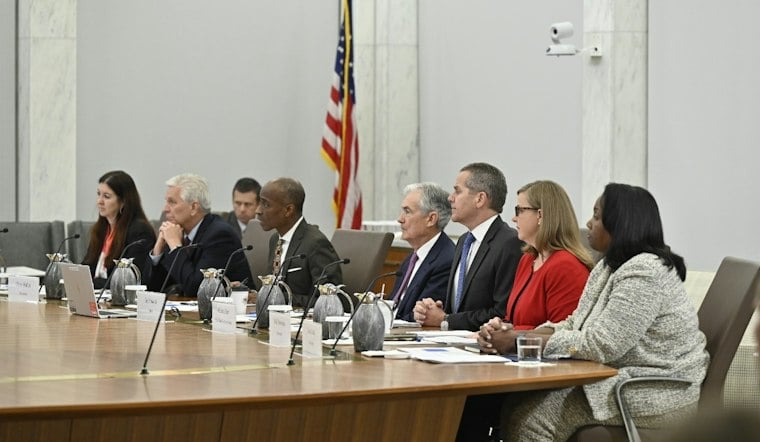
Nearly every economist polled now expects the Federal Reserve to leave interest rates untouched when it meets next week, only to resume raising them by December. The federal-funds rate is expected to stay at 3.75%-4.00% following the central bank's October 27-28 meeting, with a rate increase penciled in for the final meeting of the year.
That is the headline finding of a new survey reported by Reuters, which found 94 of 100 economists expect the Fed to hold rates steady at its upcoming meeting, while all 100 respondents in the poll expect the central bank to raise rates again in December. The Federal Open Market Committee raised its target range by a quarter point to 3.75%-4.00% in September, and officials have signaled a slower, more deliberate path for interest rates since then, according to the same Reuters poll.
Inflation Data Keeps Pressure on Policymakers
The case for patience is being tested by inflation figures that have come in hotter than expected. September's consumer price index rose 3.7% year over year, above the 3.6% forecast from economists surveyed by Dow Jones, while core CPI — which strips out food and energy — rose 2.6%, also beating expectations, according to CNBC. Producer prices were even more striking, jumping 1.3% in September — the largest monthly gain since March 2022 and more than double the 0.6% consensus estimate, per CNBC's separate report on the data.
Those numbers rattled bond markets. Longer-dated Treasury yields surged to multi-decade highs on October 7 as traders priced in higher inflation and near-term rate expectations, the Reuters poll noted, though yields later retreated nearly 25 basis points as the odds of an October move declined. The PCE index is not expected to return to the Fed's 2% target until 2028 at the earliest, with the measure likely to stay more than 100 basis points above 2% over coming quarters, according to the Reuters survey.
Economists Split Over Whether the Fed Is Moving Fast Enough
Not everyone surveyed thinks a pause is the right call. Alex Pelle, senior US economist at Mizuho Securities, said there is little reason to worry about raising rates given a strong economy and persistent inflation, and argued that skipping an increase in October would be the wrong policy decision. Pelle said the Fed is not responding adequately to the inflation problem and may be falling behind, according to the Reuters poll.
Fed Officials Stay Guarded on Their Next Move
Federal Reserve Chair Kevin Warsh has kept largely silent on rate guidance, and told reporters he was not signaling an October decision one way or the other, according to CNBC. Warsh reiterated that the Fed's 2% PCE inflation goal remains a firm, fixed target. Meanwhile, Federal Reserve Vice Chairman Philip Jefferson and New York Fed President John Williams have both indicated little urgency to raise rates further, the outlet reported, even as the Fed's own September projections showed the median official expecting one more hike before year's end.
Futures markets have whipsawed on the question. CNBC's October 16 report put the futures-implied probability of an October hike at just 15%.
Growth Holding Up Despite the Uncertainty
The US economy grew at an annualized 2.2% pace in the second quarter of 2026, according to the Bureau of Economic Analysis, which also reported a revised 2.5% growth rate for the first quarter.
The Chicago Fed's National Financial Conditions Index has risen about 0.05 points since Jackson Hole but remains negative, CNBC reported, meaning financial conditions are still loose overall even as the Fed debates its next move.



