

























































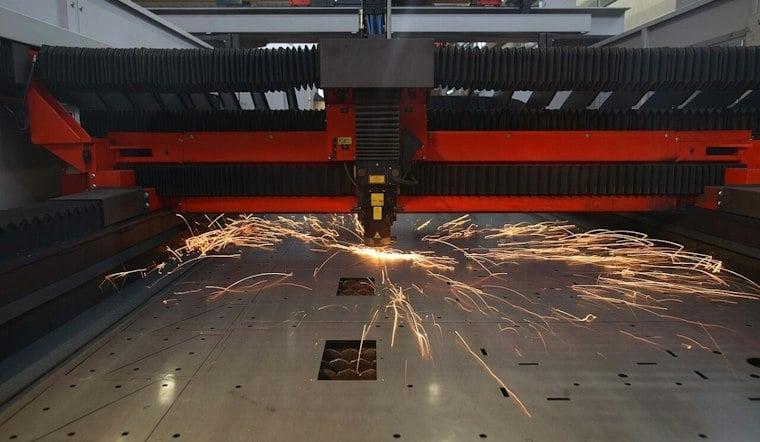
A federal jury has awarded more than $6 million to the family of a 25-year-old worker who was crushed and killed by a laser-cutting system, finding the equipment's maker liable in a case focused on readily available safeguards, particularly a safety mat and an emergency-stop switch. The verdict closes out a long-running wrongful-death case brought under the name Alicea v. Cincinnati.
The federal jury found the defendant liable in the fatal laser-cutter case after the worker was crushed and killed by the machine, according to Massachusetts Lawyers Weekly. Under the headline “Keeping things ‘simple’ proves key in $6M-plus wrongful death verdict,” the outlet reported that the jury awarded $5 million for Prieto’s conscious pain and suffering and $1 million to his mother for loss of companionship. It also named the estate’s lawyers, the defendant’s lawyer and the presiding judge, said jury selection began September 22, and described the jury’s negligence and fault findings.
The litigation also addressed whether a barrier fence and the gap between the laser and the machine's handler were adequately designed, according to a CourtListener case record.
A Similar Massachusetts Tragedy From 2018
The case echoes a separate, previously reported incident in Sharon, Massachusetts. According to Boston 25 News, a metal worker at Industrial Metal Products died on July 12, 2018, after being trapped in a piece of laser-cutting equipment for more than an hour before he was rushed to the hospital. A co-worker told the station the operator had become caught between the laser and the loader that feeds sheets of metal into the machine to be cut.
That equipment, Boston 25 News reported, functioned by loading metal sheets and laser-cutting shapes from them, and the Occupational Safety and Health Administration opened an investigation into the incident.
What OSHA Records Say About Laser-Machine Hazards
Separately, an accident record maintained by the Occupational Safety and Health Administration describes a laser-cutting machine that actuated and trapped an employee inside it, crushing the employee's chest and causing fatal injuries. The record says the machine's interlocks were either faulty or somehow bypassed.
OSHA maintains broader guidance on these hazards as well. A standard referenced on the agency's laser-hazards standards page applies to machine tools that use a laser for processing materials, describing the hazards such machines generate and the protective measures and information that should be built into them. OSHA has also partnered with the Laser Institute of America on an alliance document addressing hazards tied to high-power industrial welders and cutters, underscoring that injuries like these are a recognized risk in manufacturing settings nationally.
The Legal Path to a Wrongful-Death Verdict
Massachusetts law gives families a specific avenue to pursue cases like this one. Under Massachusetts General Laws, Chapter 229, Section 2, a person who causes another's death through negligence, or through a willful, wanton or reckless act under specified circumstances, can face liability under the state's wrongful-death statute.
Fatal workplace entrapments involving industrial machinery are not unique to Massachusetts. A 2023 report from KBTX described a Nebraska worker killed after becoming trapped in a laser-cutting machine, while a Pennsylvania lawsuit reported by Legal Newsline involved a mechanic trapped and killed in an automatic feed trough in 2025. Verdicts over machinery injuries have also landed in other states — Law360 reported that a Texas federal jury awarded a road worker $4.05 million over a life-altering leg injury caused by a fallen piece of heavy machinery.
Beyond this case, fatal workplace incidents remain a tracked category of data nationally. The U.S. Bureau of Labor Statistics tracks fatal occupational injuries in Massachusetts.





