

























































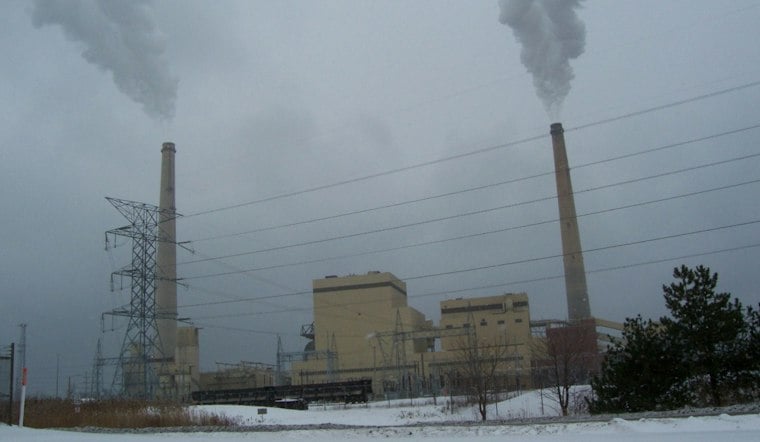
The U.S. Department of Energy has closed a $5.1 billion loan package for Alliant Energy, financing a wave of new natural-gas power plants, battery storage systems and grid upgrades across Iowa and Wisconsin. The money is expected to add more than 2.6 gigawatts of new or upgraded generation capacity and create hundreds of construction jobs in the two states.
The Department of Energy's Office of Energy Dominance Financing announced the financial close Wednesday. The financing will support new natural-gas-fired power plants, energy storage systems and upgrades to existing generation facilities, the office said, framing the investment as a way to lower electricity costs and strengthen grid reliability in both states.
Exactly how much that translates to for ratepayers depends on who's doing the counting. The federal office's release says the capacity is expected to power the equivalent of nearly 2 million homes and deliver more than $1 billion in electricity cost savings for families and businesses across Iowa and Wisconsin, per the same wispolitics.com account. A separate report from finance.yahoo.com put the figure at nearly 1.8 million homes, while Alliant Energy itself, in a statement carried by financialcontent.com, projects up to $1.2 billion in cumulative customer savings over the life of the 30-year loans.
What the Money Actually Builds
Alliant's own statement describes a financing package that gives the utility access to up to $5.1 billion, subject to project advancement, qualification and financing terms, the financialcontent.com report notes. Among the specific pieces disclosed: one potential project would add 240 megawatts of capacity at existing natural-gas facilities. The utility projects more than 1,600 local construction jobs tied to the work, a notably higher figure than the hundreds of jobs cited in the federal office's own release.
Battery storage is already part of Alliant's build-out. The company says two battery energy storage systems, one in Wood County, Wisconsin, and another in Wever, Iowa, were fully operational as of mid-January, according to Alliant Energy. The Wood County system stores 75 megawatts and can power the equivalent of 80,000 homes for up to four hours, while the Wever site has a 100-megawatt capacity. Both batteries can store electricity from nearby renewable generation or other resources and discharge it back onto the grid when demand climbs, the company says. Alliant contracted battery solutions provider FlexGen to design components and part of the systems at both sites.
A Proposed Gas Plant Near Cedar Rapids
Separately, Alliant has proposed the Morgan Valley Energy Center in unincorporated Linn County, Iowa, near Cedar Rapids, saying the site meets its criteria for a new plant. The company expects the facility to become operational in 2030, pending regulatory approval, and has said electricity demand in eastern Iowa continues to grow while new energy facilities take time to permit and build.
Construction Review Online covered the loan, framing the deal as part of a broader shift in how the federal financing office operates. As Construction Review reported, the office was previously known as the Loan Programs Office under the Biden administration, when it primarily backed emerging clean-energy projects and alternative vehicles that couldn't secure conventional bank loans. Its mission now includes support for natural-gas projects that have typically been able to obtain bank financing on their own, according to the same finance.yahoo.com report cited earlier.
Patience Required for Any Savings
The office currently has hundreds of billions of dollars in financing available, and Energy Secretary Chris Wright has said most of that money will support nuclear power projects, per finance.yahoo.com's reporting. Energy storage, notably, was supported in both the original proposal and the version that ultimately closed.
Even with the loan package now closed, nobody is promising quick relief on monthly bills. Any lowering of electricity costs could take many years, since the loans extend over decades, according to wiky.com. That timeline mirrors a pattern seen elsewhere this year: in February, the Energy Department closed a $26.5 billion loan package to Southern Co. to build or upgrade more than 16 gigawatts of grid resources, including 5 gigawatts of new gas generation, according to Utility Dive. That deal was projected to deliver more than $7 billion in cost savings for Georgia Power and Alabama Power customers and reduce the company's interest expenses by more than $300 million annually, the outlet reported.
For now, Iowa and Wisconsin households are left waiting to see which of the competing savings estimates, and which timeline, actually plays out as the gas plants, batteries and grid upgrades move from financing documents to physical construction sites.




