

























































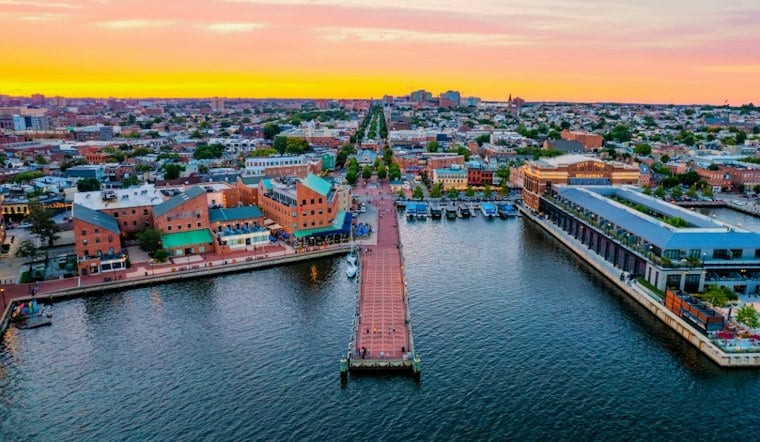
Fells Point's historic waterfront fills with thousands of visitors this weekend as the Fells Point Fun Festival marks its 60th annual run, but the roots of the free street party go back to a fight nobody was sure the neighborhood would win: stopping a federal highway that would have torn through Fells Point and over Federal Hill.
A Fundraiser Born From a Highway Fight
David Gleason, president of the Society for the Preservation of Federal Hill and Fells Point, said the festival began as a fundraiser to help his organization fight a proposed federal highway construction project, according to CBS News. Gleason said the highway would have changed Baltimore's waterfront communities, and the proposed route was intended to connect Interstates 83 and 95 directly through the neighborhood. The Preservation Society used the festival's early proceeds to fund a legal battle against the federal government, and the group ultimately opposed, and defeated, the project.
The scale of what was at stake was enormous. Mid-20th-century interstate plans called for a 14-lane water interchange in Baltimore Harbor linking Interstate 83, Interstate 70, and Interstate 95, a project that would have required demolishing hundreds of historic rowhouses across Fells Point, Canton, and Federal Hill, according to Baltimore Magazine. Local activist Roland Reed first proposed creating the festival back in 1966 as a way to build community support and raise money for that fight, leading to the first official event in 1967.
Preservation Wins That Stopped the Bulldozers
The legal turning point came in 1969, when community preservationists led by Bob Eney secured a listing for Fells Point on the National Register of Historic Places, establishing Maryland's first historic district. That designation created a legal barrier prohibiting federal funds from being spent on highway demolition in the neighborhood, per Baltimore Magazine's account of the era.
The movement also launched a political career that would shape Maryland for decades. Future U.S. Senator Barbara Mikulski co-founded the Southeast Council Against the Road to oppose the waterfront expressway, rallying residents with her declaration that “the termites couldn't take Fells Point, the British couldn't take Fells Point, and by God, the State Roads Commission can't take Fells Point!” Mikulski went on to win a Baltimore City Council seat in 1971 before serving in Congress for four decades.
From Block Party to Six-Block Showcase
Six decades later, the festival has grown into one of Baltimore's largest free public street events. It now spans six city blocks along the historic harborfront, hosting more than 225 local food, drink, and artisan vendors while drawing an estimated 50,000 attendees annually, according to BmoreActivities. This year's programming expanded to include a Friday Night Market running from 5 p.m. to 9 p.m., kicking off the weekend with more than 225 evening vendors selling crafts and food before the full weekend schedule begins. The opening ceremony is set for Friday at 6 p.m., with the festival running through the weekend and showcasing food, games, and music throughout, and WJZ serving as a media sponsor.
The festival still funds the same preservation mission that created it. The Society for the Preservation of Federal Hill and Fells Point, founded in February 1967, operates at no cost to the City of Baltimore, using festival revenues and private donations to maintain 18th- and 19th-century buildings and offer historic walking tours, per CBS News's reporting on the group's ongoing work. That work isn't just ceremonial: in July 2025, the Preservation Society compelled the Baltimore Department of Transportation to scrape away newly laid asphalt on Thames Street in order to preserve the neighborhood's historic 19th-century Belgian block cobblestones under city CHAP preservation guidelines.
Open Containers, Old Bars, and a Changing Neighborhood
The festival's rules have shifted over time to better fold in the neighborhood's permanent businesses. Organizers eliminated enclosed beer gardens in 2013 in favor of a site-wide open container rule, letting attendees carry drinks across the entire festival footprint and patronize local brick-and-mortar bars and restaurants rather than staying corralled in fenced-off areas.
This year's festival also arrives just weeks after Baltimore City ended a separate, unrelated public safety program in the neighborhood. City officials had operated weekend night security barricades and mandatory ID checkpoints in Fells Point throughout summer 2026 to curb crime, ending the program after Labor Day amid civil rights scrutiny over mass pedestrian stops, as Hoodline previously reported. City leaders had credited the checkpoints with lowering violent incidents, while defense lawyers raised Fourth Amendment questions about the mass stops.
The festival's 60th year lands in a neighborhood still negotiating its identity between historic preservation and a busy modern entertainment scene, from waterfront festivals like Sailabration to new retail arrivals and shifting nightlife spots along Aliceanna Street. But the throughline from 1967 to today remains the same nonprofit, still funding its preservation work one festival weekend at a time.




