

























































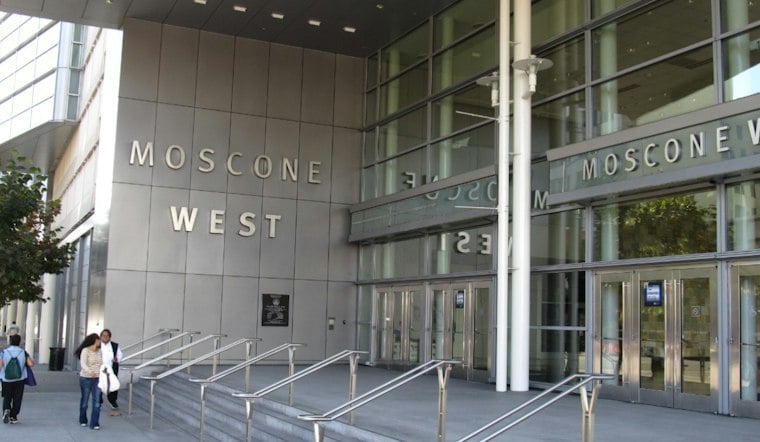
Flock Safety CEO Garrett Langley stood on stage at TechCrunch Disrupt in San Francisco this week and admitted what critics have been saying for months: his company has messed up. “Flock is far from perfect; I’m far from perfect — I’ve made plenty of mistakes,” Langley said during the Wednesday appearance at Moscone West, even as the company faced mounting criticism.
A Rocky Year for the Camera Company
Langley was interviewed by Connie Loizos, editor-in-chief of TechCrunch, in a conversation that covered artificial intelligence, surveillance, and what has been a turbulent stretch for the Atlanta-based firm. Flock now operates more than 100,000 cameras across the United States, according to the outlet, and Langley insisted the company has not fired any customers despite mounting pressure. “Today, we haven’t fired any customers, but it’s not off the table,” he said, adding that “if a customer knowingly broke the law, we would fire them immediately.”
That claim arrives alongside conflicting accounts of Flock’s footprint and finances. Yahoo Finance reports the company’s network spans around 120,000 cameras across 49 states, while Reuters previously valued the company at $7.5 billion following a March 2025 funding round that pushed its total funding above $950 million; a separate report from TheNextWeb cited a subsequent round valuing the company at $8.3 billion. Flock also told its own blog that it surpassed $300 million in annual recurring revenue, a 70% year-over-year jump.
San Francisco’s Own Audit Findings
The San Francisco Police Department’s own surveillance network has become a flashpoint in the broader debate. An SFPD audit found 299 improper inquiries of the city’s Flock system over roughly a year, according to KTVU. Flock has maintained that no out-of-state or federal agencies had direct access to SFPD’s system or any California Flock system. San Francisco currently runs nearly 500 Flock cameras and related devices, per The San Francisco Standard, which also reported that nearly 150 cities and local governments nationwide have deactivated Flock cameras or canceled their contracts altogether.
Langley pushed back on the idea that cities are fleeing the platform en masse, telling TechCrunch that some communities have instead swapped Flock for rival vendors like Axon. He also stressed that Flock’s cameras do not use facial recognition, even though they can detect and track individuals. The company has previously said it never does business with U.S. Immigration and Customs Enforcement or Customs and Border Protection directly, and ended trial projects with federal agencies last year, though critics note that immigration officials have still accessed Flock data by going through state and local agencies, including in California.
Data Retention Changes and a Looming Layoff
Under backlash, Flock has already made changes. The company shifted its default license-plate-data retention period from 30 days down to seven, a move confirmed by USA Today in August. TheNextWeb reported that more than 50 agencies or jurisdictions had canceled, suspended or rejected Flock contracts since the start of 2026, according to the tracking site DeFlock — though Flock itself disputes that framing.
Compounding the pressure, Yahoo Finance reported that Flock plans to cut about 18% of its workforce, or roughly 270 employees, as opposition to its products has intensified. The same Reuters/Ipsos polling cited by Yahoo found that only 38% of Americans support using Flock cameras in their communities, compared with 47% who oppose the technology outright — a split that underscores just how contested Flock’s expansion has become even as the company keeps signing new deals.
Cybersecurity and the Company's Defense
The company also disclosed that a 2026 penetration test identified critical- and high-severity findings, which Flock says were fixed and independently verified. Whether that satisfies skeptics remains an open question, but the results offer a snapshot of the company’s security posture.
Back at Moscone, Langley addressed criticism of Flock amid a national backlash over surveillance technology. Still, he acknowledged that the company had made mistakes — an admission that, for a company facing mounting criticism, suggests the fight over Flock’s place in American policing is far from settled.





