

























































A Miami Hurricanes defensive lineman says he received a dozen racist and violent Instagram messages in the hours after his team's dramatic double-overtime win over Florida State, and the Florida Bar now says it is investigating whether one of its own employees sent them. Damon Wilson II posted screenshots of the messages to his Instagram Stories, exposing threats of rape and violence along with slurs and references to slavery that he said offered a window into life as a Black college athlete.
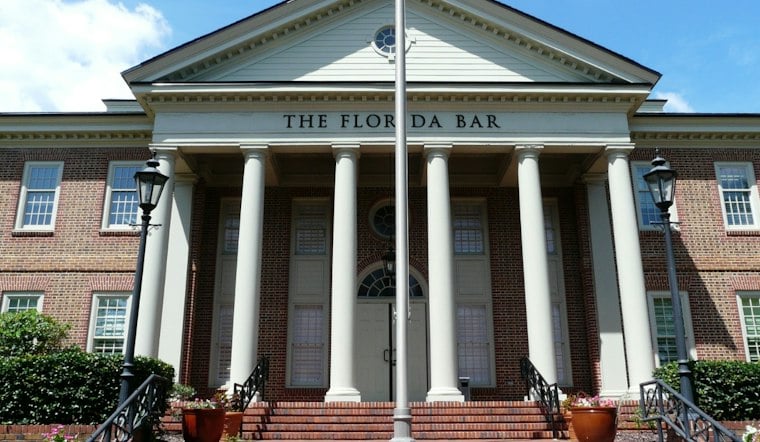
The Florida Bar confirmed it was aware of possibly inappropriate messages sent from an employee's social media account and had opened an internal investigation, according to the Miami Herald. A spokesperson for the organization confirmed the employee in question is Kade McLendon, a computer technician who has worked at the Bar since June 2024, but declined to comment further beyond acknowledging that the investigation was underway. McLendon was unavailable for comment Monday, and his Instagram and LinkedIn accounts were both shut down that same day.
The messages, displayed across 12 screenshots Wilson shared, included three uses of a racial slur, two uses of a homophobic slur, rape imagery, and violent slavery imagery, per the Herald's reporting. One message read, “I hope my great grand daddy beat urs so hard,” while another referred to Wilson as “farming equipment.” A separate message told Wilson, “I am going to rape, beat and kill ur family,” and others wished painful sexual violence on him simply because of his performance on the field. The Shadow League reported that one message also invoked segregation directly, telling Wilson, “You're the type of people that should be forced to the back of the bus,” as detailed by The Shadow League.
A Rivalry Game Decided In Double Overtime
The harassment followed Miami's 43-35 double-overtime victory over in-state rival Florida State at Hard Rock Stadium, a win that kept the Hurricanes undefeated at 6-0, according to the Miami Herald. Wilson played a direct role in the game's final sequence, drawing a critical fourth-and-21 holding penalty against Florida State offensive lineman Xavier Chaplin that wiped out a Seminoles touchdown and pushed FSU back to fourth-and-31, a sequence The Shadow League's account says set up the game-ending interception on the next play.
Wilson shared the screenshots publicly the day after the game, captioning them with a nine-word statement: “Glimpse into the life of a black student athlete,” as reported by Complex. The move put a spotlight on the kind of digital harassment Black collegiate athletes often face after high-profile games, turning what might have stayed private into a public reckoning for the sender and, now, his employer.
Wilson's Path To Miami
Wilson arrived at Miami this season as a transfer from Missouri, where he recorded nine sacks in 2025 and earned second-team All-SEC honors. Before that, the Venice High School graduate began his college career at Georgia, per the Herald's reporting, making him one of the more high-profile defensive additions to a Miami team now undefeated six games into the season.
What McLendon's Ties To Florida State Suggest
Online users identified McLendon's Instagram profile and connected it to details from his since-deleted LinkedIn resume, which reportedly showed he attended Florida State University from January 2022 to December 2023 before joining the Florida Bar in June 2024, according to The Shadow League's reporting. Miami Herald reporting likewise notes McLendon graduated from Florida State, a detail that has fueled public scrutiny given the rivalry context of the game that preceded the messages.
Potential Legal And Professional Consequences
Under Florida Statute § 836.10, sending an electronic record containing a written threat to kill or cause bodily harm is a second-degree felony punishable by up to 15 years in prison and a $10,000 fine, according to Richard Hornsby Law. Separately, Florida's cyberstalking statute, Florida Statute § 784.048, classifies repeated, malicious electronic communications that cause substantial emotional distress and serve no legitimate purpose as a first-degree misdemeanor punishable by up to a year in jail, per Jeff T. Gorman Law Offices, with the offense escalating to a felony if it includes a credible threat.
The Florida Bar's own electronic communication policy warns employees and legal personnel that privacy settings do not guarantee confidentiality and explicitly directs staff not to disparage or humiliate others on social media, according to the organization's published guidance. That policy notes information posted to social platforms can remain stored permanently, a detail that could weigh on the Bar's internal review of McLendon's conduct.
Part Of A Broader Pattern
The Shadow League situated the incident within a wider pattern of Black athletes facing severe digital harassment after high-stakes games, drawing a comparison to a prior case in which an employee was fired after sending a racist text message to WNBA star Dearica Hamby. Public exposure on social media has repeatedly triggered workplace investigations in similar cases, the outlet reported, a dynamic now playing out with the Florida Bar's review of its own employee's conduct.





