

























































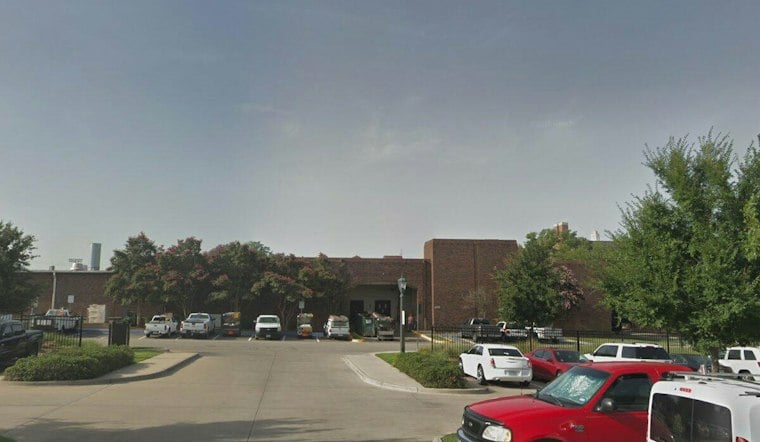
The McKinney City Council’s approval of a proposed mosque campus became more than a land-use dispute: the decision prompted a recall effort and sharpened debate over how local officials treat religious institutions. Former Mayor George Fuller later pointed to the conflict as a warning about the gap between religious liberty as a principle and its practice in public life.
Fuller made the remarks during a panel discussion at Southern Methodist University Thursday, Oct. 22, part of the annual summit hosted by the DFW Alliance for Religious Freedom and Human Dignity, a nonpartisan interfaith and civics group, according to The Dallas Morning News. A Republican who served as McKinney mayor from 2017 to 2025, Fuller reflected on the August council meeting and urged members to apply the law and city rules evenhandedly.
That request centered on the McKinney Islamic Association, a mosque built almost 30 years ago, seeking approval for a new campus. The McKinney City Council voted unanimously on Aug. 4 to approve the association's site plan for a new sanctuary, gym and classroom building, following more than four hours of public comment, according to dallasnews.com. More than 150 people had signed up to speak, and police intervened during the heated proceedings, the Dallas Express reported.
A Fully Compliant Plan Met With Fury
The revised plans submitted by the association included three smaller buildings and addressed traffic, drainage and parking concerns through redesign and engineering studies. City documents described the site plan as fully compliant with city rules, requesting no zoning variances or design exceptions. The association had paused an earlier rezoning request in 2024 after city officials said the proposed building was too large for the site, and it has been part of the McKinney community since the 1990s.
The approved site covers about 5.5 acres at Virginia Parkway and South Crutcher Crossing, with 206 parking spaces, 79 more than the 127 the city's formula requires, per the Dallas Express. The current mosque will stay open while the new campus is built, according to Fox4News. Despite the plan's compliance with city code, Fuller described the public reaction as something he did not expect from his own community, saying he did not anticipate residents speaking with such hate and bigotry.
What the law and data can show
The U.S. Department of Justice says the Religious Land Use and Institutionalized Persons Act (RLUIPA) bars land-use regulations that substantially burden religious exercise unless the government demonstrates a compelling interest pursued through the least restrictive means. The standard alone does not resolve whether McKinney violated the law. Statewide figures and county religious-congregation records have limits, too. A Texas Observer analysis of Texas Department of Public Safety data reported at least 549 documented hate crimes in 2022, up 6.4 percent from 2021; the total includes all bias categories and does not measure anti-Muslim incidents or public attitudes. The Association of Religion Data Archives’ 2020 Collin County report cautions that changing data-collection methods affect comparability, so congregation and adherent figures are not a direct census of McKinney’s Muslim population or proof of growth.
Traitor Accusations and a Recall Fight
Fuller said some meeting attendees called him a traitor and that a woman physically confronted him. He said the hostility from neighbors surprised him and pointed to social media and a political climate that rewards division and fear over solutions. He also condemned anti-Muslim rhetoric from civic leaders, including U.S. Rep. Keith Self.
The fallout from the council's decision has extended well beyond the meeting room. A group is seeking to recall four McKinney City Council members over the mosque decision and broader frustration with city growth, and organizers told CBS News they were confident they could gather the 5,800 signatures needed. Fuller is challenging that recall effort and has asked law enforcement to investigate a petition of signatures submitted the previous month, alleging the documents include false statements from signature collectors.
Fuller described Muslim residents as part of McKinney’s everyday community, naming educators, service workers, first responders, business owners and parents. He urged the summit audience to protect religious liberty and civil discourse by seeing one another as neighbors rather than as members of opposing camps.
Other Panelists Point to a Wider Pattern
Fuller was joined on the panel by Azhar Subedar, an imam and co-author of “I Am the Other,” who said Muslims in Texas are living in fear and with caution. Subedar encouraged both non-Muslims and Muslims to get to know their neighbors and said he wished people would simply see Muslims as people.
Eric Baxter, an elder in the Church of Jesus Christ of Latter-day Saints in Washington, D.C., and vice president of the Becket Fund for Religious Liberty, told the panel that more groups in America enjoy religious liberties than before even as hostility toward religion remains substantial. Baxter compared the current anti-Muslim rhetoric to anti-Catholic sentiment in the mid-19th century, when large numbers of Catholic immigrants arrived in the United States and the backlash created violence and problems nationwide, he said. He urged people of all faiths to stay aware of potential threats to religious liberty.
The McKinney dispute fits into a broader pattern across Texas, where elected officials are increasingly treating ordinary Muslim religious practices, including prayer, dress, marriage counseling and mosques, as political threats, according to The Conversation. In June, Bo French, the Republican nominee for Texas railroad commissioner, wrote on social media that he would not rest until every Muslim was gone, the outlet reported.
Rhetorical attacks on Muslims by top Texas leaders have become more pronounced and appear to be trickling down to local communities, The New York Times reported in August. That reporting noted a man was arrested and charged with making a terroristic threat at a major new Islamic center in Houston, and that a woman in Conroe who told Muslim shoppers they were not welcome in the state or the country later received nearly $250,000 from supporters after video of the confrontation circulated. Texas candidates campaigning in the primaries made Muslims and what they called the Islamification of Texas central to their campaigns, PBS reported, pointing to backlash against the proposed Epic City development northeast of Dallas, where online commentators labeled the roughly 1,000-home project an Islamic stronghold and “Sharia City.”
Fuller urged the SMU audience to treat the McKinney dispute as a warning about how religious liberty can be tested in local civic life. He said the principle remains strong in America but is increasingly fragile in practice.


