

























































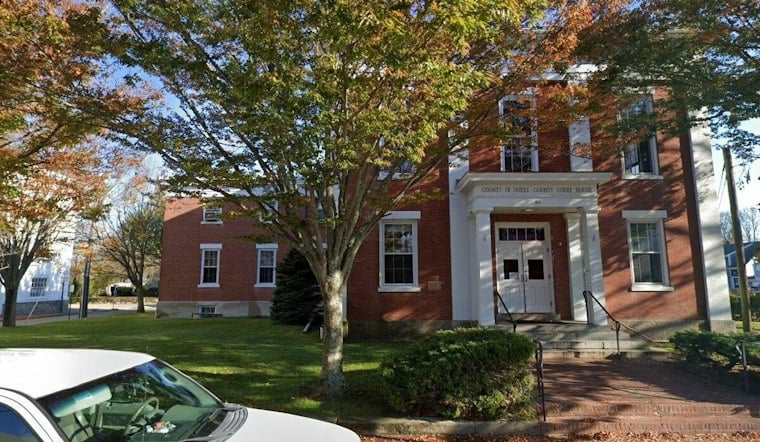
Former Oak Bluffs fire chief John Rose has formally denied allegations that he planted a hidden camera in a teenage girl's bedroom, filing a response in Dukes County Superior Court that disputes nearly every core claim in the $1 million civil lawsuit brought against him by the girl and her mother. The response, filed this past Thursday, pushes back on a case that has already ended in a criminal probation deal for Rose earlier this year.
The lawsuit, filed in August and first detailed by the Vineyard Gazette, accuses Rose of invasion of privacy and infliction of emotional distress, seeking at least $1 million in compensatory damages. According to the complaint, the girl's mother and daughter were living at Rose's home in Vineyard Haven in 2023 when the teen found a device resembling a USB charger in her bedroom, positioned toward a mirror where she regularly changed clothes.
The complaint, as reported by the Martha's Vineyard Times, alleges the device contained a concealed camera lens hidden behind a small opening in its exterior, and that neither the daughter nor her mother ever consented to a camera being placed in the bedroom. The family says Rose took the device after it was discovered and removed its memory card without their knowledge, then the mother and daughter left his home shortly afterward and contacted police.
Rose's Formal Denials
In his October 29 response, Rose denies knowing about any recording device in the bedroom at all, even while acknowledging that he saw a device that looked like a USB charger. He also denies removing a memory chip from any such device and denies being in a relationship with the mother at the time of the alleged incident. Rose further states that he does not know what happened after the mother left his home with her children.
Beyond the factual denials, Rose's filing argues two legal points: that he is not responsible for the alleged actions and therefore the family is not owed compensation, and that the plaintiffs cannot recover duplicative damages for the same alleged injury even if liability were established. Both sides have demanded a jury trial in the case, which according to the Gazette had not yet had an initial hearing as of early October, and no hearing date has since been reported.
A Criminal Case That Never Reached Trial
The civil filing lands against the backdrop of a criminal case that was resolved without ever going before a jury. Rose was charged with attempted crimes tied to the secret camera allegations and initially pleaded not guilty in Edgartown District Court in August 2024, months after he was arrested at Boston Logan International Airport that January. But the case never went to trial. In March, Rose admitted sufficient facts on two counts of attempt to commit a crime, covering attempted secret surveillance of a nude or partially nude person and attempted posing or exhibiting a child in nudity.
Judge Benjamin C. Barnes continued the case without a finding and placed Rose on 14 months of probation through May 22, 2027, the Gazette reported. A separate charge, alleging Rose photographed, videotaped, or electronically surveilled a partially nude or nude person, was dismissed that same day, partly tied to the plea agreement and partly due to evidentiary issues in the case. Local attorneys cited by the Gazette note that admitting to sufficient facts means a defendant acknowledges prosecutors had enough evidence to prove guilt without technically entering a guilty plea, and that the case will be dismissed outright if Rose completes probation successfully.
Fallout at Two Fire Departments
The allegations upended Rose's standing in Island emergency services. He had already resigned as Oak Bluffs fire chief in 2020. He went on to work with Tisbury EMS in 2021 and joined the West Tisbury Fire Department as a volunteer in 2022, but was suspended from that department in December 2023 after a harassment prevention order was issued against him the same month.
What the daughter experienced, according to the complaint, was anxiety, fear, and humiliation, along with the loss of a sense of safety in a place where she expected privacy. Massachusetts law, under General Law Chapter 272, Section 105, makes it a crime to willfully photograph a nude or partially nude person in secret, without their knowledge and consent, when they have a reasonable expectation of privacy, punishable by up to two and a half years in the house of correction, a fine of up to $5,000, or both — the statute underlying the kind of conduct alleged in the now-closed criminal matter.





