

























































Trey Kaufman-Renn's bid to keep playing college basketball cleared a major legal hurdle Friday, when a judge granted the former Purdue forward a preliminary injunction against the NCAA, extending his eligibility for a sixth season while his lawsuit continues. The decision keeps alive the possibility that Kaufman-Renn, who was selected in the second round of the 2026 NBA draft by the Minnesota Timberwolves but never signed a contract, could still suit up for a college team this season.
Judge Sides With Kaufman-Renn in Clark County
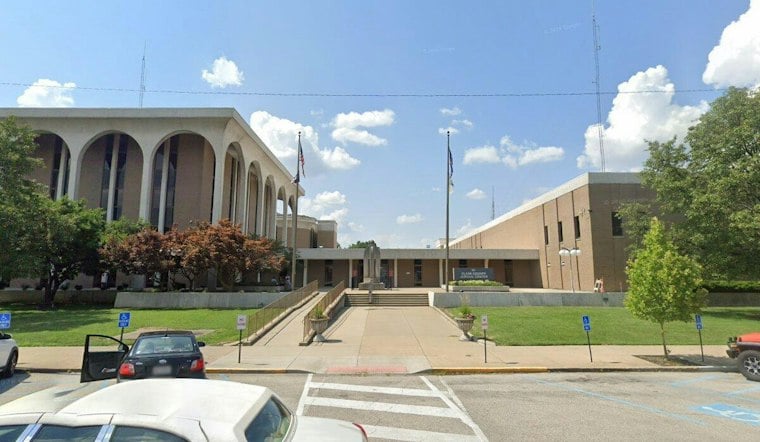
Special Judge Justin Mills in Clark County Circuit Court granted Kaufman-Renn's motion for a preliminary injunction against the NCAA, according to IndyStar. The ruling came after Kaufman-Renn had already secured a temporary restraining order that allowed him to move forward with finding a team for the coming season until Friday's hearing, per the same outlet's reporting. The preliminary injunction now extends his eligibility for the duration of the case, though the text of Mills' ruling has not been publicly released, leaving the precise terms of the order unclear.
Kaufman-Renn had exhausted his eligibility under both the NCAA's old season-based model and its new age-based system after redshirting during the 2021-22 season and then playing four full seasons, exhausting his eligibility under either framework, the station's earlier report noted. His legal team argued that athletes who played during the 2025-26 academic year were allowed to extend their careers, a position at the heart of his case against the NCAA.
No Team Yet, Despite Interest
Even with the court win, Kaufman-Renn has not signed with a professional or college team. He has entered the transfer portal, according to ESPN, and several programs have expressed interest in adding him for the 2026-27 season, per Yahoo Sports. He has already ruled out a return to West Lafayette, announcing in an Instagram post that he would not go back to Purdue for a prospective sixth season.
“Four truly unforgettable years,” Kaufman-Renn wrote, adding that “his chapter in black and gold has come to an end, but Purdue will always be part of me.” The 6-foot-9 forward was a first team All-Big Ten selection and an honorable mention All-American during the 2024-25 season, when he averaged 20.1 points and 6.5 rebounds, Yahoo Sports' report shows, and he helped lead the Boilermakers to their second Elite Eight appearance in three years.
More Legal Fights Could Follow
Even with the injunction in hand, Kaufman-Renn's path forward may not be simple. His case could still require additional legal proceedings against whatever team he eventually tries to join, since several major conferences have passed their own rules complicating matters for players in his situation. The Big Ten, the Atlantic Coast Conference, the Big 12 and the Southeastern Conference have all passed rules prohibiting athletes who declared for the NBA draft and did not withdraw from competing, according to Yahoo Sports' reporting.
The NCAA is expected to appeal the preliminary injunction, per an online report cited by IndyStar, though no filed appeal or appellate ruling has been confirmed.
Part of a Wider Legal Battle Over Eligibility
Kaufman-Renn's case is one piece of a much larger fight playing out in courtrooms across the country over the NCAA's new age-based eligibility model. The NCAA itself describes the shift as moving eligibility “from a season-based and waiver-driven system to a time-based system with few exceptions,” according to NCAA.org. Under the new rule, eligible student-athletes generally have up to five years of eligibility, with the clock starting at the earlier of full-time enrollment or an age-based trigger, and the governing body has said waivers — including clock extensions, hardship and delayed-enrollment waivers — will not be available going forward, with only narrow exceptions for pregnancy, military service and religious missions.
Other athletes have found mixed results challenging those rules in court. An Ohio judge granted 24 men's and women's basketball players a preliminary injunction allowing them to continue their college careers and enter the transfer portal, but an Ohio appellate court later reversed that injunction for Xavier's Filip Borovicanin and nearly two dozen other players, according to Sportico. The Kentucky Court of Appeals reached the same conclusion in Wells v. NCAA, a case involving 38 former athletes seeking to return, Sportico reported. Eleven Division I athletes, including basketball standouts Cade Tyson and Brock Wisne, have also filed a federal class-action lawsuit in Colorado challenging the new rules, according to ESPN's coverage of that case.
A separate U.S. District Court ruling allowed Division I athletes who began college in 2022-23 and used their fourth season in spring 2026 to compete for a fifth season in 2026-27, Sports Business Journal reported, while a former Emory University basketball player was granted a preliminary injunction in New York based in part on an argument that NCAA bylaws lacked exclusionary language against athletes who played a fourth season in 2025-26, per Yahoo Sports. With rulings splitting in different directions across multiple states, Sports Business Journal has described the broader eligibility fight as having the “potential to wreak havoc on rosters across the country” — a dynamic that leaves Kaufman-Renn's own next move, and his eventual team, still an open question.





