

























































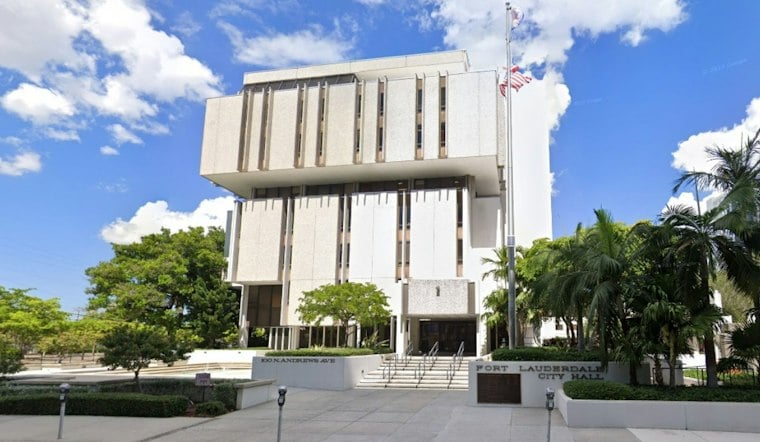
Two candidates with deep roots in South Florida political families are facing off for Fort Lauderdale's District 1 commission seat, and they can't agree on much when it comes to Amendment 3, the statewide property tax measure on the November 3 ballot. Attorney John Rodstrom III opposes the measure outright, while former commissioner Heather Moraitis is backing it. Both say they'd personally absorb a pay cut if it passes and city revenue shrinks.
The special election was triggered by the resignation of Commissioner John Herbst, who stepped down effective November 2 to set the stage for a vote on the final two years of his term, according to WLRN. Herbst's path to the commission was itself unusual — he spent 16 years as Fort Lauderdale's city auditor before being fired in 2022, then won the District 1 seat later that same year. As Axios reports, Rodstrom and Moraitis are now running to fill the remainder of that term, with Amendment 3 emerging as the defining fault line between them.
Rodstrom, a business litigation lawyer, has called Amendment 3 poorly drafted and not thought out, per the same Axios report, warning it could create significant consequences for local governments and other taxing authorities that provide essential services. He has said Fort Lauderdale could manage the amendment's financial fallout without sacrificing core services, but added that leadership should be willing to share in the sacrifices it asks of others — telling Axios he would accept a pay cut himself if the measure passes.
Moraitis Bets On Belt-Tightening At City Hall
Moraitis, who represented District 1 from November 2018 until stepping down in April 2022 and is married to former state representative George Moraitis, takes the opposite view. She supports Amendment 3 and argues, per Axios, that government should tighten its belt before taxpayers when affordability is a top issue, insisting residents should keep more of their own money. She has pointed to $15 million in savings she believes Fort Lauderdale could find without touching police, fire, or other core services, and like Rodstrom, she says she would accept a pay cut to help offset any revenue loss.
Rodstrom's own civic résumé includes a seat on Fort Lauderdale's Budget Advisory Committee, and he carries a prominent political pedigree as the son of former Broward County Commissioner John Rodstrom Jr., according to Florida Politics. The outlet notes the race features two candidates with strong ties to established local political families, a dynamic that has shaped coverage of the contest since it began.
What Amendment 3 Would Actually Change
Amendment 3 reached the ballot after the Florida Legislature approved House Joint Resolution 1-F during a June 2026 special session, passing 75–26 in the House and 30–9 in the Senate; it now needs 60% voter approval to amend the state constitution. Under its provisions, the non-school homestead exemption would rise from its current $50,000 to $150,000 on January 1, 2027, then to $250,000 the following year, with annual adjustments tied to the Consumer Price Index starting in 2029, according to St. Johns County. The measure would also lower the maximum annual assessment increase cap for non-homestead properties — including commercial real estate, rental units, and second homes — from 10% to 5% beginning in 2027, per the Florida League of Cities.
The fiscal stakes are not abstract. Florida's Revenue Estimating Impact Conference has projected the amendment would cut property tax revenues for local governments statewide by nearly $5 billion in 2027, growing to roughly $12 billion annually on a recurring basis within five years, according to the Florida Policy Institute. Axios likewise notes the amendment could cost local governments billions.
Fort Lauderdale's Budget Already Under Scrutiny
The debate lands at a sensitive moment for Fort Lauderdale's finances. The city adopted a $1.28 billion budget for Fiscal Year 2027 while holding its operating property tax millage rate steady at 4.1193 for the 20th consecutive year, per reporting cited by the City of Fort Lauderdale. That steady rate has become a point of local pride even as the city, Hoodline previously reported on a budget brawl involving outgoing Vice Mayor Herbst over a separate $725 million spending fight.
Major law enforcement and municipal leadership groups, including the Florida Sheriffs Association and the Florida League of Cities, have publicly urged voters to oppose Amendment 3, warning the revenue losses would endanger local public safety budgets. Fort Lauderdale Mayor Dean Trantalis echoed those concerns during a September candidate forum hosted for District 1 voters by the League of Women Voters of Broward County, delivering opening remarks that framed the referendum as a serious fiscal risk for city operations.
A Vacant Seat Tied To Fort Lauderdale's Next Chapter
Herbst's departure leaves open a seat that has recently been central to debates over District 1's growth, including discussions Hoodline covered about the Uptown Village development boom. Whoever wins will inherit not just that development conversation but also whatever budget reality follows the November 3 statewide vote on Amendment 3.
For District 1 voters, the choice is layered: two candidates from well-known local political families, Rodstrom the son of a former county commissioner and Moraitis the wife of a former state representative, each offering a distinct vision for how Fort Lauderdale should respond if the state cuts into its property tax base. Both have said they would personally take a pay cut if that revenue loss materializes — the one point of agreement in an otherwise starkly divided race.





