

























































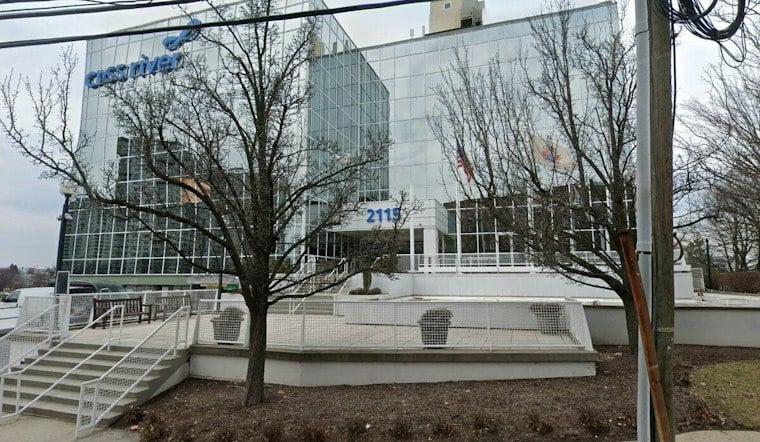
Cross River Bank, headquartered in Fort Lee, has struck a partnership with Ripple to wire RLUSD, Ripple's U.S. dollar-backed stablecoin, directly into the bank's proprietary Core Operating System. The integration adds support for transactions on the XRP Ledger, a public blockchain, sitting alongside the traditional payment rails the bank already runs.
According to ROI-NJ, the move is meant to help issuers and acquirers settle payments intraday, cut down on settlement latency, and tap blockchain-based payments through a platform that is still a regulated bank. Cross River's technology platform, as described by financialcontent.com, serves as the integration layer between regulated financial services and blockchain-based payment networks, and customers can now tap RLUSD through a single API connection without building their own blockchain infrastructure.
One Platform, Two Kinds of Dollars
The partnership positions RLUSD as an additional payment rail within Cross River's platform rather than a replacement for existing ones. Per the same report, fintechs and business customers will be able to move between U.S. dollars and RLUSD, settle cross-border payments and treasury movement 24/7, and access ACH, wires and real-time payments all through one banking platform and API connection.
Adam Goller, head of fintech banking at Cross River, framed the pitch in plain terms: “Businesses shouldn't have to rely on several different providers to move money across the globe. Our partnership with Ripple eliminates that complexity and makes payments simpler.” Cross River and Ripple described the effort as part of a broader push to let stablecoins and traditional dollars move alongside one another under consistent standards.
Speed Claims and the Fine Print
XRP Ledger transactions settle in three to five seconds at a fraction of a cent and can move 24/7, according to the companies, as reported by financialcontent.com. RLUSD itself is built for institutional use and issued on the XRPL blockchain, and Cross River noted that its services tied to the integration are currently available only in limited states, without specifying which ones.
Markus Infanger, senior vice president of RippleX at Ripple, said the company is bringing RLUSD and XRP Ledger settlement into Cross River's regulated banking platform, adding that stablecoins will transform payments by becoming part of the banking infrastructure businesses already use. Adam Goller, Cross River's head of fintech banking, said the integration expands stablecoin infrastructure capabilities Cross River already had in development.
How Big Is RLUSD, Exactly?
Ripple-related materials cited by financialcontent.com say RLUSD has grown to more than $2.5 billion in market capitalization, with more than $1 billion issued on the XRP Ledger. But data from RWA.xyz reported separately by Yahoo Finance placed the stablecoin's total capitalization at approximately $2.02 billion, with about $962.8 million circulating on the XRP Ledger — a notable gap between the two figures that the available reporting does not reconcile.
What both accounts agree on is the trajectory. Yahoo Finance reported that RLUSD, which launched in December 2024 and is issued natively on both Ethereum and the XRP Ledger, saw its market value climb eightfold from April 2025, when its capitalization was approaching just $250 million. The outlet also noted that RLUSD transfer volume reached $11.81 billion across 1.39 million transactions in a recent 30-day stretch, and that RLUSD now represents more than 90% of the stablecoin supply on the XRP Ledger.
Reserves, Oversight and the Regulatory Pitch
Ripple says RLUSD is backed one-to-one by cash, U.S. Treasuries and government money market funds, with BNY Mellon serving as reserve custodian, according to the company's own materials. Ripple also states that RLUSD is issued by Standard Custody & Trust Company, a Ripple subsidiary operating under a limited-purpose trust company charter from the New York Department of Financial Services, which Ripple says provides ongoing supervision along with reserve, segregation and independent-attestation requirements.
The push to fold stablecoins into everyday banking rails is not unique to Cross River. As pymnts.com put it, the industry is working to ensure end-users start treating stablecoins as an always-on layer for moving liquidity, extending credit and settling financial obligations. That same report noted CRB Group raised $50 million in March to keep expanding its embedded finance capabilities, underscoring how much capital is chasing this kind of infrastructure bet right now.





