

























































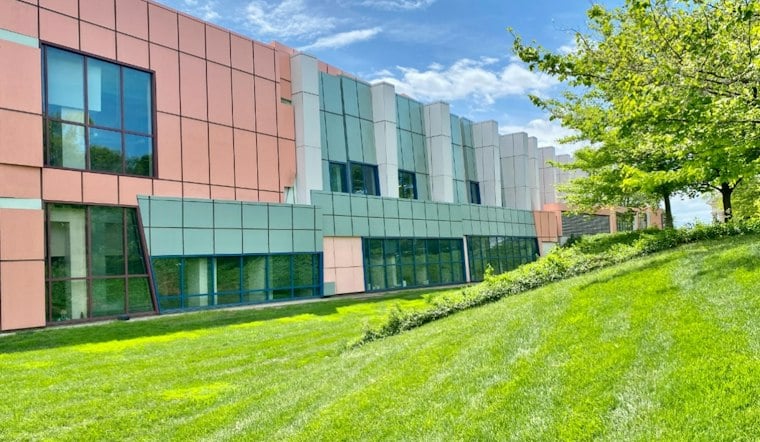
Four winners of the MacArthur Foundation's so-called “Genius” grant sat down at the University of Cincinnati's Probasco Auditorium on Oct. 15 to argue that artificial intelligence isn't really the villain in the modern workplace story — the people deploying it are. The event, called Genius Lives Here, drew historian Shailaja Paik, Microsoft researcher Mary L. Gray, New York University professor Jennifer L. Morgan and Cornell Tech computer scientist Nicola Dell into a shared conversation about inequality, technology and the future of human labor.
The panel, titled “Rehumanizing Labor: Putting People Back at the Center of Work,” was presented by UC's College of Arts & Sciences and funded by the John D. and Catherine T. MacArthur Foundation, running from 5 to 7 p.m. with a livestream planned, according to the University of Cincinnati. As reported by The News Record, UC's College of Arts & Sciences invited the four fellows specifically to address public concern about AI's effects on the workforce. Paik, a distinguished professor of history at UC, told the audience that labor can be rehumanized and technology reimagined through discussion, according to the student paper's account.
A Historian's Local Milestone
Paik's presence on stage carried its own significance: she is UC's first and only MacArthur Fellow, a distinction the university confirmed when she received her award in 2024. Gray, who won her fellowship in 2020 and now serves as senior principal researcher at Microsoft Research, argued that technology reflects how people value themselves and one another. The discussion also touched on ghost work.
Gray also raised data ownership as a political issue as much as a social one, saying citizens have a fundamental right to know what happens to the data they create. Morgan, a professor of social and cultural analysis at NYU who received her MacArthur award in 2024 alongside Dell and Paik, pushed the conversation into historical territory, comparing AI to slave labor and arguing that today's AI discourse echoes centuries of assumptions about appropriating others' labor. She described the violent expropriation of others' labor as profoundly human, according to the same account, while also telling attendees that moving away from an AI-forward workforce is possible, if difficult, and would require conversation, collective engagement, argument, disagreement and hard work.
Computer Scientist Warns Against Blind Trust
Dell, an associate professor of computer and information science at Cornell Tech who also received a 2024 MacArthur award, voiced a narrower but pointed worry: that companies adopt technologies without fully understanding them. She told the audience that many people adopt systems without understanding them or knowing whether the output is actually good or better than what came before, per The News Record. Dell also connected that concern directly to the classroom, warning that students may turn to ChatGPT after a single failed attempt rather than sit with a task long enough to struggle through it — a habit she said undercuts the learning, expertise and resilience that come from working through difficulty.
That classroom anxiety found an echo from Matthew Kraus, UC's department head of Judaic studies and director of the Hebrew program, who proposed that the College of Arts & Sciences create an intensive course addressing AI's challenges to student learning without using AI at all. Kraus argued students should be fully unplugged and engage in learning and critical thinking, according to The News Record's coverage of the event.
What the Research Actually Shows
The panelists' warnings about AI and work land against a research picture that is more mixed than alarmist. A Stanford Institute for Economic Policy Research brief found little evidence that AI is causing significant job losses right now, noting that unemployment among the most AI-exposed workers has risen only slightly more than among the least-exposed since 2022, according to Stanford SIEPR. That same brief found employment at firms adopting enterprise AI actually grew 10% in the two years after adoption, and a generative AI assistant studied in customer support boosted novice workers' output by 30% per hour.
Separate Stanford Digital Economy Lab research paints a more targeted concern: while there's no widespread, economy-wide job displacement tied to AI, employment among workers ages 22 to 25 in highly AI-exposed occupations sat about 19% below expected levels as of June, a shortfall that had widened from 15% just the year before, according to Stanford's Digital Economy Lab. That adjustment appears to be happening mainly through reduced hiring of young workers rather than layoffs.
The Federal Reserve Bank of New York has also discussed the relationship between AI infrastructure and labor, according to the New York Fed's Liberty Street Economics blog.
Back at Probasco Auditorium, the panel closed on a note aimed squarely at students: Gray told the audience that learning how to learn and knowing how to ask good questions remain resistant to AI, a skill she framed as a kind of insurance against whatever comes next. Gray is a MacArthur Fellow.





