

























































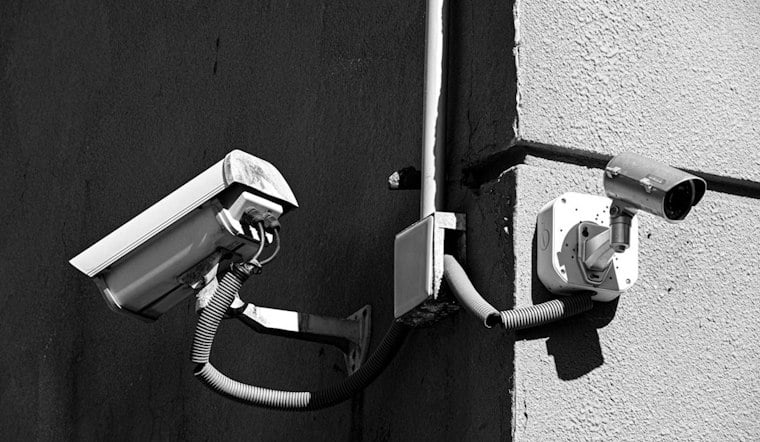
Fullerton's city council voted this week to shut down its network of Flock Safety license plate readers for six months, making it the first city in Orange County to suspend use of the controversial surveillance cameras. The 3-1 vote came after more than a dozen residents spoke out against the system at a council meeting, with one council member warning that unchecked surveillance databases threaten both privacy and freedom.
The council's decision, which took place on October 6, pauses all 17 stationary cameras and two mobile units that make up the city's Flock network, according to the Los Angeles Times. Fullerton has used automated license plate reader technology since 2007 and signed its current contract with Flock in 2021, a deal that runs through 2028 and costs the city $51,000 a year for its 19 cameras, per police spokesperson Jon Radus. Council member Jamie Valencia cast the lone dissenting vote, saying she was uncomfortable turning off cameras that she believes have helped officers do their jobs; she had pushed instead for a shorter two- or three-month pause. Council member Nick Dunlap ultimately proved the swing vote for the full six-month suspension, saying active surveillance databases raise serious concerns about freedom and the potential for future misuse.
Residents Demand Answers Before Any Return
The vote followed sustained public pressure, with Fullerton residents criticizing the camera system during the meeting and more than a dozen speakers lining up to voice objections, the newspaper's report notes. Council member Ahmad Zahra said the city should use the pause to assess whether police can achieve the same crime-solving results without the cameras running. Council member Shana Charles said she supported turning the cameras off and holding a community meeting, but stopped short of calling for their permanent removal.
Radus defended the technology's track record, saying Flock cameras have helped detectives solve crimes including burglaries and an attempted murder, while stressing that no arrests are based solely on a photograph. The department also tightened its own oversight before the vote, shifting its system audits from an annual schedule to quarterly reviews. Under the city's data policy, the system does not record audio or video — only still photographs of vehicles and license plates — and stores that data for 30 days, with backup copies taking an additional week to fully delete.
A Wave of Scrutiny Across California
Fullerton's pause lands amid a wider reckoning over license plate reader technology statewide. The case of a former Costa Mesa police officer looms large in that debate: Robert Jay Josett pleaded guilty in April to misdemeanor computer access fraud after making 13 CLETS inquiries between June and December 2023 to track his wife, an ex-girlfriend and a romantic rival, and accessing the department's Flock system, including in June 2024, according to the Orange County District Attorney's Office. Hoodline previously reported on the guilty plea. Costa Mesa itself opted to keep its Flock system running but changed its data-retention and sharing terms in response.
The American Civil Liberties Union has called for a nationwide “get the flock out” movement, describing the cameras as a building block of mass surveillance with little transparency, oversight or regulation. That critique carries statistical weight: a 2020 report by the California State Auditor found that 99.9% of the 320 million license plate images in the Los Angeles Police Department's system were from vehicles not on a hot list when captured. Under state law, Flock camera data cannot legally be shared to assist federal immigration enforcement. California's SB 34 establishes privacy and policy requirements for automated license plate reader systems.
Other Orange County Cities Still Weighing Options
Fullerton's move sets it apart from neighboring cities that have so far kept their networks intact. Santa Ana's city council plans to revisit its Flock and Motorola Solutions agreements at a future meeting, while Costa Mesa opted to keep its Flock system running but changed its data-retention and sharing terms in response, Hoodline reported in an earlier look at the county's stance. Flock cameras remain a flashpoint for privacy and surveillance concerns across Orange County more broadly, independent of Fullerton's decision.
The debate is playing out against a backdrop of mounting legal and financial pressure on the surveillance vendor itself. More than 50 municipalities nationwide deactivated, canceled or declined to renew Flock contracts during 2026 amid growing public scrutiny, according to The Guardian. Flock Safety responded this month by announcing plans to lay off roughly 18% of its workforce, about 270 employees, following a voluntary separation program, per Yahoo Finance. Meanwhile, the company's efficacy claims have come under fire: a September investigation by CBS News found that Flock's widely cited metric of helping solve “1 million crimes in 2025” relied on self-reported agency estimates and general investigative searches rather than verified case clearances.
Courts are also shaping the landscape Fullerton must navigate once its pause ends. A Santa Clara County Superior Court judge dismissed a constitutional challenge to San Jose's Flock network on October 2, ruling that police can conduct warrantless retrospective searches of stored license plate records, according to Davis Vanguard. An audit also alleged that out-of-state agencies had accessed local plate reader databases, according to CBS News.
What Happens When the Six Months Are Up
Fullerton's moratorium does not extend beyond city jurisdiction — Cal State Fullerton's own network of 46 Axion license plate reader cameras on campus will keep operating regardless of the council's vote. City leaders have pledged to hold a community meeting about the policing tool during the pause and plan to review crime-solving data trends, audit protocols with Flock, and the department's broader policies once the six months conclude.





