

























































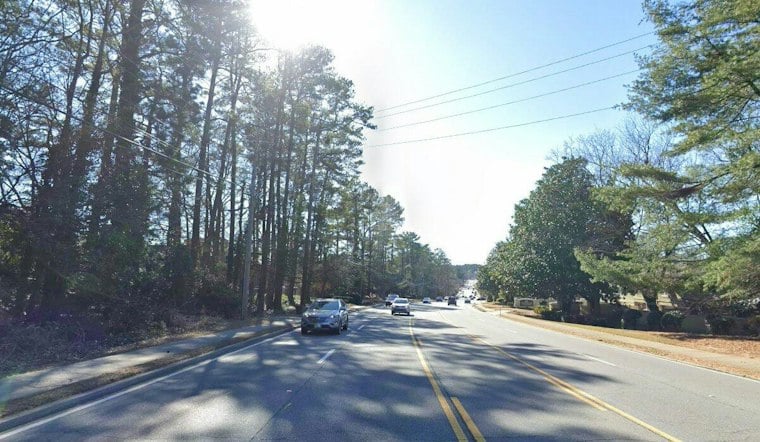
Thousands of Fulton County voters found their registrations marked as challenged this fall after county records mistakenly classified their home addresses as nonresidential properties. According to FOX 5 Atlanta, automated state records erroneously flagged a newly built apartment community on Roswell Road in Sandy Springs as a gas station, contributing to the wave of erroneous challenges that landed on thousands of active voters ahead of the midterm election.
The scale of the problem came into focus through a review by the ACLU of Georgia, which examined 7,642 Fulton County voters whose registrations had been classified as challenged. The organization found that more than 7,000 of those voters were flagged specifically because the county had classified their home addresses as nonresidential, according to the ACLU of Georgia. When the group randomly selected 1,100 of those flagged addresses to examine more closely, it found that hundreds turned out to be ordinary houses, apartments, or mixed-use buildings rather than businesses or vacant lots.
Fulton County Says Eligibility Isn't at Stake
Fulton County election officials, now facing scrutiny over the mass miscoding, told the ACLU that the incorrect classifications would not affect anyone's ability to vote, and that eligible residents could still cast ballots at their assigned polling locations. The county's own voter-registration guidance frames a challenged status as simply a flag that officials need to confirm a residential address so a voter receives the correct precinct ballot with the correct local candidates, per Fulton County's published guidance.
That reassurance lines up with separate guidance Fulton County provides on sample ballots, which states that a voter whose status appears as challenged on the My Voter Page or at a polling place is still able to exercise the right to vote. Georgia law also allows any registered elector of a county or municipality to challenge another voter's registration, and the county recommends that anyone filing such a challenge submit substantial proof, according to Fulton County's voter-challenges page.
Timing Raises Flags Under Federal Law
What concerns the ACLU most is not just the sheer number of misfires but when many of them happened. The organization identified 290 voters whose challenge dates fell on or after August 5, 2026, placing those cases inside a window protected under the National Voter Registration Act in the run-up to the November election. The ACLU of Georgia has urged action to protect the affected voters, arguing that late-cycle challenges carry heightened legal risk even when county officials insist eligibility itself is not in question.
The episode arrives against a backdrop of broader claims about the health of Georgia's voter rolls. A state audit from the Georgia Secretary of State's office previously estimated that no more than 0.1% of voter-registration records statewide would have allowed someone to vote despite an unverified identity, an invalid residential address, or unverified eligibility, according to the Georgia Secretary of State. Fulton County's Board of Registration and Elections has in the past convened special meetings specifically to review and resolve batches of voter residency challenges, a process the county has relied on in prior election cycles.
For now, the exact fate of the 290 voters flagged during the protected period, and how quickly the broader batch of misclassified addresses will be corrected, remains unresolved. What is clear is that a data error tied to how the state classifies properties, down to mistaking a Sandy Springs apartment complex for a gas station, has pulled thousands of otherwise unremarkable voter files into a challenge process just weeks before Election Day.





