

























































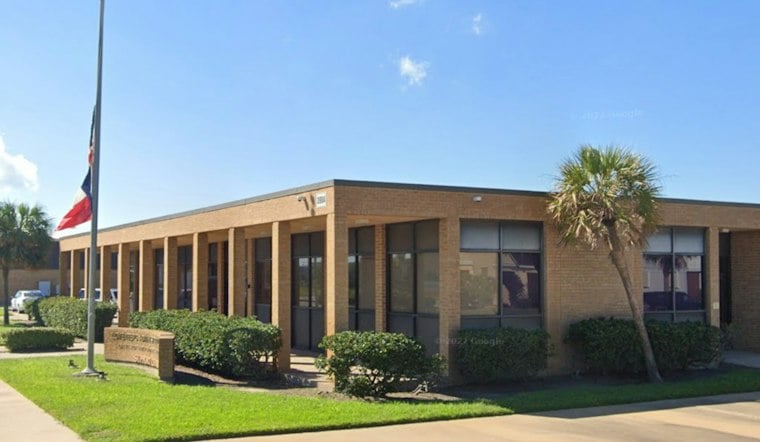
A state district court judge has ordered Galveston ISD to display donated Ten Commandments copies in classrooms within 10 days, closing out a months-long standoff between the district and the Texas Attorney General's office over a law requiring the postings in every public-school classroom in the state.
Judge Jeth Jones granted the attorney general's request for a temporary injunction, according to Houston Chronicle reporting. The order requires Galveston ISD to display Ten Commandments posters donated by state Sen. Mayes Middleton, though the district is not required to purchase additional copies to fill every classroom. The ruling effectively ends Galveston ISD's challenge to Texas's Ten Commandments classroom-display law, known as Senate Bill 10, which mandates the displays in public schools statewide.
The fight traces back to October 2025, when the Galveston ISD school board voted to delay installing the posters while a related lawsuit awaited a ruling from the U.S. Court of Appeals for the Fifth Circuit. The Houston Chronicle reported the vote came down 4-3 on Oct. 23, 2025, while Spectrum News dated the same vote to Oct. 22, 2025, describing it as a decision to delay posting until constitutional appeals were fully heard and decided. Middleton said at the time that he had donated the posters to the district and that trustees were obligated to put them up, telling the Chronicle, “I donated 10 Commandments posters to GISD and they must display them.”
Paxton's Lawsuit and the District's Pushback
Attorney General Ken Paxton sued Galveston ISD and its school board members in November 2025, according to the seed reporting, after accusing the district of flouting the display law. The Daily News reported the case stemmed from that November lawsuit, and Paxton had already warned, per the Chronicle, that any school district not covered by a court injunction could face legal action if it failed to comply. Galveston ISD trustees later voted 5-2, following more than two hours behind closed doors, to take no action on installing the signs until a court hearing, the Daily News reported.
The district maintained it believed state law conflicted with federal law and existing constitutional interpretations on religious displays in public classrooms, according to a statement reported by Houston Public Media. Anthony Brown said Middleton's donated posters were insufficient to fill every classroom in the district, but also said Galveston ISD would follow the law. William Farrell, meanwhile, said SB 10 is the law of the land and that Galveston ISD must display the Ten Commandments.
A Divided Fifth Circuit and a Pending Supreme Court Decision
The legal landscape shifted in April, when the Fifth Circuit ruled 9-8 that Texas could enforce Senate Bill 10, allowing the policy to take effect across the state. The Daily News reported the majority found the displays were passive postings that did not establish religion or coerce students, with the court discarding decades of precedent tied to the so-called Lemon test in favor of a history-based approach. The Lemon test had barred excessive government entanglement with religion, but the U.S. Supreme Court had already moved away from that framework in a 2022 ruling involving a public-school football coach who was suspended after refusing to stop leading players in Christian prayers after games.
The multifaith families challenging the law said they planned to seek Supreme Court review. The American Civil Liberties Union said in a statement, “We anticipate asking the Supreme Court to reverse this decision,” describing the plaintiffs in the underlying case, Rabbi Nathan v. Alamo Heights Independent School District, as a multifaith group of 15 Texas families. The Houston Chronicle had earlier reported that sixteen Texas families sued their school districts over the mandate, arguing it violated their First Amendment rights — the two accounts give differing counts of the families involved. Parents and advocates have since asked the Supreme Court to hear their challenge, and the court is expected to decide whether to take up the case by Oct. 28, 2026. Jones is expected to schedule a trial on the attorney general's claims against Galveston ISD trustees after June 2027, which the seed reporting says would allow time for a potential Supreme Court ruling on the law's constitutionality.
A Legal Patchwork Across Texas Districts
Galveston ISD's case fits into a broader, uneven legal fight playing out across Texas. A federal judge temporarily blocked 11 Texas school districts from complying with SB 10 in August 2025, citing likely First Amendment violations, according to Houston Public Media. A separate federal judge later blocked 14 additional districts from implementing the law that November. In a related case, a U.S. district judge in San Antonio ruled in August 2026 that the law could not take effect in districts where plaintiffs from a separate coalition of parents and advocates lived, after that group sued over the law's constitutionality in July 2026.
The ACLU also pointed to a federal injunction requiring certain Texas districts to remove Ten Commandments displays by Dec. 1, 2025, and barring new displays, after a judge wrote that displaying the Ten Commandments under SB 10 violates the Establishment Clause. Comparable fights have surfaced outside Texas, too: a federal appeals court in Louisiana blocked a similar law as unconstitutional, according to Spectrum News, and a judge in Arkansas barred four school districts from putting up the posters. The ACLU also noted that the U.S. Supreme Court struck down a similar Ten Commandments law in Kentucky nearly 50 years ago, ruling it violated the First Amendment — a precedent now squarely at odds with the Fifth Circuit's April decision on Texas's law.





