

























































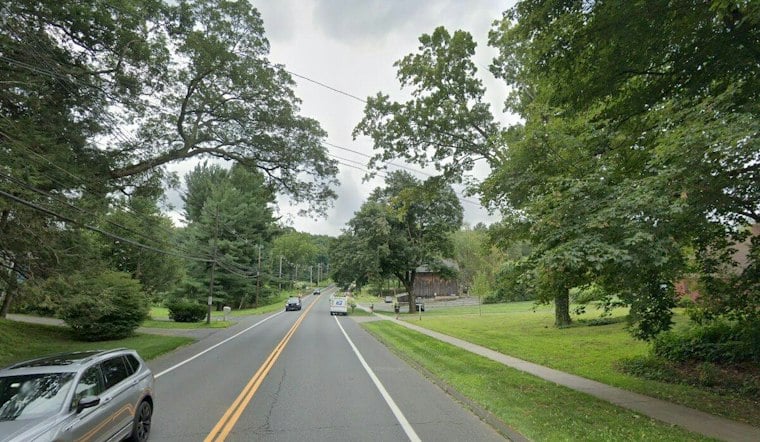
Glastonbury officials were scheduled to gather Tuesday morning at the Old Cider Mill to celebrate the completion of a 1,310-foot sidewalk along Main Street, closing what town leaders described as the last remaining pedestrian gap between South Glastonbury and the town center. The 10 a.m. ceremony was set to cap more than 20 years of planning and construction aimed at giving residents a safe way to walk a stretch of Route 17 that has long carried heavy vehicle traffic without a continuous footpath.
According to the Hartford Courant, the Town of Glastonbury, the Connecticut Department of Transportation, and the Capitol Region Council of Governments jointly celebrated the project's completion, which connects South Glastonbury to the existing sidewalk network to the north. The construction contract was worth $1,943,769, the Courant reported, and the finished path now improves pedestrian safety and connectivity along a corridor where Route 17 between South Glastonbury and Portland had average daily traffic of up to 17,000 vehicles in 2012, according to Kurumi. The ceremony was held at the Old Cider Mill, a timber-frame property dating to the 1870s that is recognized as the oldest continuously operating cider mill in the United States, per Historic Buildings of Connecticut.
Engineering Around a Constrained Highway
Building a sidewalk along an active state route required more than pouring concrete. The Town of Glastonbury shifted portions of the roadway up to 9 feet to the east to avoid steep roadside slopes, while also adding new stormwater catch basins that discharge into Holland Brook and reconfiguring the Chestnut Hill Road traffic signal to include a Lead Pedestrian Interval, according to the town's own project documentation. The Main Street sidewalk was completed and celebrated at this week's ribbon-cutting.
The route's traffic woes trace back further than most residents realize. Route 17 through South Glastonbury was originally planned in 1967 as a multi-lane express freeway connecting to Portland, before state transportation officials abandoned those freeway plans in the 1970s, according to the roadway history site Kurumi.
State Grant Covered Full Construction Cost
The project was funded through Connecticut's Local Transportation Capital Improvement Program.
“State transportation funding can make a real difference in a community,” said Laoise King, CTDOT deputy commissioner, according to the Courant. King said the agency uses the Local Transportation Capital Improvement Program to help towns such as Glastonbury improve pedestrian safety and build connections for people traveling without a vehicle, the Courant reported.
Corey Turner, chairman of the Glastonbury Town Council, said the sidewalk links neighborhoods and provides residents a safe, walkable path to the heart of South Glastonbury, per the Courant's report. Rob Aloise, director of transportation planning at the Capitol Region Council of Governments, said the new sidewalk shows how regional collaboration makes streets safer for everyone, adding that the Local Transportation Capital Improvement Program turns local priorities into improvements used by residents every day, the Courant noted.
Walkability Efforts
Glastonbury's Main Street project is an effort to expand walkability.
The timing lands two days after a three-car Main Street crash near Stockade Road trapped a driver on Sunday, October 18, underscoring the kind of traffic conditions residents navigate along the corridor.





