

























































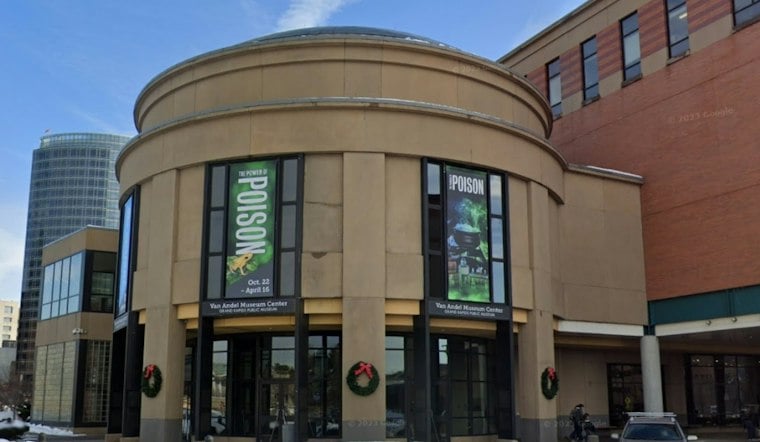
The Grand Rapids Public Museum reopened its redesigned Anishinaabek: The Original People of This Place exhibit on Monday, transforming a gallery that had been part of the museum since 1994 into an immersive new visitor experience. The gallery, located on the museum's third floor, now features hologram experiences, multimedia storytelling and a Veterans Wall of Honor built after years of collaboration between museum staff and Indigenous leaders.
The reopening came together after what the museum described as years of gathering feedback, consulting with Tribal leaders and community members, recording voices, designing the space and constructing the displays, according to the Grand Rapids Public Museum. As MLive reported, the museum developed the exhibit through a years-long collaboration with Indigenous leaders, tribal representatives, cultural experts and Michigan community members, saying Anishinaabek communities should play a central role in determining how their own stories are told.
A Gallery Rebuilt With Tribal Guidance
Central to the redesign was the Eshtoojik Advisory Council, a group representing Michigan's federally and state-recognized tribal governments. Council members began working alongside museum staff and exhibit partners in 2023 to review content and provide cultural guidance, helping ensure the exhibit's stories are authentic and community-informed, per MLive's reporting. The museum had announced the redesign and expansion would take roughly two years to complete, a timeline that matched the council's involvement, according to Native News Online.
Katrina Furman, Anishinaabe Curator for GRPM, said the finished exhibit reflects collaboration between Anishinaabe and museum communities, along with the contributions of artists, knowledge keepers and craftspeople, MLive reported. Dale Robertson, president and CEO of GRPM, said the museum aimed to listen and work alongside Indigenous partners so the space reflects their voices and experiences. The exhibit itself shares Anishinaabek history, traditions, languages and continued presence through Indigenous perspectives and voices, incorporating language, oral histories and personal narratives throughout the gallery.
Inside The Redesigned Exhibit
The updated gallery includes cutting-edge technology, vibrant natural elements, connections to the Grand River and sensory experiences alongside works by Anishinaabe artists, per the museum's own description. One section, called Ogitichidaak, includes an interactive screen where visitors can view profiles and learn about Anishinaabe veterans. Any Anishinaabe veteran is eligible for the Wall of Honor, whether they served in wartime or peacetime and whether they were deployed or stationed stateside.
The redesigned gallery also brings newly commissioned works by Anishinaabe artists into the space, as Grand Rapids Magazine detailed, with language, oral histories and personal narratives further connecting visitors to the people and traditions on display. The Wege Foundation served as lead sponsor of the project, with additional support from the Bay Mills Indian Community and other community partners.
A PowWow Before The Doors Opened
Two days before the exhibit's public reopening, the museum hosted a grand-opening PowWow on Saturday to celebrate the Michigan tribal members involved in the project. According to MLive, the Oct. 12 opening celebration brought together tribal leaders, community members, project partners, elected officials and museum supporters. The PowWow itself ran from 6 to 9 p.m. with doors opening to the public at 5:30 p.m., per the museum's event listing, and featured singing, drumming, dancing, food vendors, art and a preview of the exhibit.
Guests at the PowWow were also invited to seed minomin, or wild rice, near the Blue Bridge, MLive reported. The museum offered an honorarium of $20 to the first 100 registered dancers at the event, according to its own announcement. The timing placed the celebration just ahead of Indigenous Peoples' Day, which is observed annually on the second Monday of October to honor Native tribes' history, culture and sovereignty across North America.
Part Of A Broader Push For Indigenous Voices
The redesigned exhibit builds on steps the museum described taking in recent years to better reflect Indigenous perspectives. In 2022, the museum said it was working to ensure Indigenous voices and perspectives were incorporated consistently into its current and future programming and exhibits, according to MLive's earlier coverage. Grants that year supported the creation of a full-time Anishinaabe curator position, now held by Furman, along with an Indigenous internship program.
Admission to the Grand Rapids Public Museum costs $15 for adults, $10 for seniors, and $5 for college students and children ages 3 through 17, according to WOODTV. The exhibit remains on the third floor of the museum, inviting visitors to explore a space nearly two years in the making and more than three decades after the original gallery first opened in 1994.





