

























































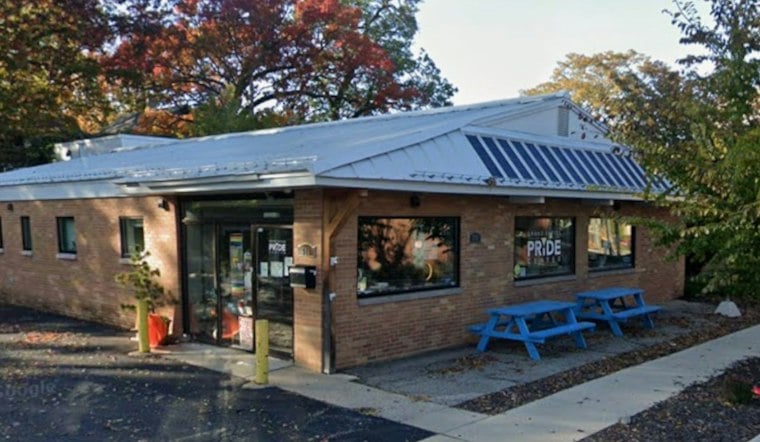
Michigan's oldest LGBTQ+ community center is warning it could shut its doors for good by the end of the year after losing grants, sponsorships and other funding that kept it running for nearly four decades. The Grand Rapids Pride Center, which has served the LGBTQ+ community in West Michigan for 38 years, according to Michigan Advance, had only two months of operating expenses left in reserve and was projected to close by Thanksgiving without an infusion of cash.
That grim timeline, first reported by Michigan Advance, has since shifted slightly: an online fundraiser has pulled in enough money to keep the center open through Christmas, buying a few more weeks. Executive Director Jazz McKinney, who uses they/them pronouns, described the fundraiser as a bridge meant to buy time while the organization pursues longer-term sustainability, according to the outlet's reporting. McKinney has led the center since 2020 and said they've watched the finances closely over the past year as a six-month reserve dwindled down to almost nothing.
A Budget Built on a Single Weekend
The center's financial model has long leaned heavily on one event: Grand Rapids Pride, held this year on June 20 and 21, as reported by Grand Rapids Pride Center. The organization typically pays deposits for entertainment and venue rentals in the first quarter, then ends up financially ahead once Pride wraps in the second quarter, per the Michigan Advance report. McKinney told Pride Source that when they first took over, “When I took over, 90 percent of our income was coming from our Pride festival.” Since then the center's budget has grown substantially, with McKinney noting, “Now this year's budget is $630,000 as opposed to the $200,000 I inherited.”
The center's monthly operating expenses are about $70,000, per the Michigan Advance report. It employs a staff of six and serves LGBTQ+ residents across 10 counties, offering dozens of groups each week, a program for elders, and services for children as young as eight, according to the same reporting. Charity Navigator lists the nonprofit's mission as empowering the LGBTQ community through supportive services and awareness, according to Charity Navigator.
A Flood Knocked the Center Off Course
Money troubles compounded this year after storms inundated West Michigan in March, flooding the center's building and forcing it to close for three months, as reported by WOOD TV8. Staff spent the next two months in what the station called survival mode, relocating operations and holding temporary office hours while the building sat unusable. Insurance did not cover the damage, so the center turned to the community, raising around $28,000 to make repairs, the station reported.
The flood recovery pulled staff attention away from grant applications and sponsorship outreach for the center's largest annual fundraiser, according to the Michigan Advance report. McKinney said the organization received no federal funds directly, but was hit indirectly as partners, corporate sponsors and other nonprofits adjusted their own policies in response to federal funding changes. The center was denied a grant through a partner that normally worked with it after the partner required agreement with Executive Order 14151, which McKinney described as stating there are only two sexes, as noted by Michigan Advance.
A Decade-Long Partnership Ends
One of the clearest losses was Blue Cross Blue Shield, a partner for 10 years that had provided health insurance to McKinney and center staff. Blue Cross Blue Shield changed its rules of engagement in order to retain federal government funding, ending the partnership, according to the Michigan Advance report. As of October 23, the center's online fundraiser had raised more than $62,000 from over 500 donors, the outlet reported.
The squeeze isn't unique to Grand Rapids. Denise Spivak, executive director of CenterLink, an umbrella organization for LGBTQ+ community centers, said financial struggles are part of a national trend for LGBTQ+ centers and for nonprofits as a whole, according to WITF. The same reporting attributes to Spivak the view that funding has markedly decreased sector-wide and that many corporate sponsors abandoned the queer community, though she also said centers are resilient and that communities are helping them stay open. Perhaps 1% to 2% of LGBTQ+ community centers have been forced to close for financial reasons in the prior two years, per that account, while some have simply taken a pause rather than shutting down entirely.
Pride Festivals Losing Corporate Backing Nationwide
Grand Rapids' reliance on its Pride weekend mirrors a broader pattern. Pride celebrations across the country continue to lose large sponsorships as corporations pull back from diversity causes and LGBTQ+ events, according to NPR. Corporate sponsorships of celebrations in cities including New York City, Salt Lake City, Louisville, St. Louis, Orlando and Pittsburgh are down from previous years, and the United States Association of Prides has said a majority of Pride celebrations have seen reduced sponsorship. NPR reported that Pittsburgh Pride organizers expect to secure only 30% to 40% of the sponsorship dollars they raised a few years ago, turning instead to a state grant and individual donations, while Tampa Pride announced a one-year hiatus after a slew of corporations dropped their support.
The stakes extend beyond the festivals themselves. Pride events often double as resource fairs, job fairs and fundraising events, meaning lost sponsorship dollars ripple into year-round services, NPR reported. A 2026 survey of LGBTQ community centers nationwide found that limited staff capacity and limited finances were among the top obstacles facing the field, according to the Movement Advancement Project. That report found nearly half of all centers, 49%, remain thinly staffed, and 76% reported experiencing anti-LGBTQ threats or harassment.
Michigan Isn't Alone in the Squeeze
Other LGBTQ+ organizations around the state and country are navigating similar strain. The Michigan LGBTQ+ Students Project could disappear in early 2027 unless it raises about $250,000 to replace lost funding, according to Pride Source, which noted the project has run 153 in-person and virtual workshops for 8,751 people and provided nearly 400 individualized technical-assistance responses to schools in 42 Michigan counties since 2020. In Pennsylvania, the LGBT Center of Central PA has struggled to stay afloat since opening what it called a permanent location on Harrisburg's Front Street in spring 2024, with WITF reporting it has been a close call to make payroll in recent months. And in New York, LGBTQIA+ organizations report that demand for services is rising while the funding behind those programs grows more complicated, according to Spectrum News, which noted that Collar City Pride in Troy, an entirely volunteer-run organization, has already seen three times its prior year's case-management client volume since January.
Back in Grand Rapids, the pressure is compounded by a second, related organization under the same roof. The Grand Rapids Trans Foundation, established in 2015, operates as a separate nonprofit housed within the Pride Center, and its executive director, Ximón Kittok, posted a Facebook video in August about the foundation's urgent need for operating funds, according to the Michigan Advance report. McKinney and Kittok have emphasized that they don't want their two nonprofits competing against each other for the same individual donations.
McKinney described the center's work as providing basic-needs services, advocating for policy change and community visibility, and said it offers life-giving and lifesaving services to the people who rely on it. Despite the financial strain, McKinney said they believe the community will band together and find a way forward.





