

























































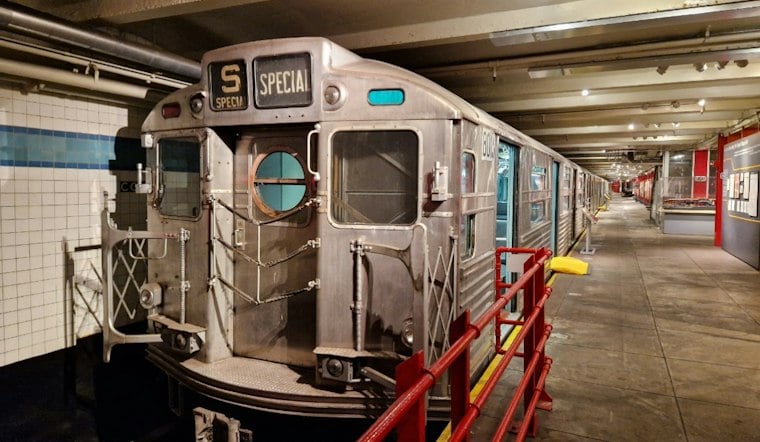
Thousands of New Yorkers are expected to line up at the outdoor sale site at 23 Avenue X in Gravesend, Brooklyn this Thursday and Friday for a chance to buy actual pieces of the subway system, from station globes to decommissioned turnstiles, with prices running roughly $100 to $3,000. The Metropolitan Transportation Authority's annual Memorabilia and Collectibles Pop-Up Shop runs from 9 a.m. to 2 p.m. both days, and shoppers walk away only after signing a waiver and hauling their purchase out themselves.
The event has become something of a tradition since it started in 2021, according to WABC-TV New York, drawing between 3,000 and 5,000 customers over the two-day run, including people who line up hours before the gates even open. The outlet notes the MTA this year scheduled the sale for October 8 and October 9 at 23 Avenue X, adjacent to the Bay 50th Street D train station, with entry strictly walk-in and payment accepted only via Visa or Mastercard, as confirmed by the Metropolitan Transportation Authority. Guests are admitted in small groups and get just 45 minutes to shop before the next batch comes through.
Scarred Signs and Subway Seats Draw Collectors
Paul Dvoskin, who leads the NYC Transit team that collects material for the sale, said the appeal of many pieces comes from their beaten-up condition rather than in spite of it. He told the station that his team brings collected material to the sale site four to six times a year, and that this year's inventory includes station globes, a window, grab holds, actual turnstiles, and equipment pulled from trains including Metro-North stock, along with materials salvaged from rehabilitated or renovated subway stations, the station's report notes. New this year are MetroCards and the orange triple seats pulled from R46 subway cars.
Those R46 cars trace back to Pullman Standard-built trains manufactured between 1975 and 1978, an order that at the time stood as the largest single passenger car purchase in U.S. railroad history, according to Wikipedia. The cars are being systematically retired and replaced by newer Kawasaki-built R211 trains, and the MTA phased out the last regularly scheduled R46 runs on its primary IND A and C lines in April 2025, per footage reviewed by DJH Trains. The newer R211 fleet features wider doors and digital displays.
MetroCards Shift From Fare Media to Collector's Item
The debut of MetroCards as sale items lands just as the payment system itself disappears from daily use. The MTA set a final deadline of December 31, 2025 to end all MetroCard sales and refills, closing out 32 years of use in favor of the OMNY contactless system. The agency estimates the full switch to OMNY will save at least $20 million annually in operating costs by eliminating the maintenance burden of physical swipe infrastructure.
Every item sold at the pop-up comes with an official Certificate of Authenticity issued directly by the transit agency, according to Untapped Cities, confirming that pieces like station signs and car builder plates actually saw service in the system. Shoppers at the sale range from dedicated transit buffs to couples who, per the WABC report, met at the Avenue U event itself — one prospective shopper told the station she was hoping to track down a 7 train Jackson Heights sign.
Turnstiles for Sale as System Phases Out Fare Evasion
The turnstiles on offer are part of a broader overhaul already underway across the subway system. The MTA has begun adding anti-vaulting spikes, paddles, and high-barrier gate prototypes at stations to curb fare evasion, as reported by Time Out New York. Traditional waist-high turnstiles are being phased out as those upgrades spread system-wide.
Beyond the twice-a-year pop-up, the MTA also lists surplus equipment such as wooden subway benches and station signs year-round through its Asset Recovery program, a mechanism that generates revenue above scrap metal value to help offset operating deficits, as detailed by Business Insider. High-demand items like Times Square signs have previously fetched as much as $2,500 through that channel.
Not everything retired from the system ends up on a folding table in Gravesend, though. Historic rolling stock and major transit artifacts are instead preserved and exhibited by the New York Transit Museum, housed inside the decommissioned 1936 Court Street subway station in Downtown Brooklyn, which maintains an archive of more than one million artifacts, according to the museum's own history. That institutional archive stands apart from the public liquidation sales, representing the formal preservation side of the agency's relationship with its own retired hardware.



