

























































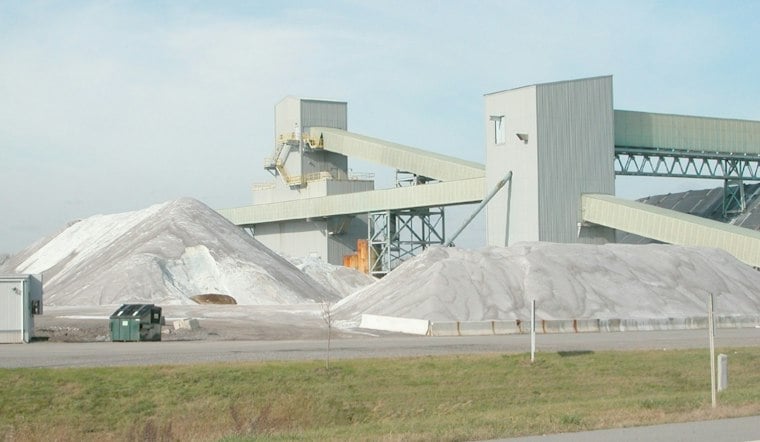
The shuttered Livingston Correctional Facility in Groveland, New York, has a new owner with a very different plan for the 160-acre property: digging a rock salt mine deep beneath it. Liberty Rock Salt LLC purchased the site for $1.1 million after the Livingston County Industrial Development Agency approved the sale on Oct. 2, setting up a years-long permitting process before any shaft gets drilled.
From Prison Yard to Prospecting Ground
The correctional facility closed in 2019, and the property had reportedly been scheduled for demolition before Liberty Rock Salt LLC, described as a newly formed buyer, stepped in. According to 13WHAM, the company plans to drill two mine shafts at the site and expects to extract between 10,000 and 14,000 tons of salt a day once the operation is running. As reported by Spectrum News, the proposed mine would need to reach deeper productive salt layers than the nearby Hampton Corners operation, since the former prison grounds sit farther south.
Spectrum News reports that company leadership, including Liberty Rock Salt chief operating officer Cragg Chaffee and president Chad Bugman, describes the underground deposit as containing two separate salt veins. Per that account, the first vein is estimated to last roughly 125 years at the mine's current footprint, with a second vein adding about 80 years on top of that. The company has said the project aims to provide high-paying jobs and economic benefits to the community, per the same outlet.
A Supply Measured in Centuries, If Permits Come Through
Whec.com quotes the company estimating “roughly 200 years of salt that we can get, and there's a potential to go to probably 300 years of salt” if the operation expands, a figure that aligns with Spectrum News's separate reporting of a 200-year baseline supply and up to 300 years with expansion. WHEC also reports the company hopes to have the mine operational within five years, though the project still must clear required state permits before any construction begins.
The mining operation is expected to create about 300 jobs in Livingston County, WHEC reports, and the company has floated an employee ownership stake. Spectrum News reports the stock ownership plan would start between 5% and 10% for employees, while 13WHAM separately reports that neighboring landowners have been offered a 5% production royalty tied to the value of salt extracted near their property. The company has also said it intends to avoid environmental impacts, according to Spectrum News, though specifics of that plan have not been detailed.
Why Groveland Sits on So Much Salt
The geology behind the project isn't a mystery to regional scientists. Spectrum News reports that SUNY Geneseo geological science professor D. Jeffrey Over has noted that the salt layer dips slightly southward across New York, with salt sitting approximately 1,000 feet deep near Geneseo and actually reaching the surface near Avon, where salt springs are also found. That underground geology already supports American Rock Salt's Hampton Corners mine nearby, which the Livingston County News reports received a state permit for a 1,700-acre underground expansion expected to add 10 to 20 years to that mine's life and open up an estimated 40 million tons of salt for immediate extraction. That expansion used existing mine shafts and required no new above-ground construction, the paper noted — a contrast to Liberty Rock Salt's plan to drill fresh shafts at the former prison site.
Company officials have said the Groveland project is partly a response to rock salt shortages that have affected the region in recent winters, 13WHAM reports. Regional salt mining has a long and sometimes turbulent history in the county: the former Retsof salt mine, before its collapse, reportedly supported more than 325 jobs with an annual payroll topping $11 million and estimated annual gross sales above $70 million, according to the U.S. Geological Survey. Elsewhere in the salt belt, Cargill's Cayuga Salt Mine produces roughly 2 million tons of road salt annually, shipped to more than 1,500 locations across New York and the Northeast, per the company.
What Still Has to Happen Before Any Digging Starts
Before Liberty Rock Salt can break ground, the project must secure a Mined Land Reclamation permit, the approval New York requires for regulated mining and reclamation activity under state rules established by the New York State Department of Environmental Conservation. That agency's mined land reclamation staff are available to guide applicants through plan preparation and the state's environmental review process, and if a proposed mine site falls within the New York City watershed area, the agency sends a copy of the completed application to New York City's environmental protection department, according to the department's applicant guide.
For now, the sale itself — approved earlier this month by the Livingston County Industrial Development Agency — is the only firm step on the record. The company's production estimates, job figures, and five-year timeline remain projections tied to permits that have not yet been granted, leaving Groveland residents to watch a lengthy regulatory process before the shuttered prison yard becomes anything resembling a working mine.





