

























































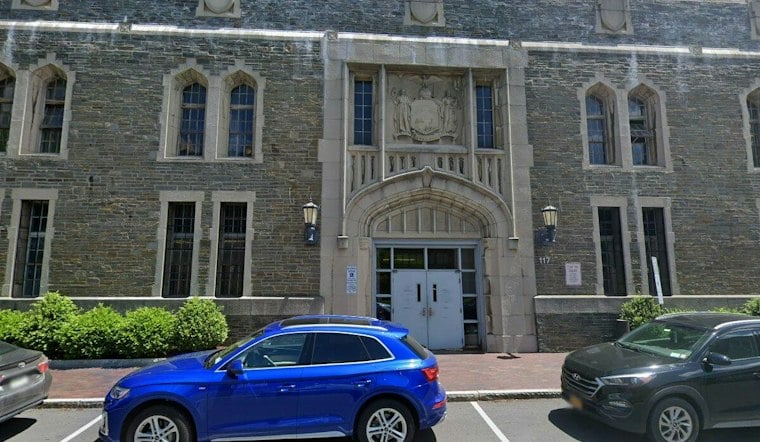
Cornell University's own crime statistics don't match up from one report to the next, according to a CBS News New York investigation that examined years of official crime data from the school and New York State. Investigative reporter Mahsa Saeidi found that the number of rape reports recorded by Cornell differed strikingly from the number recorded by its own police department, raising fresh questions about how the Ithaca campus tracks sexual violence.
The discrepancy shows up in Cornell's own published Annual Security Reports. One account of the university's 2025 Annual Security Report put the number of on-campus rape cases reported in 2024 at 23, according to The Cornell Daily Sun. A separate account of the university's 2026 Annual Security Report instead listed 28 reported cases of on-campus rape for that same year, before the figure fell to six in 2025.
That same 2025 account from the student paper reported a slightly different multi-year trend line, putting reported on-campus rape cases at 25 in 2022 and 28 in 2023, ahead of the 23 figure it gave for 2024. The dossier underlying these numbers does not explain why the two accounts diverge on the 2024 total, and nothing in the record resolves which figure is correct.
What the Annual Security Report Actually Counts
Cornell's Annual Security Report is not a measure of how many assaults occurred — it only reflects crimes officially reported to campus authorities. The report captures crimes reported to Campus Security Authorities, which includes the Cornell University Police Department as well as local law enforcement agencies with jurisdiction over the campus, per the Daily Sun's reporting on the 2025 edition. Under the federal Clery Act regulation that governs these disclosures, institutions must report statistics for the three most recent calendar years for specified crimes occurring on or within campus-related geography, according to the Electronic Code of Federal Regulations.
That reporting-based structure is also why the Annual Security Report tells a very different story than Cornell's own campus survey. The student newspaper's account of the 2025 report noted that a survey of 6,000 Cornell students found 23 percent of undergraduate women and 9 percent of undergraduate men reported experiencing some form of sexual assault during their time at the school — numbers drawn from self-reported experience, not police reports.
A Newer Survey Shows a Jump
Cornell's more recent Sexual Assault, Relationship Abuse, and Misconduct survey, conducted in 2025, found that 15% of respondents reported experiencing nonconsensual sexual contact since entering Cornell — up from 11% in both 2023 and 2021, according to a Cornell University statement. The university cautioned that the survey's reduced response rate makes the data more difficult to analyze. That survey drew 926 responses for an overall response rate of 15%, according to the 2025 SARM Survey report.
The undergraduate response rate specifically fell to just 13% in 2025, down from 34% in 2023, which the Presidential Task Force on Campus Sexual Assault's final report said limits estimates of sexual assault and hinders interpretation of the results. Despite that caveat, the task force's report found that 35% of Cornell undergraduate women and 8% of men reported experiencing a sexual assault during their time at Cornell in the 2025 survey, compared with 23% of women and 9% of men in 2023. The report also found that residence halls were the most common reported location for a sexual assault to occur, followed by off-campus residences and fraternity chapter houses.
A Task Force and Lingering Questions
President Kotlikoff and Provost Bala established the Presidential Task Force on Campus Sexual Assault in February 2025, focused on undergraduate students on the Ithaca campus. In compiling its final report, the task force said it talked to numerous leaders from across campus, including CUPD, the Clery Act Compliance Office, and the Public Safety Advisory Committee.
The scrutiny extends beyond Cornell's own numbers. A Washington Post report raised questions about whether the Ivy League school and the local prosecutor did enough to fully investigate and address allegations at the time, though the specifics of any individual case review were not detailed. Nationally, a Bureau of Justice Statistics analysis found that only 20% of college women aged 18 to 24 who were raped or sexually assaulted reported the crime to police, according to a Hurwitz Admissions analysis — a gap that helps explain why official counts and survey results so rarely line up at any campus, not just Cornell's.
The 2026 Annual Security Report also showed other shifts in Cornell's broader sexual-violence figures, with reported dating violence cases falling from 35 in 2024 to 14 in 2025, while stalking reports rose from 22 to 31 over the same period, according to the Daily Sun's coverage of that report. CBS News New York's investigation, first reported by Saeidi, underscores how much remains unsettled about what Cornell's dueling figures actually mean, even as the university and outside observers continue picking apart the numbers.



